The Jakarta Post
Please Update your browser
Your browser is out of date, and may not be compatible with our website. A list of the most popular web browsers can be found below.
Just click on the icons to get to the download page.


Popular Reads
Top Results
No results found. Please check your search term and try again
Can't find what you're looking for?
View all search results
Popular Reads
Top Results
No results found. Please check your search term and try again
Can't find what you're looking for?
View all search resultsBank account freezes can help fight crime, not silence critics
When the state freezes an activist’s bank accounts mid-protest, it isn't routine law enforcement. It is an urgent test of whether the rule of law controls the police or punishes dissent.
Change text size
Gift Premium Articles
to Anyone
Share the best of The Jakarta Post with friends, family, or colleagues. As a subscriber, you can gift 3 to 5 articles each month that anyone can read—no subscription needed!
 Set as preferred source
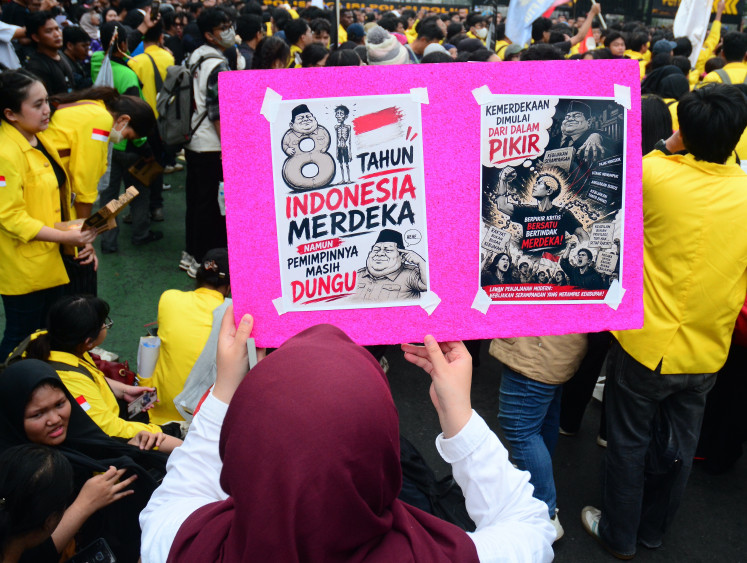
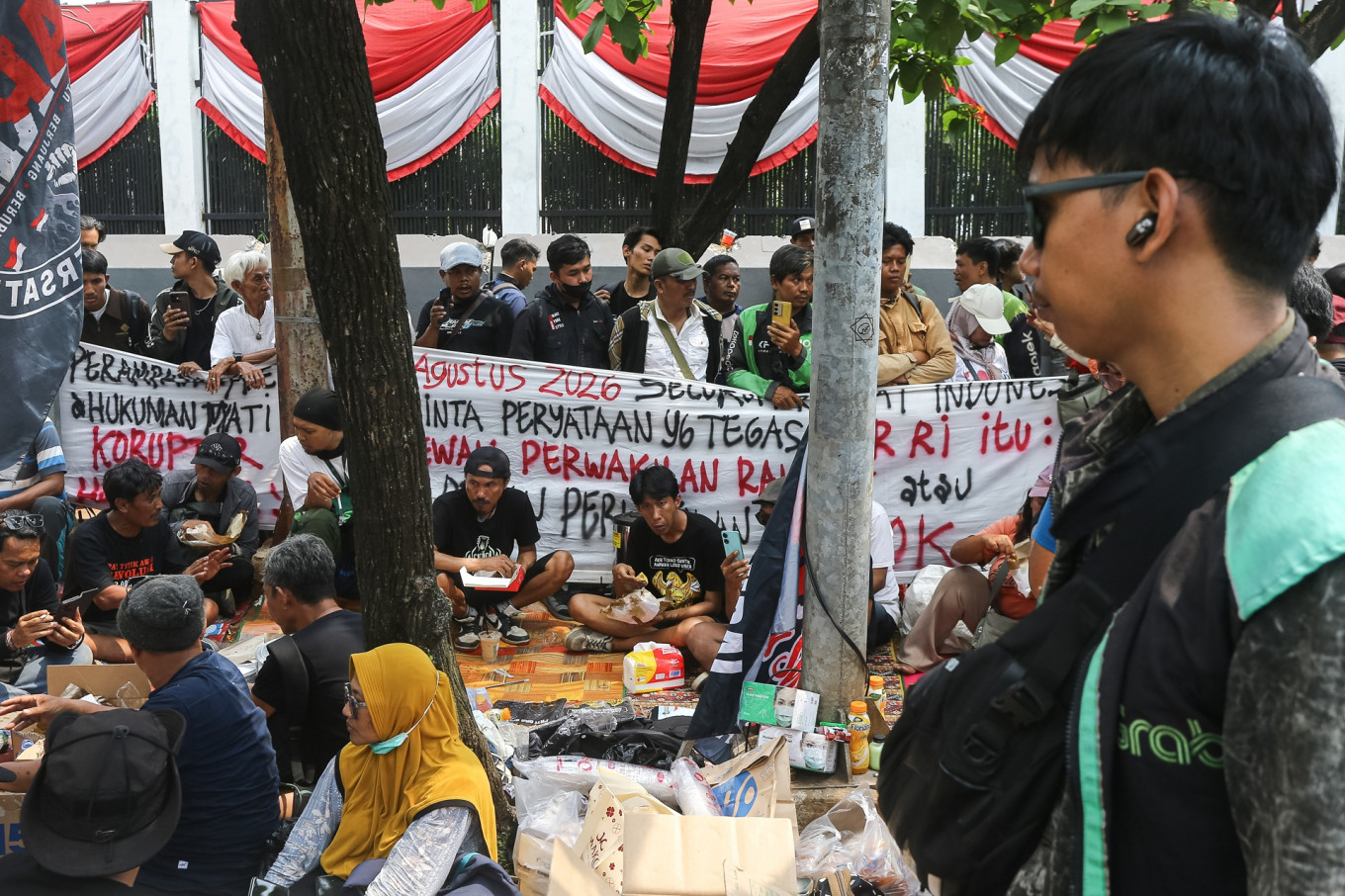 Members of the United Pati Community Alliance (AMPB) from Pati, Central Java, gather in front of the Senayan Legislative Complex in Central Jakarta on Aug. 26, 2026, the day before a rally to urge firmer anticorruption efforts and to demand the House of Representatives expedite passage of the asset forfeiture bill. (Antara/Angga Budhiyanto)
W
hen state-owned Bank Mandiri froze the account of Supriyono, better known as Botok, coordinator of the Pati United Community Alliance (AMPB), the move crossed beyond routine banking or policing and struck directly at the core of human rights protection.
The bank has since unblocked Supriyono’s account and apologized for the action. The freeze reportedly came at the request of the police while Supriyono and fellow AMPB members were exercising their rights to free speech and peaceful assembly outside the House of Representatives in Jakarta to demand, among others, the swift deliberation and passage of the Asset Forfeiture Bill.
This was not the AMPB’s first time taking to the streets. In August last year, the group mobilized against steep hikes in local property taxes and demanded the resignation of Pati Regent Sudewo. This year on Jan. 19, the Corruption Eradication Commission (KPK) arrested Sudewo on corruption charges.
Freezing a citizen's finances in the middle of a peaceful protest against government policy raises pointed questions: Who ordered it? Under what legal mandate? And toward what end?
These questions carry heightened urgency under Law No. 20/2025 on the Criminal Law Procedures Code (KUHAP). The revised code explicitly classifies account freezing as a compulsory legal measure. Article 89 ranks it alongside suspect naming, arrests, detentions, searches, seizures, wiretaps, mail inspections and travel bans. It is not an administrative afterthought left to unchecked police discretion.
Article 140 establishes that while investigators, prosecutors or judges can initiate a freeze, doing so generally requires prior approval from the relevant district court chief. A formal application must detail the alleged crime, establish a factual link between the targeted assets and the offense, cite verifiable evidence and clarify the exact scope and intent of the order. Judges are expected to review the application with rigorous scrutiny.

The code does provide an emergency exception for warrantless freezes in situations involving imminent asset flight or organized crime conspiracies. Yet this carve-out has strict bounds. Police must still obtain court approval within 48 hours. If a judge denies authorization, the freeze must be lifted within three working days.