The Jakarta Post
Please Update your browser
Your browser is out of date, and may not be compatible with our website. A list of the most popular web browsers can be found below.
Just click on the icons to get to the download page.


Popular Reads
Top Results
No results found. Please check your search term and try again
Can't find what you're looking for?
View all search results
Popular Reads
Top Results
No results found. Please check your search term and try again
Can't find what you're looking for?
View all search resultsTechnocracy cannot fix Europe
A new private initiative bringing together the crème de la crème of European business, financial, economic and tech elites could well prove useful in kick-starting European growth and innovation. But first, it must recognize that the problem it hopes to solve is fundamentally political.
Change text size
Gift Premium Articles
to Anyone
Share the best of The Jakarta Post with friends, family, or colleagues. As a subscriber, you can gift 3 to 5 articles each month that anyone can read—no subscription needed!
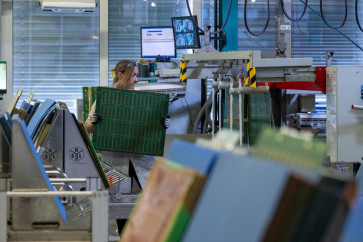
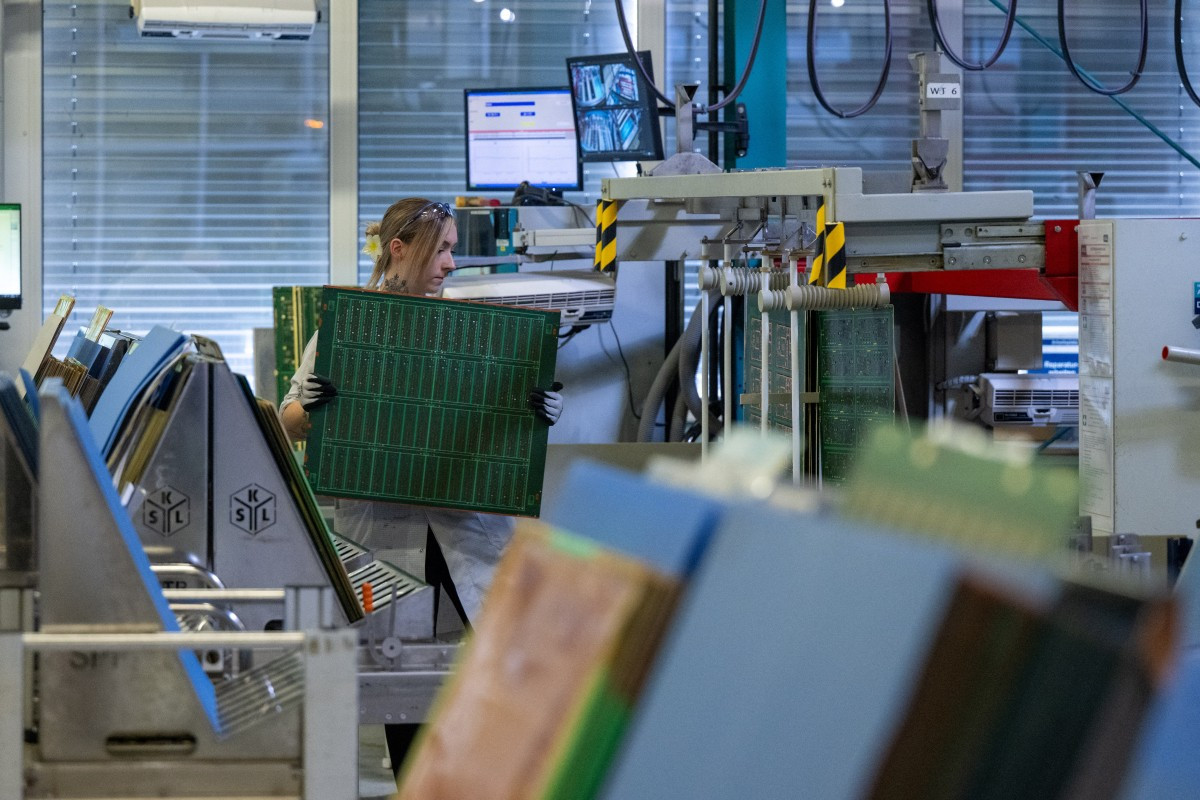 An employee is seen inside the production facilities of high-end printed circuit boards (PCBs) and integrated circuit (IC) substrates manufacturer AT&S on Aug. 11 in Leoben, Styria, Austria. (AFP/Kerstin Joensson)
T
he Rhine Group launched last week with the goal of restoring Europe’s capacity to innovate, grow and compete globally, is an unusual initiative: a private club assembled to do what public institutions are supposed to do.
Nonetheless, it has brought together many household names, with former European Central Bank president Mario Draghi and tech entrepreneur Patrick Collison serving as cochairs. Luis Garicano, an LSE economist and former liberal member of the European Parliament, is the executive director.
Many other company founders, financiers, former ministers, serving regulators, senior media figures and economists - including the Nobel laureates Philippe Aghion and Bengt Holmström - have signed on. Few other organizations could assemble such intellectual authority, corporate power and institutional experience in one place. But that is precisely why this initiative deserves scrutiny.
True, the concerns it hopes to address are real. Europe is falling behind technologically, struggling to mobilize capital, and becoming dangerously dependent on technologies from the United States and China. Without urgent action, it will lose the ability to finance self-defense, health care, pensions, education, climate investments and social protection. Although the Draghi report on European competitiveness documented the problem with unmatched authority two years ago, few of its recommendations have been implemented.
The Rhine Group was created to end this paralysis. But despite the severity of its diagnosis, it has so far offered a remarkably thin prescription: Europe must “compete, build and grow again.” Even more troublingly, it is reproducing some of the same habits underlying the paralysis. Once again, we have policymaking driven by personalities, rather than by political vision, with technocratic fixes being handed down from above.
The Draghi agenda has not stalled for lack of evidence supporting its recommendations. The issue, rather, is that common borrowing, industrial subsidies, capital-market integration and regulatory simplification would all redistribute power, costs and benefits across countries and social groups. That makes them a source of political conflict. The lack of progress is not, as the Rhine Group believes, a technocratic problem that experts can solve.

The group’s own diagnosis narrows the range of possible answers. Consider this striking statistic in its founding statement: only four of the world’s 50 largest technology companies are European. In highlighting this metric, the authors have already smuggled in a political argument. If Europe’s problem is defined simply as the absence of American-sized technology companies, it need only facilitate greater scale, more unicorns and more concentrated capital by removing constraints on companies seeking to become dominant. But is that really Europe’s problem?