The Jakarta Post
Please Update your browser
Your browser is out of date, and may not be compatible with our website. A list of the most popular web browsers can be found below.
Just click on the icons to get to the download page.


Popular Reads
Top Results
No results found. Please check your search term and try again
Can't find what you're looking for?
View all search results
Popular Reads
Top Results
No results found. Please check your search term and try again
Can't find what you're looking for?
View all search resultsVietnam’s hantavirus warning for Southeast Asia
Taking action to prevent zoonotic disease spillover is better than reacting to an outbreak, especially in countries where people live and work closely with wildlife, such as Vietnam and Indonesia.
Change text size
Gift Premium Articles
to Anyone
Share the best of The Jakarta Post with friends, family, or colleagues. As a subscriber, you can gift 3 to 5 articles each month that anyone can read—no subscription needed!
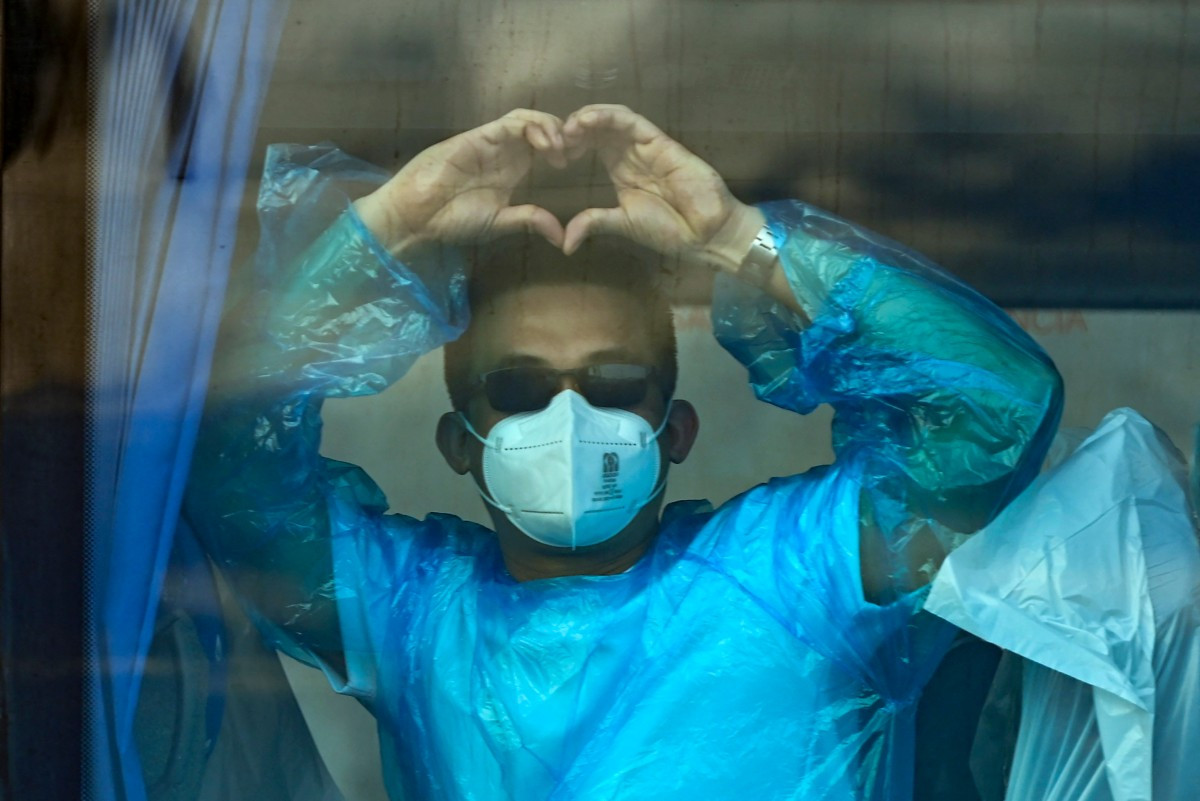 A passenger of the hantavirus-stricken cruise ship MV Hondius makes the heart hands sign on May 11, 2026, as he leaves aboard a military bus from the port of Granadilla de Abona on Tenerife in the Canary Islands, Spain. (AFP/Jorge Guerrero)
W
ildlife farming is common in Vietnam, where people breed and trade wild animals for pets, food and traditional medicine. By 2021, the country had around 6,744 wildlife farms housing 1.8 million animals across 371 species. Although these farms support many families, they also bring people into close contact with wild animals. This creates opportunities for zoonotic diseases to spill over into humans.
A recent outbreak highlights the potential danger. The Andes hantavirus, which spreads between people, infected 13 passengers on the cruise ship MV Hondius and killed three. Investigators believe it happened by inhaling contaminated dust while ashore in South America, where the virus is endemic, and later spread person-to-person on the ship.
Our 2025 study found hantavirus exposure in people farming bats, bamboo rats, civets and wild boars in Vietnam. The findings should serve as an early warning for other Southeast Asian countries, including Indonesia, where wildlife farming and markets are also common.
We tested 210 wildlife farmers in Lao Cai and Dong Nai provinces in Vietnam. Nearly 9 percent had hantavirus immunoglobulin G (IgG) antibodies, showing they had been exposed before. Another 1.9 percent had active infections when we collected samples between August 2023 and March 2024. However, no hantavirus outbreaks were reported during the study period.
Farmers who only managed the farms faced the highest risk, even if they did not hunt, trade, slaughter or eat the animals. Poor hygiene and a lack of protective equipment may explain this risk. Humans can become infected by inhaling tiny particles contaminated with infected rodents’ urine, droppings or saliva.
Our study cannot yet tell us exactly where the infections came from. The farmers may have been exposed to infected wild rodents outside the farms. We also do not know which variant of hantavirus infected them.

Our study used antibody tests (ELISA), which can show previous exposure but cannot identify the specific virus. Tests of samples from farmers and animals also found no viral genetic material.
Identifying the virus and its host will require genetic testing, including reverse transcription polymerase chain reaction (RT-PCR) and sequencing. Given Vietnam’s high biodiversity, an undetected hantavirus variant could potentially be circulating.
Preventing the virus from jumping to humans is much better than reacting to an outbreak. Farmers need practical safety measures, including consistent use of protective equipment when handling animals or cleaning cages. This requires cooperation between different doctors, veterinarians, wildlife experts and farmers, otherwise known as the “One Health” approach, to develop safety measures that are both effective and practical.
Vietnam already has laws governing wildlife farming, but enforcement remains weak. Animal health monitoring is limited, and coordination between government agencies has room for improvement.
Better surveillance could help detect emerging diseases earlier and reduce the risk of future outbreaks. This is important not only for Vietnam but also for other countries where people live and work closely with wildlife, including Indonesia.
Governments should also use social media and other accessible channels to inform farmers and the public about the risks of zoonotic diseases. Clear, practical information can help people understand the risks and follow safer farming practices.
Preventing disease spillover requires action before an outbreak occurs. As people, animals and economies become increasingly connected, strengthening surveillance and safety measures is essential to protecting both local communities and global health.
---
 Ha Thi Thanh Nguyen is a PhD fellow at Uppsala University, where Jiaxin Ling is a researcher. Hung Nguyen-Viet is regional director at the International Livestock Research Institute (ILRI) Asia. Steven Lam is an assistant professor in health sciences at Wilfrid Laurier University. This article is republished under a Creative Commons license.