The Jakarta Post
Please Update your browser
Your browser is out of date, and may not be compatible with our website. A list of the most popular web browsers can be found below.
Just click on the icons to get to the download page.


Popular Reads
Top Results
No results found. Please check your search term and try again
Can't find what you're looking for?
View all search results
Popular Reads
Top Results
No results found. Please check your search term and try again
Can't find what you're looking for?
View all search resultsAre the walls closing in on Bessent?
Far from suggesting financial Armageddon, the US treasury secretary’s futile efforts to keep a lid on Treasury yields suggest that once again, the dollar is America’s currency but everyone else’s problem.
Change text size
Gift Premium Articles
to Anyone
Share the best of The Jakarta Post with friends, family, or colleagues. As a subscriber, you can gift 3 to 5 articles each month that anyone can read—no subscription needed!
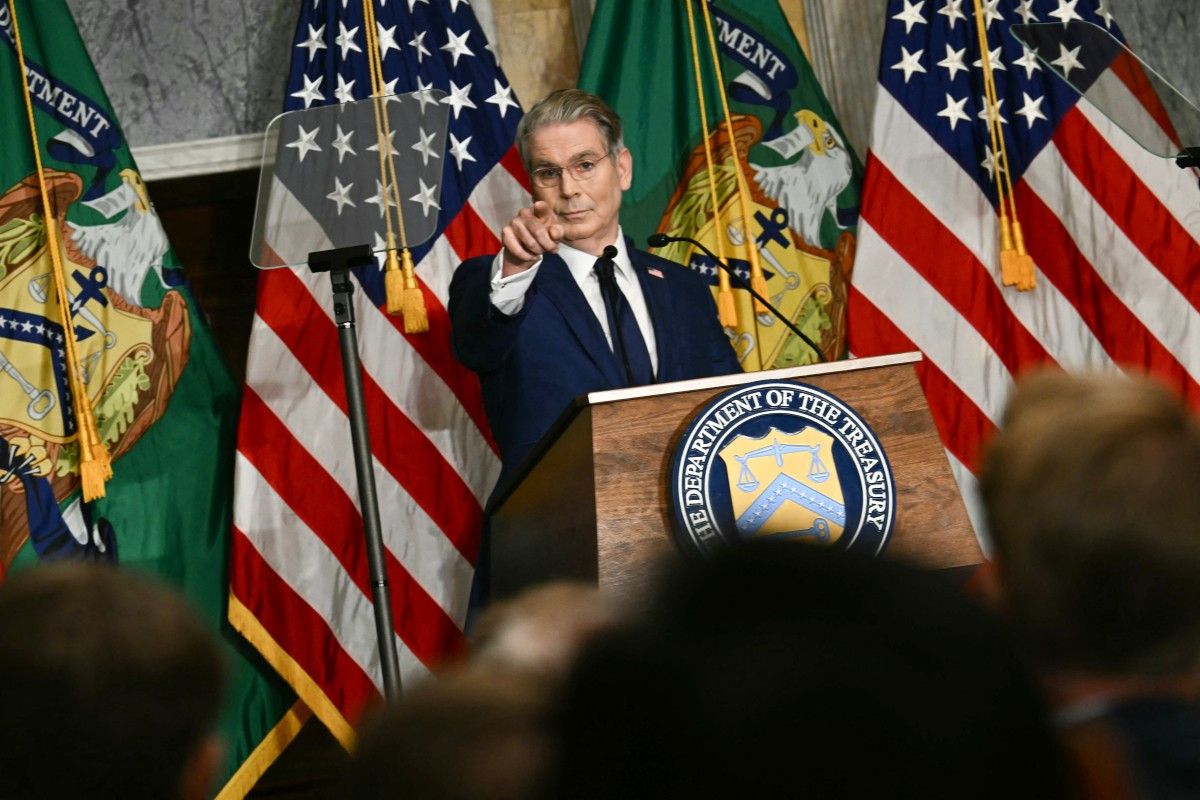 United States Secretary of the Treasury Scott Bessent takes questions from reporters on Aug. 24, 2026, during a press conference in Washington, DC. (AFP/Kent Nishimura)
U
nited States Treasury Secretary Scott Bessent has a packed agenda. Alongside trying to crash Iran’s economy, he is concerned about the cost of servicing federal debt, which surpassed 100 percent of gross domestic product earlier this year. Interest payments on America’s debt have shot up to more than US$1 trillion this year, exceeding annual defense spending.
To keep a lid on Treasury yields, Bessent, who spent most of his career in capital markets, notably at Soros Fund Management where he helped “break” the British pound in September 1992, is now seeking to move market sentiment from the other side of the fence.
First came a joint intervention by the US and Japan to prop up a weak yen. To raise the dollars required on its own, Japan would have had to sell US Treasuries. Japan is the largest holder of US debt and has long been a reliable buyer, putting around 25 cents of every surplus dollar into Treasuries for the past two decades. A forced sale would have been a very public break from precedent.
The next step revealed Bessent’s real concern. He suggested that instead of selling securities, Japan could gain access to dollars to buttress the yen through the Foreign and International Monetary Authorities Repo Facility, which has been little used since the pandemic. He also proposed using the facility to relieve pressure on the US bond market as well as raising its borrowing ceiling to support dollar funding more widely.
Most recently, Bessent has turned his attention to demand, with a commitment to double long-dated buybacks to “at least” $4 billion per operation.
Here, the arithmetic doesn’t add up. The US Federal Reserve can bend a yield curve because it operates in larger amounts: At the height of the pandemic, its daily Treasury purchases peaked at roughly $75 billion. But the Treasury cannot do the same. It pays for long-dated buybacks by selling short-dated debt, reducing the duration of America’s debt while claiming to steady long-term Treasury yields.

This sequence of interventions has not delivered the expected outcome: The 30-year yield, which reached its highest level since 2007 right before Bessent’s buyback announcement, fell temporarily but soon bounced back. It has also confused bondholders. That puts Bessent, the self-described “nation’s top bond salesman”, in an uncomfortable position.