The Jakarta Post
Please Update your browser
Your browser is out of date, and may not be compatible with our website. A list of the most popular web browsers can be found below.
Just click on the icons to get to the download page.


Popular Reads
Top Results
No results found. Please check your search term and try again
Can't find what you're looking for?
View all search results
Popular Reads
Top Results
No results found. Please check your search term and try again
Can't find what you're looking for?
View all search resultsAnalysis: Can Icomex make Indonesia a commodity price maker?
Change text size
Gift Premium Articles
to Anyone
Share the best of The Jakarta Post with friends, family, or colleagues. As a subscriber, you can gift 3 to 5 articles each month that anyone can read—no subscription needed!
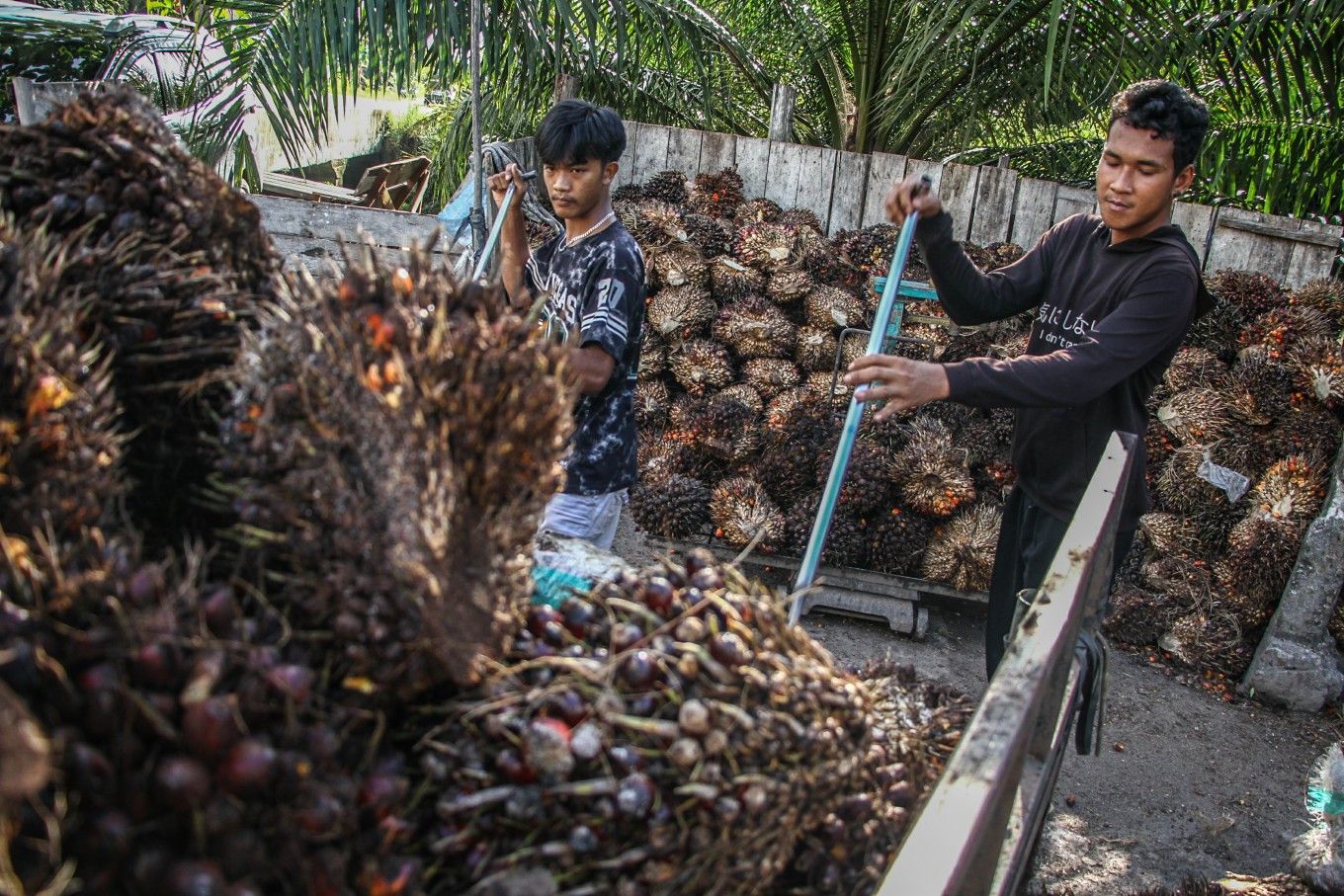 Workers unload fresh fruit bunches (FFB) from an open-back truck at a collector in Palangka Raya, Central Kalimantan, on Oct. 29, 2025. (Antara/Auliya Rahman)
T
he country is seeking to move from being a major commodity producer and global price taker to becoming a price maker through the planned Indonesian Commodity Exchange (Icomex). Yet a similar platform, the Indonesia Commodity & Derivatives Exchange (ICDX), has operated for nearly two decades without gaining significant influence over global markets.
Against this backdrop, questions remain over how the two exchanges will coexist and whether Icomex can attract sufficient trading volume and market participation to establish credible reference prices that can challenge established international benchmarks.
Icomex is slated to begin operating on Jan. 1, 2027, with the aim of establishing an Indonesia Reference Price for major commodities such as crude palm oil (CPO), nickel, tin and coal. President Prabowo Subianto has argued that Indonesia, despite being a major global producer of several commodities, should not remain dependent on overseas exchanges for price benchmarks. Supervised by the Financial Services Authority (OJK), the exchange is expected to deepen domestic markets, improve price transparency and strengthen governance, while helping curb practices such as transfer pricing and under-invoicing.
Icomex is developed in coordination with institutions including the OJK, state asset fund Danantara and the Mineral Industry Agency (BIM), with clearing arrangements modeled on those used in capital markets. Danantara believes the exchange could improve transparency and accountability, complementing the export monitoring role of PT Danantara Sumberdaya Indonesia (DSI), established in May.
DSI has clarified, however, that it is not directly involved in either the operations or trading activities of Icomex. According to DSI president director Luke Thomas Mahony, the two institutions will have distinct roles: Icomex is expected to establish commodity reference prices through market mechanisms, while DSI monitors exports and verifies prices for coal, CPO and ferroalloys.
The distinction between Icomex and the existing commodity trading infrastructure is particularly important, given the presence of ICDX. The Indonesian Palm Oil Association (GAPKI) has noted that CPO trading volumes on ICDX remain limited, with transactions still dominated by business-to-business arrangements. This suggests that the success of Icomex will depend not only on its regulatory framework but also on the incentives it offers, the depth of market participation, its transaction mechanisms and how its reference prices interact with existing international benchmarks.

Meanwhile, ICDX has expressed support for the plan to establish Icomex, describing the government initiative as a step toward strengthening the country’s commodity sovereignty and developing national reference prices for strategic commodities. ICDX said it would comply with the new regulatory framework while continuing its existing role as a commodity and derivatives exchange.