The Jakarta Post
Please Update your browser
Your browser is out of date, and may not be compatible with our website. A list of the most popular web browsers can be found below.
Just click on the icons to get to the download page.


Popular Reads
Top Results
No results found. Please check your search term and try again
Can't find what you're looking for?
View all search results
Popular Reads
Top Results
No results found. Please check your search term and try again
Can't find what you're looking for?
View all search resultsGrowth, income disparities and national cohesion
By redirecting local fiscal lifelines to fund national flagship projects, the government risks deepening the income gap and fracturing national unity into a tale of two economies.
Change text size
Gift Premium Articles
to Anyone
Share the best of The Jakarta Post with friends, family, or colleagues. As a subscriber, you can gift 3 to 5 articles each month that anyone can read—no subscription needed!
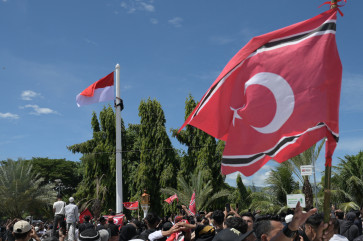
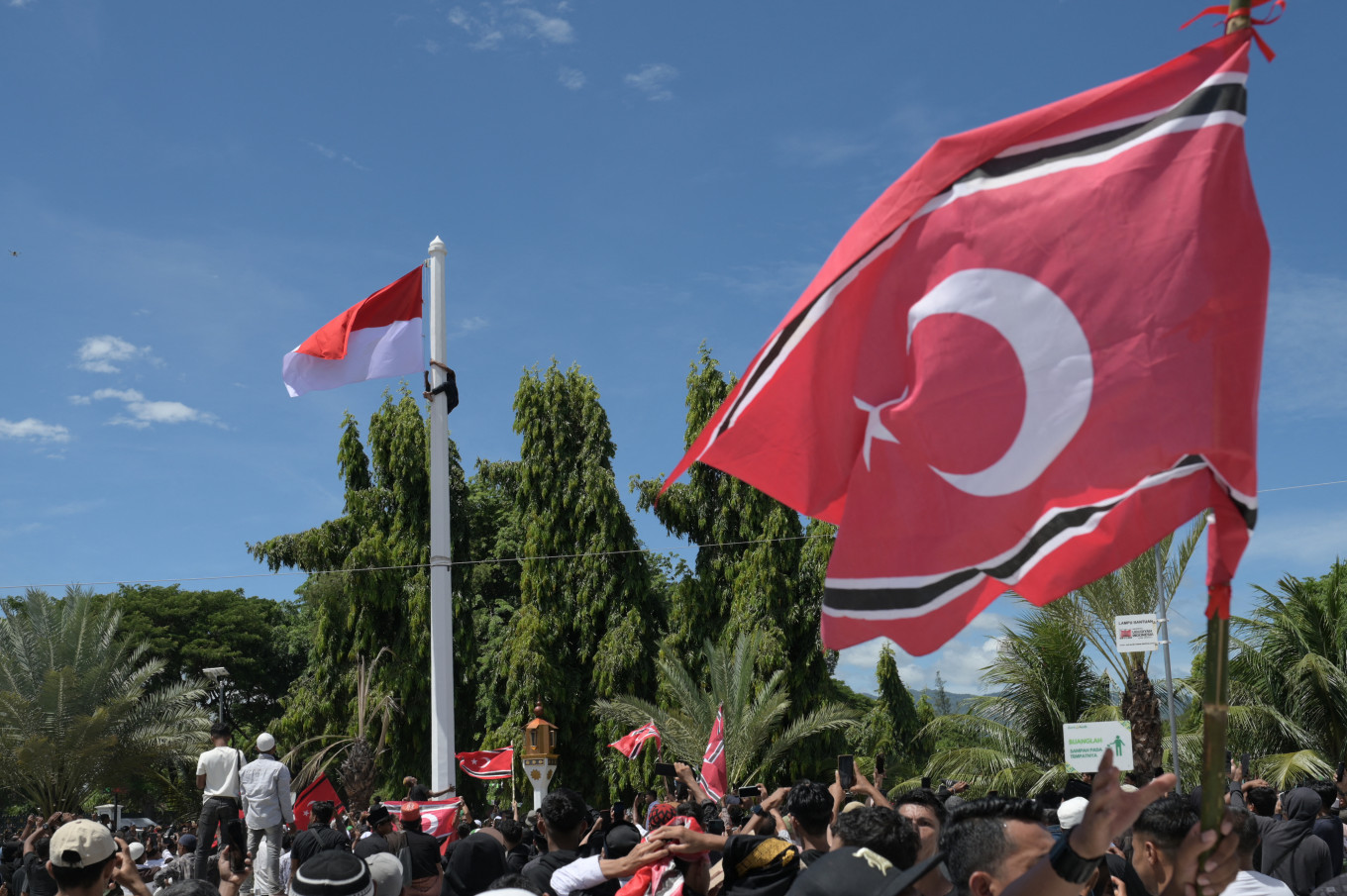 A man climbs a flagpole (left) as he attempts to raise a Free Aceh Movement (GAM) flag alongside the Red and White national flag on Aug. 15, 2026, during a rally to mark the 21st anniversary of the Helsinki Agreement outside the Baiturrahman Grand Mosque in Banda Aceh, Aceh. (AFP/Reza Saifullah)
D
espite Indonesia’s solid headline economic growth over the past two years, an urgent question persists: Who is actually benefiting? For a vast archipelagic country like Indonesia, the real measure of economic success lies not in top-line GDP figures but in how effectively the country narrows the development divide across its provinces.
On the ground, the wealth gap between the Java-Sumatra axis and Eastern Indonesia, particularly East Nusa Tenggara (NTT), Maluku and Papua, has consistently been significant. While the national economy expanded 5.1 percent in 2025, 17 provinces lagged behind that benchmark. Provincial growth rates swung wildly, from 34.2 percent in North Maluku down to 2.97 percent in Aceh, alongside a 21.8 percent contraction in the newly formed province of Central Papua.
Income per capita tells a similarly skewed story. In 2025, Jakarta’s per capita gross regional domestic product (GRDP) reached Rp 367.7 million (US$21,000), more than 14 times that of NTT, roughly 11 times that of Maluku and eight times that of Aceh.
Even where provinces post impressive GRDP figures, headline growth rarely filters down to everyday citizens. The national nickel downstream drive has propelled double-digit expansion across resource-rich regions like North Maluku and Central Sulawesi, but these extractive operations are capital-heavy and labor-light.
The revenue generated by nickel smelting and mining flows overwhelmingly to central coffers, corporate boardrooms and major investors, leaving local communities with widespread ecological damage and land displacement rather than high-paying jobs. In Central Sulawesi and West Papua, per capita GRDP reaches Rp 131.6 million and Rp 139.2 million, respectively, yet poverty rates stand at 10.5 percent and 19.6 percent, well above the national average.
Compounding this structural divide are recurring natural disasters that deplete already fragile local economies. Following the devastating Aug. 15 earthquake in NTT, roughly 179,000 displaced residents and 1,700 injured survivors face years of rebuilding across 80,000 damaged homes and 2,000 public facilities. Meanwhile, the local administrations in Kalimantan and Sumatra are stretched thin, battling forest fires that have consumed hundreds of thousands of hectares.

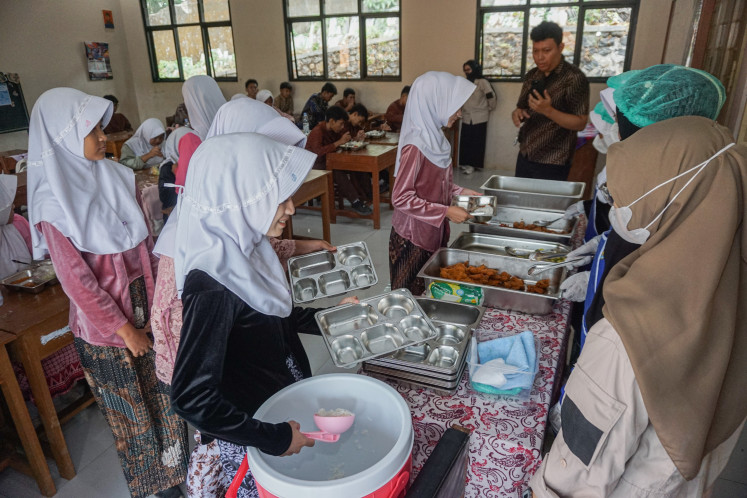
Against this backdrop, a central policy pivot has diverted crucial fiscal lifelines away from regional development toward President Prabowo Subianto’s flagship initiatives. Regional transfers (TKD) have dropped sharply from Rp 881 trillion in 2023 to Rp 849 trillion in 2025, falling further to Rp 697 trillion this year. Much of this funding has been redirected under the banner of "fiscal efficiency" to finance the free nutritious meal program.