The Jakarta Post
Please Update your browser
Your browser is out of date, and may not be compatible with our website. A list of the most popular web browsers can be found below.
Just click on the icons to get to the download page.


Popular Reads
Top Results
No results found. Please check your search term and try again
Can't find what you're looking for?
View all search results
Popular Reads
Top Results
No results found. Please check your search term and try again
Can't find what you're looking for?
View all search resultsNurturing a culture to protect humanity in wartime
Black-and-white laws cannot stop wartime atrocities; true restraint begins only when the principles of humanity are etched into the soldier’s conscience long before the first shot is fired.
Change text size
Gift Premium Articles
to Anyone
Share the best of The Jakarta Post with friends, family, or colleagues. As a subscriber, you can gift 3 to 5 articles each month that anyone can read—no subscription needed!
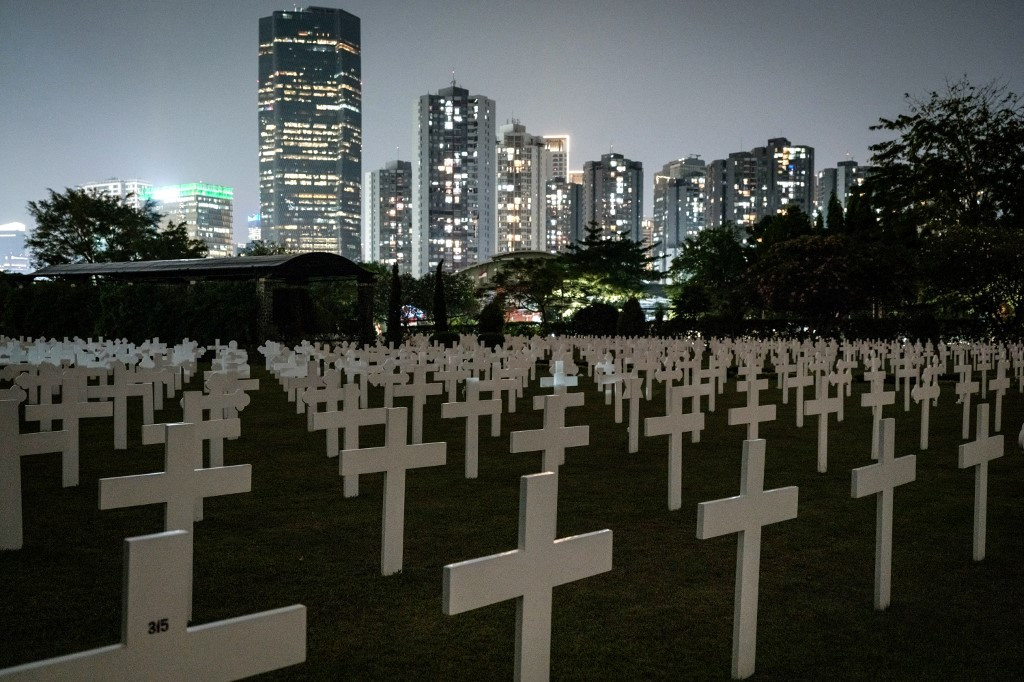 Graves are seen after the commemoration ceremony of the cessation of World War II in Asia at the Menteng Pulo Dutch war cemetery in Jakarta on Aug. 15, 2024. (AFP/Yasuyoshi Chiba)
W
ar brings undeniable cruelty. Can we nurture a genuine commitment to protect humanity even amid armed conflict? This question lies at the core of the laws and customs of war, traditions built over centuries and known today as International Humanitarian Law (IHL).
At its heart, IHL rests on four foundational pillars. The principle of distinction requires armed forces to separate civilians from combatants, making direct attacks against the former strictly prohibited. Military necessity permits legitimate tactical operations only when pursuing a defined military advantage within legal bounds.
Proportionality demands that the anticipated civilian harm never outweighs the direct military value of a strike. Finally, the principle of precaution obligates commanders to exercise constant due diligence before launching an attack, from assessing situational intelligence and issuing warnings when feasible to seeking senior operational clearance.
Starting in the 19th century, these customs crystallized into formal treaties through the Hague and Geneva Conventions. Today, their bedrock remains the four 1949 Geneva Conventions, alongside their 1977 Additional Protocols.
These instruments establish clear legal safeguards for wounded and sick armed forces on land under Convention I, shipwrecked and wounded personnel at sea under Convention II, prisoners of war under Convention III and civilians in conflict zones and occupied territories under Convention IV.
Building a culture that respects human dignity requires more than passing statutes or distributing field manuals. While sound legal frameworks and formal training are vital, black-and-white rules alone rarely guide split-second battlefield choices.

The real test is instilling these principles into individual conscience so soldiers internalize restraint before they act. This requires moving away from rote memorization and toward dynamic, participatory learning grounded in real-world jurisprudence.