The Jakarta Post
Please Update your browser
Your browser is out of date, and may not be compatible with our website. A list of the most popular web browsers can be found below.
Just click on the icons to get to the download page.


Popular Reads
Top Results
No results found. Please check your search term and try again
Can't find what you're looking for?
View all search results
Popular Reads
Top Results
No results found. Please check your search term and try again
Can't find what you're looking for?
View all search resultsEnding Southeast Asia’s never-ending haze cycle
Southeast Asia’s recurring haze is rooted in fires burning in Indonesia, but its regional impact calls for stronger ASEAN cooperation, accountability and prevention.
Change text size
Gift Premium Articles
to Anyone
Share the best of The Jakarta Post with friends, family, or colleagues. As a subscriber, you can gift 3 to 5 articles each month that anyone can read—no subscription needed!
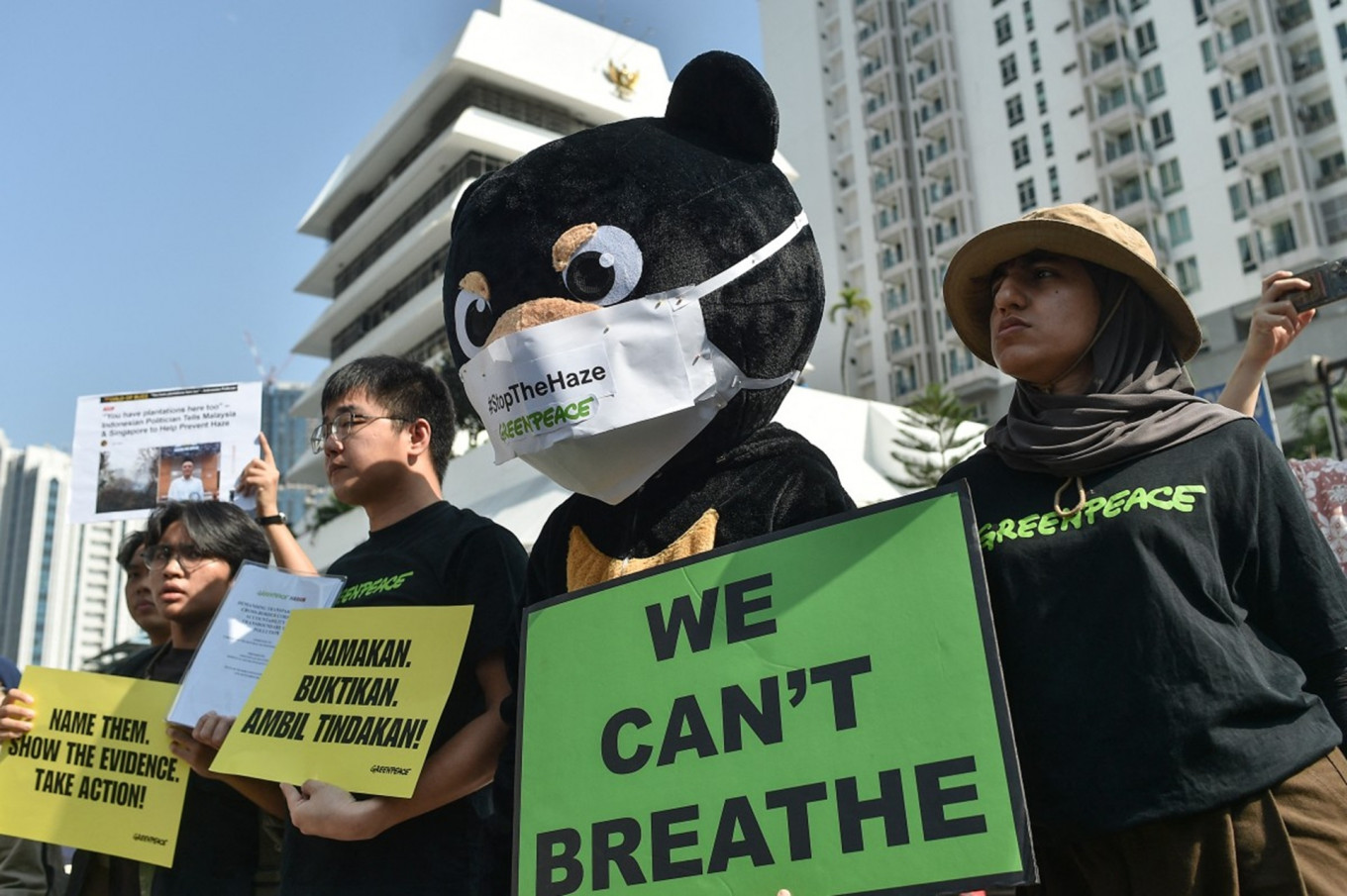 Activists led by Greenpeace Malaysia and Himpunan Advocacy Rakyat Malaysia (HARAM) stage a rally in front of the Indonesian embassy in Kuala Lumpur on Sept. 4, 2026, calling for transparency and corporate accountability over transboundary haze due to wildfires in Indonesia. (AFP/Arif Kartono)
S
outheast Asia has spent decades trying to tackle haze from forest fires. Yet every few years, the region finds itself breathing it again. The transboundary environmental problem has become a recurrent phenomenon in the region.
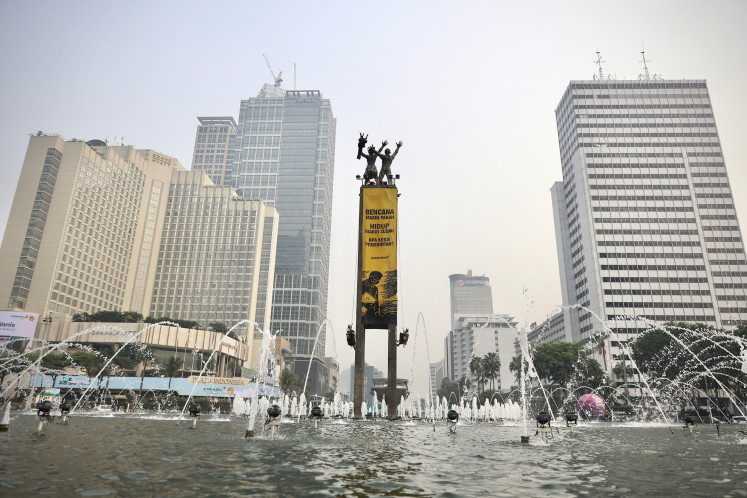
The latest episode is no exception. Forest and peatland fires in Indonesia have sent smoke across parts of Malaysia, Brunei Darussalam and other parts of Southeast Asia. On Aug. 26, the ASEAN Specialised Meteorological Centre raised the regional haze alert to Level 3 as smoke from hot spots in Kalimantan spread across borders.
Indonesia bears the primary responsibility for preventing and fighting fires on its territory. But once the smoke crosses national borders, haze becomes more than a domestic environmental problem. Malaysia and Brunei Darussalam have agreed to take this matter to the ASEAN level.
This issue has now become a test of whether ASEAN can help its members manage problems that no country can contain alone.
Historical records show that smoke from fires in Indonesia has affected neighboring countries since at least the 1970s. The 1997 and 2015 fires were among the region’s most severe.
Scientific research points to a combination of human activity and environmental conditions. Land clearing through burning can ignite fires, while drained and degraded peatlands are particularly vulnerable. Once dry, peat can burn underground and produce thick, persistent smoke that is difficult to extinguish.

Weather can make the situation worse. Prolonged dry conditions, including those associated with El Nino, can dry out vegetation and peatlands, allowing fires to spread more easily. In the current crisis, below-normal rainfall and strong dry season conditions are helping sustain the fires and carry smoke across borders.
This means the haze cannot be solved simply by responding when fires are already burning. Prevention, land management and enforcement matter just as much.
Indonesia is central to the problem because many of the fires generating transboundary smoke occur within its territory, particularly on Sumatra and in Kalimantan. This places the primary responsibility on the Indonesian government to prevent fires, enforce environmental regulations and hold those responsible accountable.
Indonesia already has laws and institutions aimed at preventing forest and peatland fires. Research also shows that the government has strengthened peatland protection and related institutions since 2016. The challenge is implementation.
The recurring fires show how difficult it can be to translate regulations into effective prevention, particularly when land use, economic interests, local practices and extreme weather intersect. Recently, Indonesian authorities have again promised legal action against those responsible for the fires.
The question is not whether Indonesia should act but whether national action alone is enough when the consequences are regional.
ASEAN has recognized this problem for decades. In 1997, member states adopted the Regional Haze Action Plan to strengthen prevention, monitoring and regional coordination. In 2002, they adopted the ASEAN Agreement on Transboundary Haze Pollution (AATHP), creating a regional framework for preventing and responding to transboundary haze.
Indonesia, however, was the last ASEAN member to ratify the agreement, depositing its ratification in 2015. Studies argued that the treaty’s mechanisms remained limited because they reflected "the ASEAN Way”, particularly the principles of sovereignty and noninterference.
This creates a dilemma: The haze is regional, but much of the authority to address its causes remains national. This explains why ASEAN can coordinate information, monitoring and emergency responses but has struggled to make member states fully accountable for recurring transboundary pollution.
ASEAN does not need to become a supranational authority to become more effective.
First, affected countries can use ASEAN channels to demand stronger enforcement from Indonesia. Public scrutiny will also make inaction a major reputational liability.
Second, ASEAN can improve transparency. Regional sharing of hot spot data, fire information and assessments of government responses could make it easier to identify where fires occur and whether commitments are being implemented.
Third, ASEAN can step up practical collaboration, from early warning systems to joint firefighting and peatland management. After all, regional frameworks already spot peat fires as the main driver of haze.
These measures would not replace Indonesia’s responsibility. They would support it.
ASEAN has demonstrated that it can use diplomacy to address regional crises, including tensions between Thailand and Cambodia. Environmental crises deserve similar political attention when their consequences cross borders.
The recurring haze exposes a broader challenge for Southeast Asia: National responsibility and regional consequences do not always fit neatly together. Indonesia must take the lead in stopping fires within its borders. But neighboring countries cannot simply wait for the next crisis, while ASEAN cannot treat another haze episode as business as usual.
The goal should not be to expect ASEAN to extinguish every fire. It should be to make regional cooperation strong enough that preventing those fires becomes harder to ignore.
After decades of recurring haze, Southeast Asia may not need another agreement. It needs to enforce its existing commitments, not just sign new ones.
---
 The writer is a lecturer in international relations at Andalas University. This article is republished under a Creative Common license.