The Jakarta Post
Please Update your browser
Your browser is out of date, and may not be compatible with our website. A list of the most popular web browsers can be found below.
Just click on the icons to get to the download page.


Popular Reads
Top Results
No results found. Please check your search term and try again
Can't find what you're looking for?
View all search results
Popular Reads
Top Results
No results found. Please check your search term and try again
Can't find what you're looking for?
View all search resultsIn a global economic heatwave, beware financial wildfires
Global growth is running hot into the second half of the year, forcing asset managers to find firebreaks while staying invested.
Change text size
Gift Premium Articles
to Anyone
Share the best of The Jakarta Post with friends, family, or colleagues. As a subscriber, you can gift 3 to 5 articles each month that anyone can read—no subscription needed!
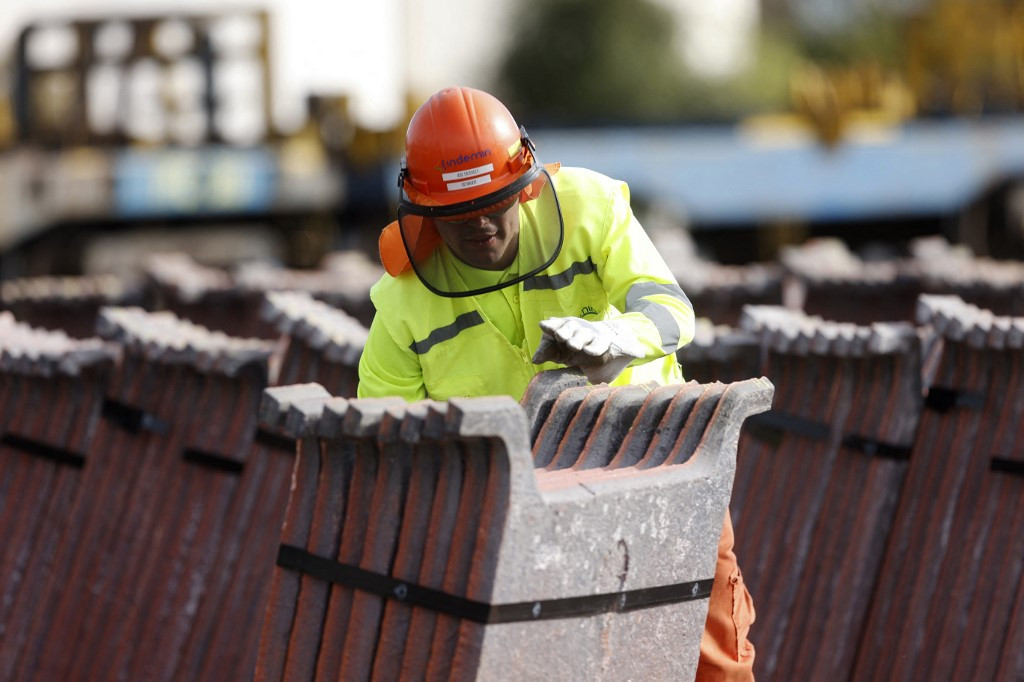 A worker sorts copper production at El Teniente mine, the world's largest underground copper mine in Machali, near Rancagua, Chile, on April 2, 2025. (AFP/Raul Bravo)
E
ven two wars and sky-high energy prices haven't cooled the world economy. Global growth is running hot into the second half of the year, forcing asset managers to find firebreaks while staying invested, and higher interest rates may be the only policy brake left.
In the six months since the Iran war catapulted crude oil 50 percent higher and doubled natural gas prices, there's been a nervous wait to see how the effects would ripple across the world economy. But as the third quarter draws to a close, global activity looks to have picked up steam, if anything, driven by an AI race and corporate investment boom more than any other single factor.
If inflation rates remain agitated and interest rates are pushing higher, it's because of this basic combination of strong economic growth, hot geopolitics and the supply disruptions that come with them.
Just in the past week alone, some big numbers have rolled in. The unexpected surge in United States payrolls in August was one case in point. Eurozone and Japanese gross domestic product for the second quarter were both revised higher, China's annual export and import growth was running at 25-30 percent through last month, and we've just ended a corporate earnings season with one of the fastest aggregate profit expansions on record.
It's no wonder then that copper prices, often seen as a barometer of global industrial activity, are rising again to record highs and have almost doubled in just five years. There are other things going on with the red metal, of course, including US tariff fears and various supply bottlenecks. But it still stands as a reflection of both brisk economic activity and copper demand in the blistering buildout of AI data centers around the planet and higher defense spending.
Measuring global business sentiment comes to the same conclusion.

JPMorgan's aggregated world business surveys across manufacturing and service sectors show the global output index rose in August for a fifth straight month to its highest in more than two years. That is consistent with a 3.1 percent annualized gain in global GDP, above the bank's estimate of global potential at 2.3 percent. Along with firming output, a jump in new orders and future-output components is a positive forward-looking signal, it said.
"Excluding the rebound from recessions, it [the August reading] stands in line with the peaks of mid-expansion upswings over the past two decades."
It may be a dangerous upswing, mainly because of its inflation and debt-market impact, but its strength is not in doubt. To the extent that it's driven by AI investment and defense spending, there's little sign of a slowdown next year. It's also likely the International Monetary Fund will upgrade its world growth estimate for 2026 from the 3.0 percent it penciled in during July. With next year already expected to accelerate to 3.4 percent, its take on 2027 will be closely watched.
What's more, if governments are increasingly leaning on growth to rein in rising debt-to-GDP ratios, none seem minded to tap on the fiscal brakes. That leaves central banks once again as the only policy restraint.
The big investment debate of the moment hinges on how portfolio investors can keep riding this growth and how they should view the parallel rise in long-term borrowing costs to their highest in decades.
For some, this cements the idea that the peculiar period in post-World War Two history was the decade after the 2008 banking crash: a cosseted era of low growth and investment, high savings and subdued inflation that was an aberration, rather than some "new normal" reinforced by ageing demographics.
Deutsche Bank strategist Jim Reid insists rising bond yields will simply refocus investors on the coupon side of the bond proposition rather than the capital gains (or losses) part.
"Bonds have become bonds again," he wrote in an opinion piece in Tuesday's Financial Times, and what we are seeing is just a "continuation of the long normalization from the historic anomaly of the 2010s."
But not everyone thinks the end of the new normal just ushers back in the old one, however much the current period of turbulent geopolitics, supply shocks, growth and investment may replicate the pre-2008 decades of the Cold War, Vietnam, Middle East oil embargoes and financial booms and busts.
David Kelly, chief global strategist at JPMorgan Asset Management, thinks the period we're now in is different from both the past decade and the old normal and calls it the "new, new normal."
"Investors should be careful to recognize what is the same and what has changed," Kelly wrote, pointing to today's similarities with the 2010s in rising inequality, ageing populations and shades of the pre-2008 world in an ebbing dollar.
He also emphasized unique elements of this new phase, given the return of economic nationalism and trade protectionism unprecedented since World War II, as well as the potentially productivity-boosting AI transformation.
But where we certainly don't return to an old normal is the level of government debt accumulated to prevent the 2010s economic funk from becoming a deep depression and again to insulate economies from the pandemic. Kelly thinks this changes the game for investors going forward.
"We can’t expect Treasuries to rally in reaction to an economic or market downturn to the same extent that they did in the old normal," he wrote. "Investors need broader sources of diversification."
Maybe the best way to describe the world right now is to remove the word "normal" altogether.
---
The writer is a Reuters columnist. The views expressed are personal.