The Jakarta Post
Please Update your browser
Your browser is out of date, and may not be compatible with our website. A list of the most popular web browsers can be found below.
Just click on the icons to get to the download page.


Popular Reads
Top Results
No results found. Please check your search term and try again
Can't find what you're looking for?
View all search results
Popular Reads
Top Results
No results found. Please check your search term and try again
Can't find what you're looking for?
View all search resultsAnalysis: Tighter food import controls squeeze producers
Change text size
Gift Premium Articles
to Anyone
Share the best of The Jakarta Post with friends, family, or colleagues. As a subscriber, you can gift 3 to 5 articles each month that anyone can read—no subscription needed!
 Set as preferred source
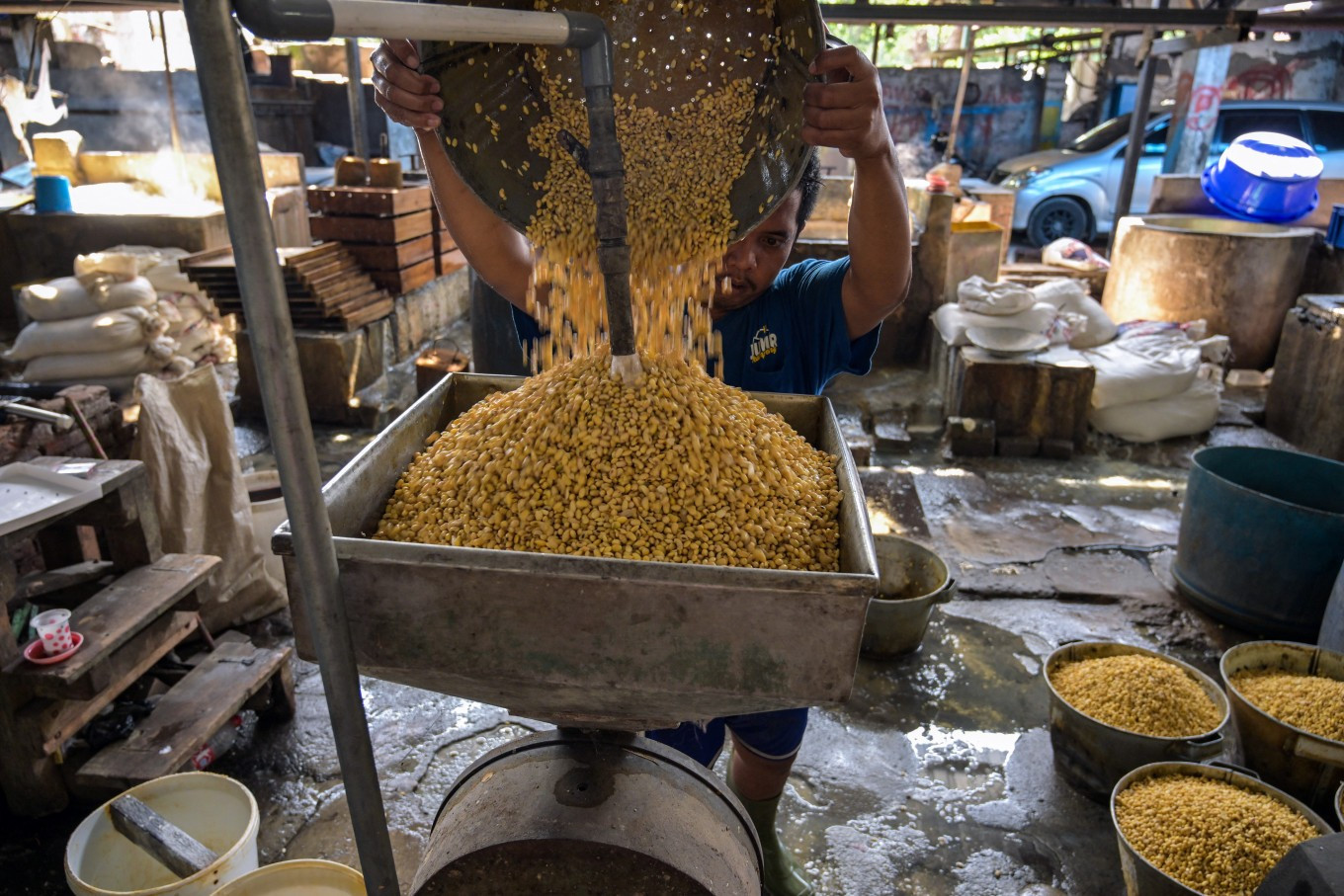 A worker rinses soybeans on Feb. 5, 2026, at a tofu factory in Surabaya, East Java. ( AFP/Juni Kriswanto)
T
he government’s latest changes to the import regime have expanded the range of food and agricultural products subject to tighter import controls, creating bottlenecks that are raising input costs and constraining supply. At the same time, weaker-than-expected demand from the Free Nutritious Meals (MBG) programme has left producers facing pressure from both sides: higher production costs and limited demand for their output.
The changes stem primarily from Permendag No. 11/2026, which expanded the list of agricultural commodities subject to import licensing from seven to 11 categories. The additions include soybean meal, feed wheat, broken rice for feed, mung beans and peanuts, bringing previously less-regulated agricultural inputs under the import approval regime.
Under the revised regime, importers of these commodities can no longer rely solely on the general import licensing process. They must meet additional requirements before their imports can be approved. For commodities subject to a commodity balance, such as sugar and corn, the government first determines import requirements and allocates import volumes. For other controlled commodities, importers must obtain additional technical recommendations from the relevant ministry before an Import Approval can be issued. These additional layers of approval have created bottlenecks and, in turn, supply constraints, particularly when government assessments and inter-ministerial coordination fail to keep pace with businesses’ demand for raw materials.

These bottlenecks can ultimately feed through into higher food prices. Statistics Indonesia (BPS) data for August showed food inflation at 4.22 percent year-on-year, above headline inflation of 3.19 percent. At the same time, food producers are facing pressure from both sides of the supply chain: higher input costs and uncertainty over the prices they can obtain for their output. Producer prices in the agriculture, forestry and fisheries sector rose 3.79 percent year-on-year in the second quarter, while the government has warned that tighter supplies, elevated global commodity prices and worsening drought conditions could put further pressure on production costs and food prices.
The impact is particularly significant for industries that depend heavily on agricultural inputs such as animal feed, where higher costs can quickly squeeze producers’ margins. The inclusion of soybean meal and feed wheat in the import control regime was particularly unexpected given their importance as key feed ingredients and the limited availability of domestic substitutes. The poultry sector is among the industries most exposed to the regulatory shift, having already been undergoing efforts to strengthen domestic production and develop the local supply chain.
The initial push to strengthen the poultry industry was driven in part by expectations that demand for poultry products would rise with the expansion of the MBG programme. However, the programme has so far been unable to absorb additional supply as quickly as expected. This has contributed to a supply surplus and put downward pressure on farm-gate prices, leaving poultry farmers caught between rising feed costs on the input side and weaker-than-expected demand on the output side.

The pressure on farmers reached a critical point last month. In August, thousands of poultry farmers in Central Java, Yogyakarta and South Sulawesi staged protests over falling egg prices and rising feed costs. In Kendal, Central Java, farmers reported that egg prices had fallen to Rp19,000–20,000 (US$1.08–1.14) per kilogram, well below the Rp26,500 level they considered viable. At the same time, the prices of corn and soybean meal, key feed ingredients for laying hens, had risen by around 25 percent. With feed accounting for about 70 percent of laying-hen production costs, farmers said the combination was severely squeezing their margins and pushing some producers to the brink of bankruptcy.