The Jakarta Post
Please Update your browser
Your browser is out of date, and may not be compatible with our website. A list of the most popular web browsers can be found below.
Just click on the icons to get to the download page.


Popular Reads
Top Results
No results found. Please check your search term and try again
Can't find what you're looking for?
View all search results
Popular Reads
Top Results
No results found. Please check your search term and try again
Can't find what you're looking for?
View all search resultsFaulty tool costs fortune
When pedicab drivers are labeled wealthy while a millionaire lawmaker qualifies for state aid, Indonesia’s high-stakes welfare registry proves that confusing data shortcuts with genuine reform costs real lives.
Change text size
Gift Premium Articles
to Anyone
Share the best of The Jakarta Post with friends, family, or colleagues. As a subscriber, you can gift 3 to 5 articles each month that anyone can read—no subscription needed!
 Set as preferred source
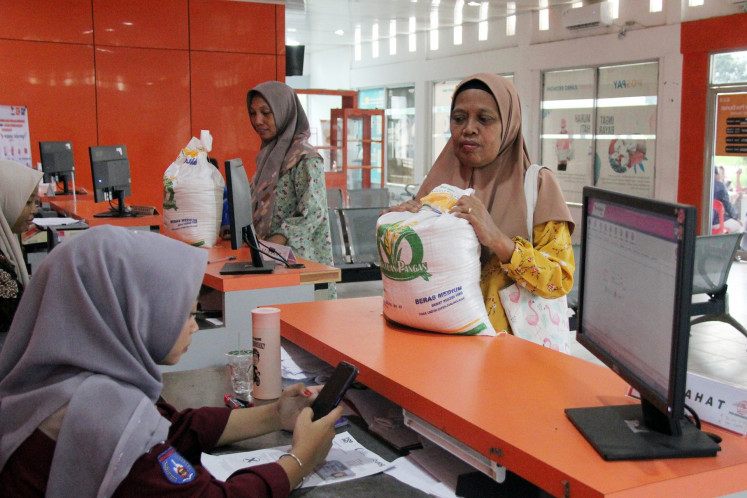
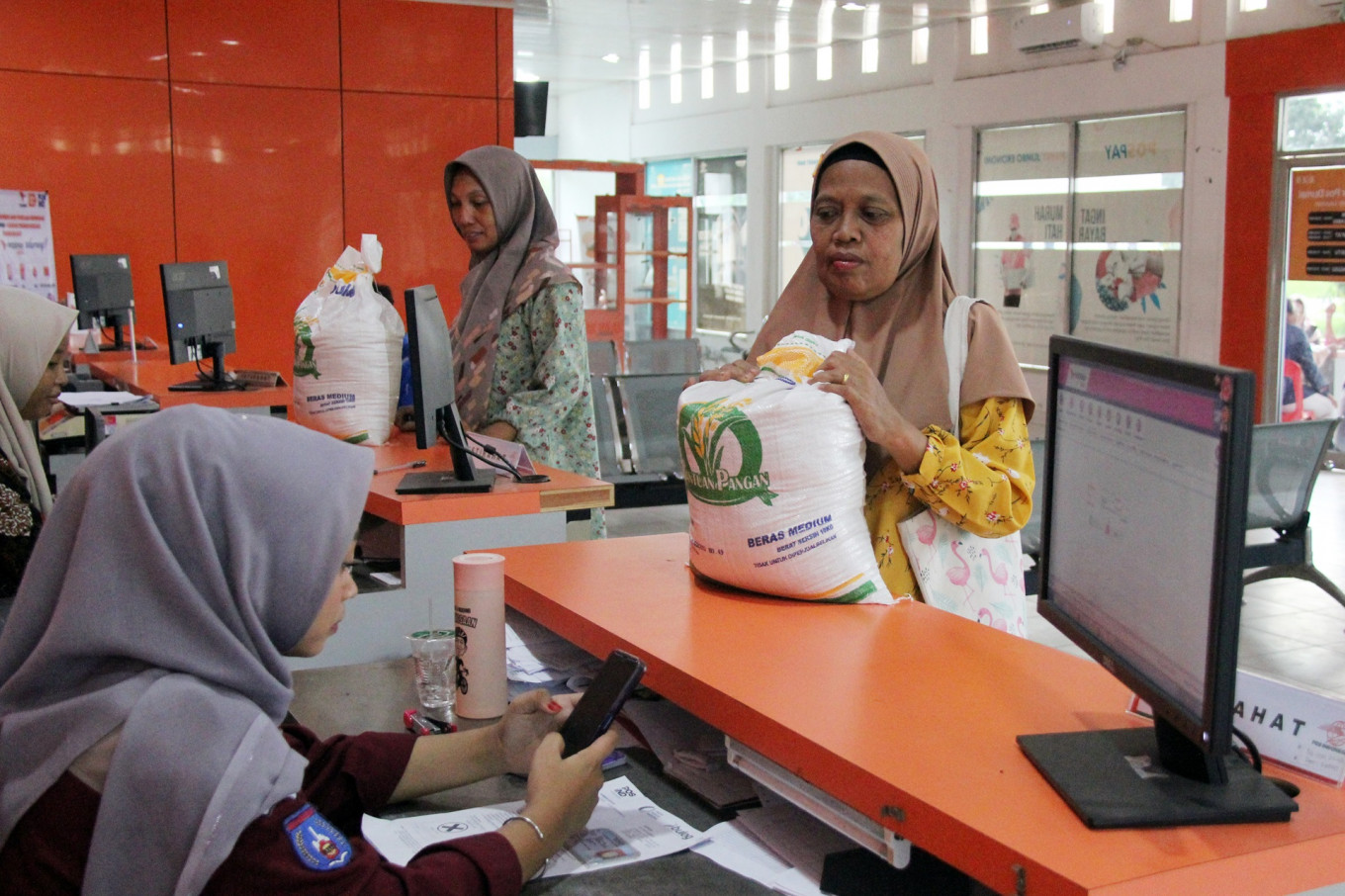 Social aid recipients receive a sack of rice from the government's food reserves distribution program at Dumai Post Office in Riau on Oct. 29, 2024. (Antara/Aswaddy Hamid )
A
ll eyes are now on the National Socioeconomic Single Data (DTSEN) registry. With the government preparing to use it to decide who receives social assistance, who buys subsidized fuel and liquefied petroleum gas (LPG) and who is left out, the public has come to a sudden realization: A registry once dismissed as mere administrative data has become profoundly consequential.
Yet this system, which carries the monumental responsibility of steering the disbursement of Rp 508.2 trillion (US$28.8 billion) in state social protection funds, remains far from perfect, if not flawed.
In recent weeks, glaring discrepancies have come to light. Pedicab drivers have found themselves arbitrarily assigned to deciles 9 and 10, brackets theoretically reserved for the country’s wealthiest elite. Conversely, a sitting member of the House of Representatives with more than Rp 16 billion in declared personal assets was categorized into decile 4, legally entitling her to state-funded social welfare benefits.
Such distortions reflect a chronic institutional malaise. For decades, Indonesia has struggled to establish an accurate, fair and reliable mechanism for targeting its vast welfare expenditures.
The consequences of these prolonged systemic failures are staggering. More than a third of households in the country’s highest expenditure bracket continue to purchase subsidized 3-kilogram cooking gas intended for the poor, while a massive swath of the most destitute families received zero social assistance throughout 2025.
Thus, the move toward a single data source such as DTSEN deserves support, but it must be accompanied by efforts to reduce significant misclassification.

Statistics Indonesia (BPS) survey data are useful for obtaining aggregate data at the regional, provincial or national level. However, they lack the ability to accurately capture conditions at the individual level.