The Jakarta Post
Please Update your browser
Your browser is out of date, and may not be compatible with our website. A list of the most popular web browsers can be found below.
Just click on the icons to get to the download page.


Popular Reads
Top Results
No results found. Please check your search term and try again
Can't find what you're looking for?
View all search results
Popular Reads
Top Results
No results found. Please check your search term and try again
Can't find what you're looking for?
View all search resultsWhen violence falls between the cracks
As youth violence shifts from organized terrorist dogma to decentralized digital subcultures, Southeast Asia must confront a new reality: how do you stop an impending attack when there is no ideology to deradicalize and no network to map?
Change text size
Gift Premium Articles
to Anyone
Share the best of The Jakarta Post with friends, family, or colleagues. As a subscriber, you can gift 3 to 5 articles each month that anyone can read—no subscription needed!
 Set as preferred source
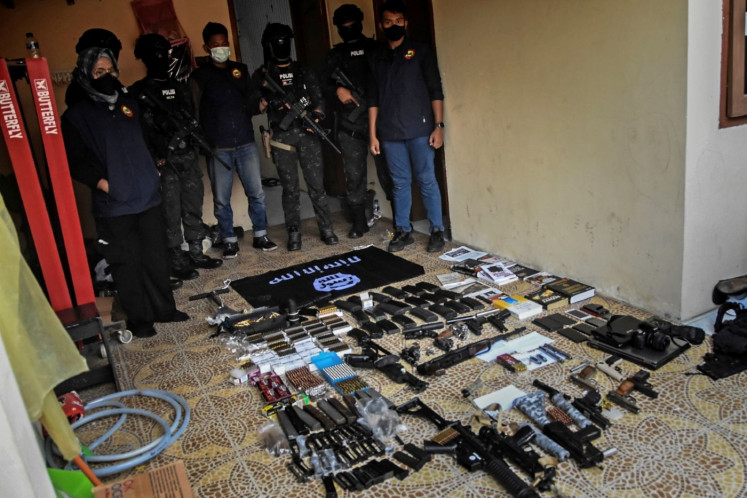
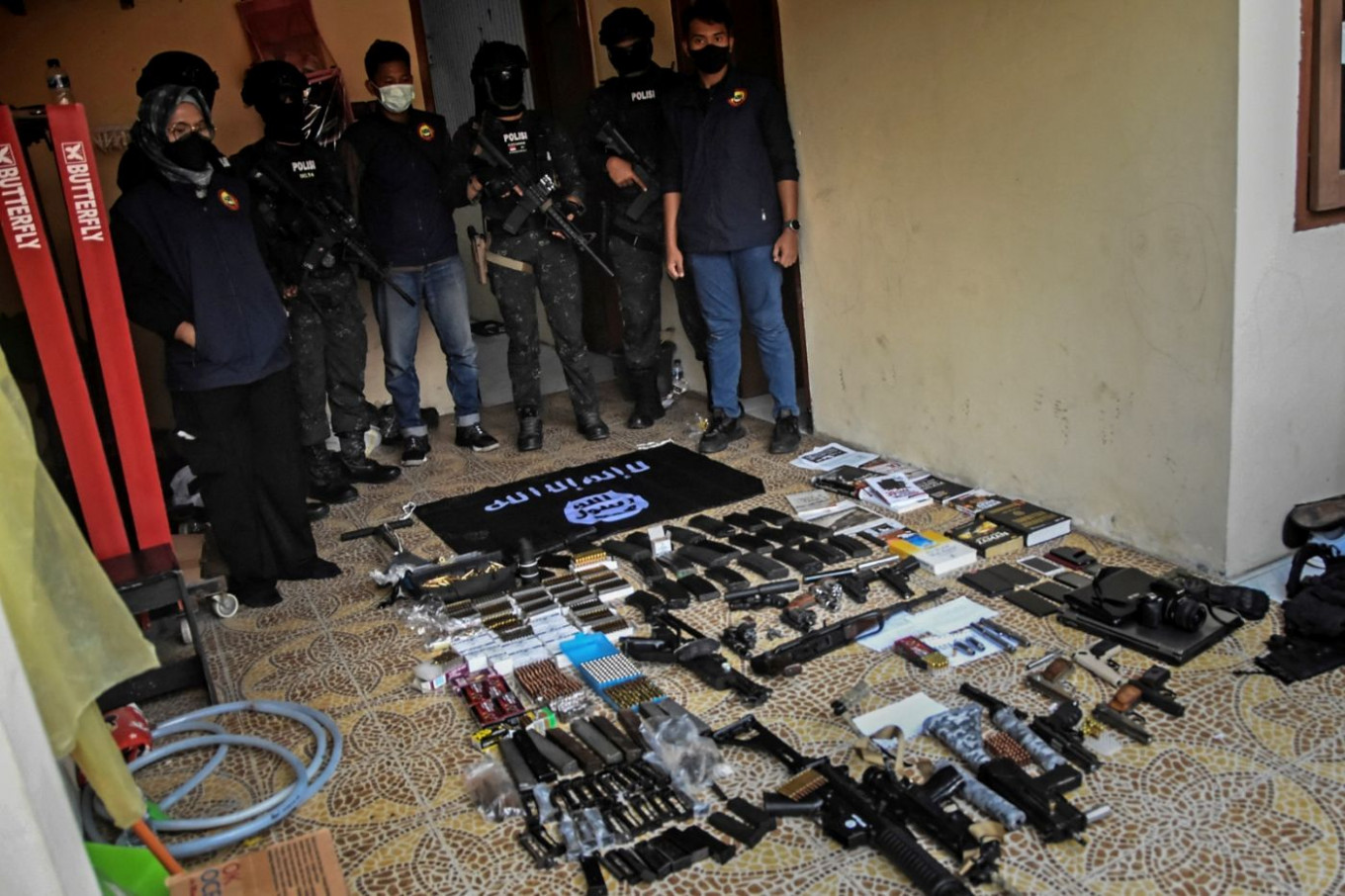 The raid: Personnel from the National Police’s counterterrorism squad Densus 88 show seized firearms and other items on Aug. 14, 2023, following a raid on the house of an alleged sympathizer of the Islamic State movement in Bekasi, West Java. (AFP/Rezas)
T
he threat facing Southeast Asia today is no longer confined to violent extremism driven by a coherent ideology. Increasingly, violence originating outside conventional extremist frameworks can escalate into a national security threat. Incidents over the past two years indicate that pathways to violence are fundamentally shifting.
In November last year, a student at SMAN 72 state senior high school in Jakarta - inspired by the True Crime Community (TCC), an online subculture that normalizes mass-casualty violence - detonated an explosive device on school grounds. By January of this year, the National Police’s Densus 88 counterterrorism unit had identified 70 minors aged 11 to 18 across 19 provinces who were actively engaged with TCC networks online.
That same month, a stabbing in Bandar Utama, Selangor, Malaysia, involved a 14-year-old linked to the same ecosystem. In March 2026, Philippine police thwarted a planned mass-casualty attack in Calamba, Laguna, arresting seven 15-year-old boys connected to the TCC. Authorities recovered paraphernalia associated with both the subculture and broader Nonviolent Extremism/Nonideological Violent Extremism (NVE) networks.
These cases spotlight the rising influence of digital violent subcultures and expose the limits of traditional counterterrorism frameworks. Children and adolescents are increasingly exposed to online spaces, violent content and narratives that defy established categories of political or religious extremism.
Consuming violent media, following true crime forums or playing violent video games does not inherently signal extremist intent, nor does an interest in historical attackers or dark memes provide sufficient grounds for security intervention.
However, these behaviors become dangerous when coupled with other risk factors: an identification with past perpetrators, explicit threats, a desire for notoriety, the normalization of violence, access to weapons and a concrete intent to strike.

This ambiguity presents a profound dilemma. Intervening prematurely risks criminalizing youth behavior, personal vulnerability and free expression. Intervening too late means lives are lost before the state acts.