The Jakarta Post
Please Update your browser
Your browser is out of date, and may not be compatible with our website. A list of the most popular web browsers can be found below.
Just click on the icons to get to the download page.


Popular Reads
Top Results
No results found. Please check your search term and try again
Can't find what you're looking for?
View all search results
Popular Reads
Top Results
No results found. Please check your search term and try again
Can't find what you're looking for?
View all search resultsWhy Russia is deepening ties across the Global South
The Ukraine war certainly featured in conversations. Tellingly, however, Putin steered many talks with leaders towards fuel, trade and transit.
Change text size
Gift Premium Articles
to Anyone
Share the best of The Jakarta Post with friends, family, or colleagues. As a subscriber, you can gift 3 to 5 articles each month that anyone can read—no subscription needed!
 Set as preferred source
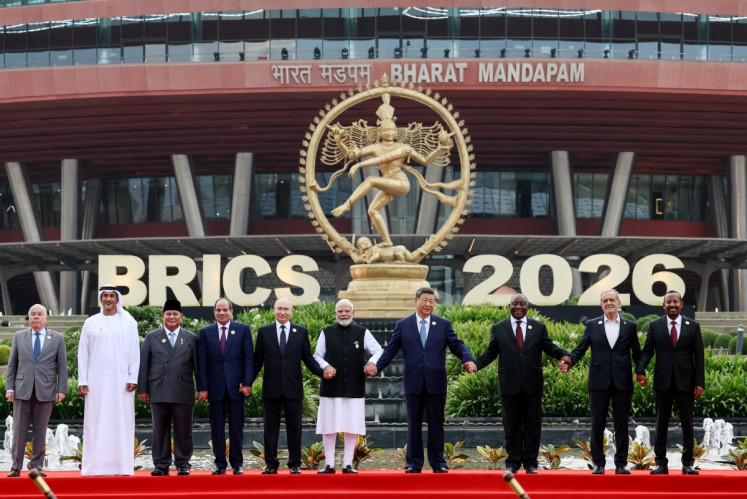
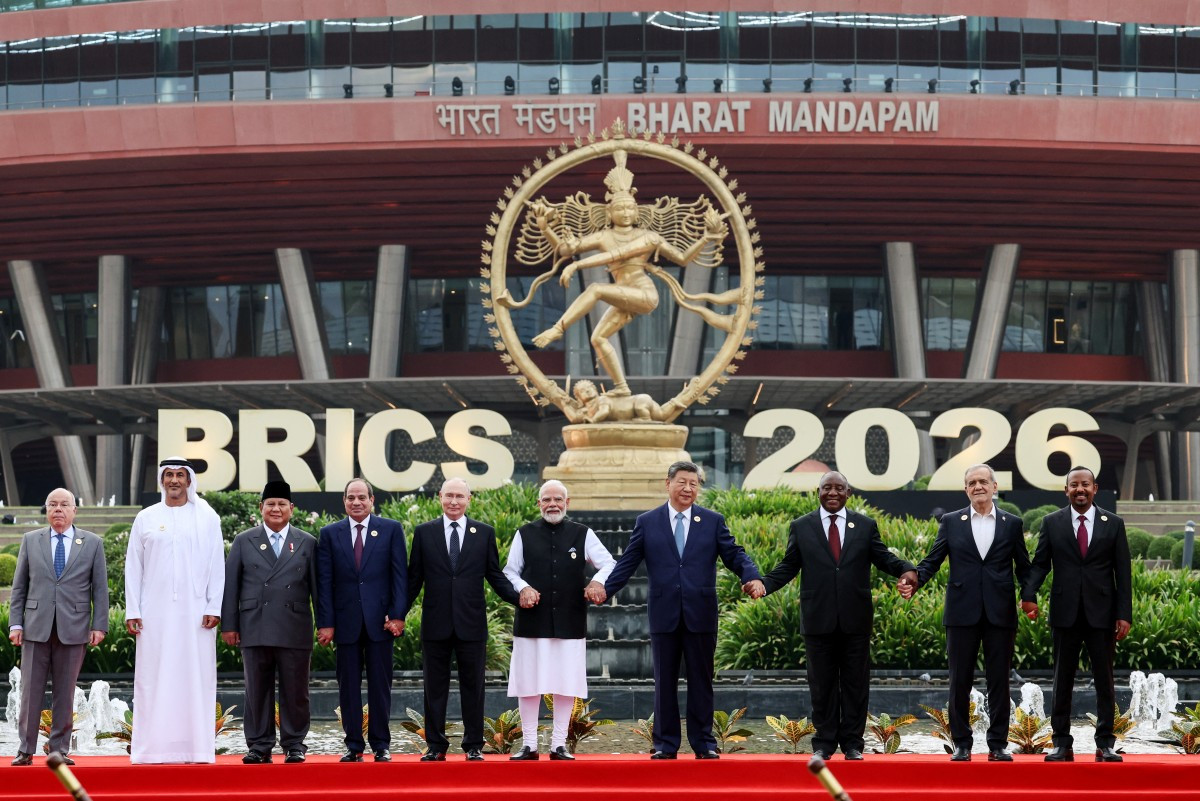 Brazil's Foreign Minister Mauro Vieira (from left), UAE's Supreme Council for National Security Secretary-General Ali Mohamed Hammad Al Shamsi, President Prabowo Subianto, Egypt's President Abdel Fattah al-Sisi, Russia's President Vladimir Putin, India's Prime Minister Narendra Modi, China's President Xi Jinping, South Africa's President Cyril Ramaphosa, Iran's President Masoud Pezeshkian and Ethiopia's Prime Minister Abiy Ahmed pose for a family photo during the 18th BRICS Summit in New Delhi. (AFP/Alexander Kazakov)
O
ver the past two weeks, Russia’s President Vladimir Putin staged a major diplomatic blitz. Across three events in Bishkek, Vladivostok in Russia’s Far East and New Delhi, as well as a state visit by Vietnam’s leader, he met with some 18 heads of state.
Among them were the leaders of heavyweights of the Global South such as China, India, Indonesia, Iran, Malaysia and Turkey.
The Ukraine war certainly featured in these conversations. Russia has recently ramped up its attacks on Ukraine, further fueling some fears in the West that Ukraine could end up losing the war.
Tellingly, however, the main thrust of discussions led by the Russian president had a different focus: fuel, trade and transit.
Here is why Russia is deepening ties with many partners in the Global South, and what these meetings tell us about the impacts of Western efforts to isolate Putin.
Fuel and energy security is becoming a mutual concern for both Moscow and its partners in the Global South. Ukraine’s deliberate offensive campaign targeting Russia’s oil refining capacity has resulted in noticeable fuel shortages in the country.

It has forced the Russian government to import refined fuel from countries it has traditionally exported to, such as Belarus, Turkey and India.
At the same time, the Kremlin continues to push for the expansion of its energy exports. This includes finalizing the contract to build the Power of Siberia 2 pipeline, which intends to deliver 50 billion cubic meters of natural gas annually from Russia to China via Mongolia.
Last week, Russia also signed a deal to establish a new strategic oil reserves hub in Vietnam.
Russia is also expanding cooperation on nuclear power, which was part of the discussion agenda with Turkish President Recep Tayyip Erdogan, Vietnam’s President To Lam and Indian Prime Minister Narendra Modi.
The ongoing sanctions war between Russia and the West has made its economic and trade relations with the Global South pivotal for the country’s survival and future development.
Two friendly interstate bodies, in which Russia plays core roles, are becoming especially important. The first is BRICS, a group of 11 economies namely Brazil, China, Egypt, Ethiopia, India, Indonesia, Iran, Russia, Saudi Arabia, South Africa and the United Arab Emirates.
The BRICS economies now account for about 40 percent of global GDP. Last year, mutual trade turnover among BRICS member states exceeded US$1 trillion for the first time.
The second is the Shanghai Cooperation Organisation (SCO). This is a political and security bloc spanning countries in Europe, Asia and the Indo-Pacific. According to Putin, Russia’s trade turnover with the SCO exceeded $400 billion in 2025.
Overall, Asia accounted for 73.4 percent of Russia’s trade turnover last year. It is no surprise that Moscow’s trade links with Asia featured in almost every conversation in Bishkek, Vladivostok and New Delhi.
Despite its friendly ties with Iran, Russia and its clients are not immune from the ongoing disruption to transport and trade routes through the Middle East. To mitigate these risks, Russia is actively lobbying two relatively new transcontinental transit networks.
The first is the 7,200-kilometer combined rail-road-maritime International North-South Transport Corridor. This route connects Russia’s Baltic Sea ports with Mumbai in India, via the Caspian Sea and Iran. Russia reportedly discussed this route with the Indian and Iranian delegations he met with this month.
The second is the 5,600-km maritime Northern Sea Route, which connects Asia’s ice-free ports with Russia’s Arctic ports as part of the northeast maritime passage across the Arctic Ocean.
In August, Beijing launched commercial operations along this route for the first time.
Russia walked away from this month’s diplomatic blitz with some clear wins. In addition to securing $7.7 billion worth of investments in Vladivostok, along with some lucrative deals with Vietnam, Putin could also claim some political success.
First, although challenging at times, Putin’s interactions with his counterparts showcased how Moscow’s relationship with major non-Western international players remains a geopolitical constant, even in the fifth year of the Ukraine war.
For leaders of emerging centers of global influence, whether India’s Modi, Indonesia’s President Prabowo Subianto or Vietnam’s Lam, interacting with Russia forms part of their countries’ foreign policy approach based on the notion of “strategic autonomy”.
This sends a powerful signal to the United States and its allies, amid the latest round of high-level consultations involving the CIA and US Treasury chiefs and their Russian counterparts.
Earlier this month, US President Donald Trump sent his own personal envoys to Moscow and made a follow-up phone call to Putin.
Second, Russia and its core partners in Asia jointly signaled they will continue to maintain strategic partnership links. This includes the question of importing Russia’s fossil fuels, nuclear power and other goods and exporting processed fuel back to Russia.
Fuel security is particularly relevant to the Russian authorities’ attempts to stabilize the domestic situation. The Kremlin is under pressure to mitigate the aftershock of the escalating war with Ukraine amid upcoming parliamentary elections.
Still, many in the Global South remain concerned about the growing impact of what seems to be becoming a forever war in and over Ukraine.
The latest round of tit-for-tat attacks against merchant shipping in the Black Sea triggered fears of grain and wheat shortages.
In mid-November, China will host the 2026 Asia-Pacific Economic Cooperation (APEC) summit. This is tipped to be a possible venue for the first trilateral meeting of Putin, Xi and Trump.
Here, Moscow might feel increasing pressure to settle the war by political means from its partners. These countries do not want to feel the effects of the sanctions war between the West and Russia, let alone be dragged into it.
---
The writer is a senior research fellow at the School of Arts and Humanities, Edith Cowan University. This article is republished under a Creative Commons license.