The Jakarta Post
Please Update your browser
Your browser is out of date, and may not be compatible with our website. A list of the most popular web browsers can be found below.
Just click on the icons to get to the download page.


Popular Reads
Top Results
No results found. Please check your search term and try again
Can't find what you're looking for?
View all search results
Popular Reads
Top Results
No results found. Please check your search term and try again
Can't find what you're looking for?
View all search resultsArmed impunity
When soldiers target civilians and keep their badges, the military court doesn't just shield its own, it suffocates our democracy.
Change text size
Gift Premium Articles
to Anyone
Share the best of The Jakarta Post with friends, family, or colleagues. As a subscriber, you can gift 3 to 5 articles each month that anyone can read—no subscription needed!
 Set as preferred source
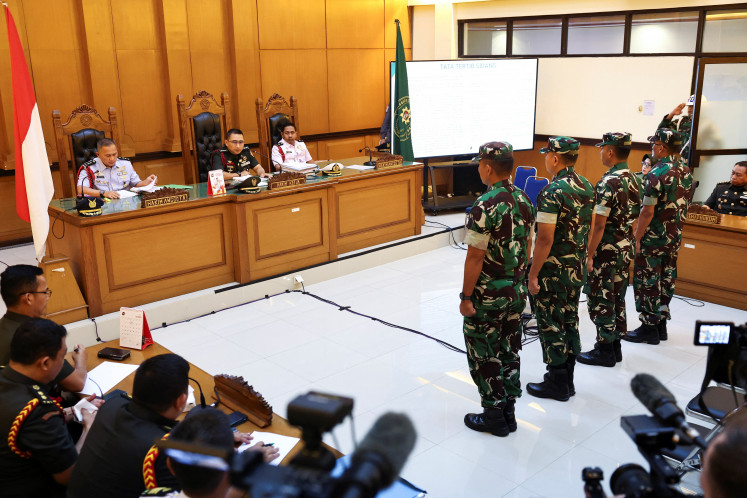
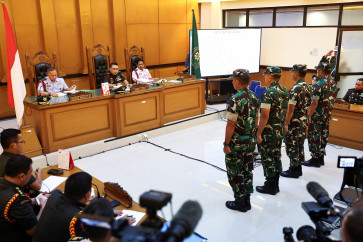
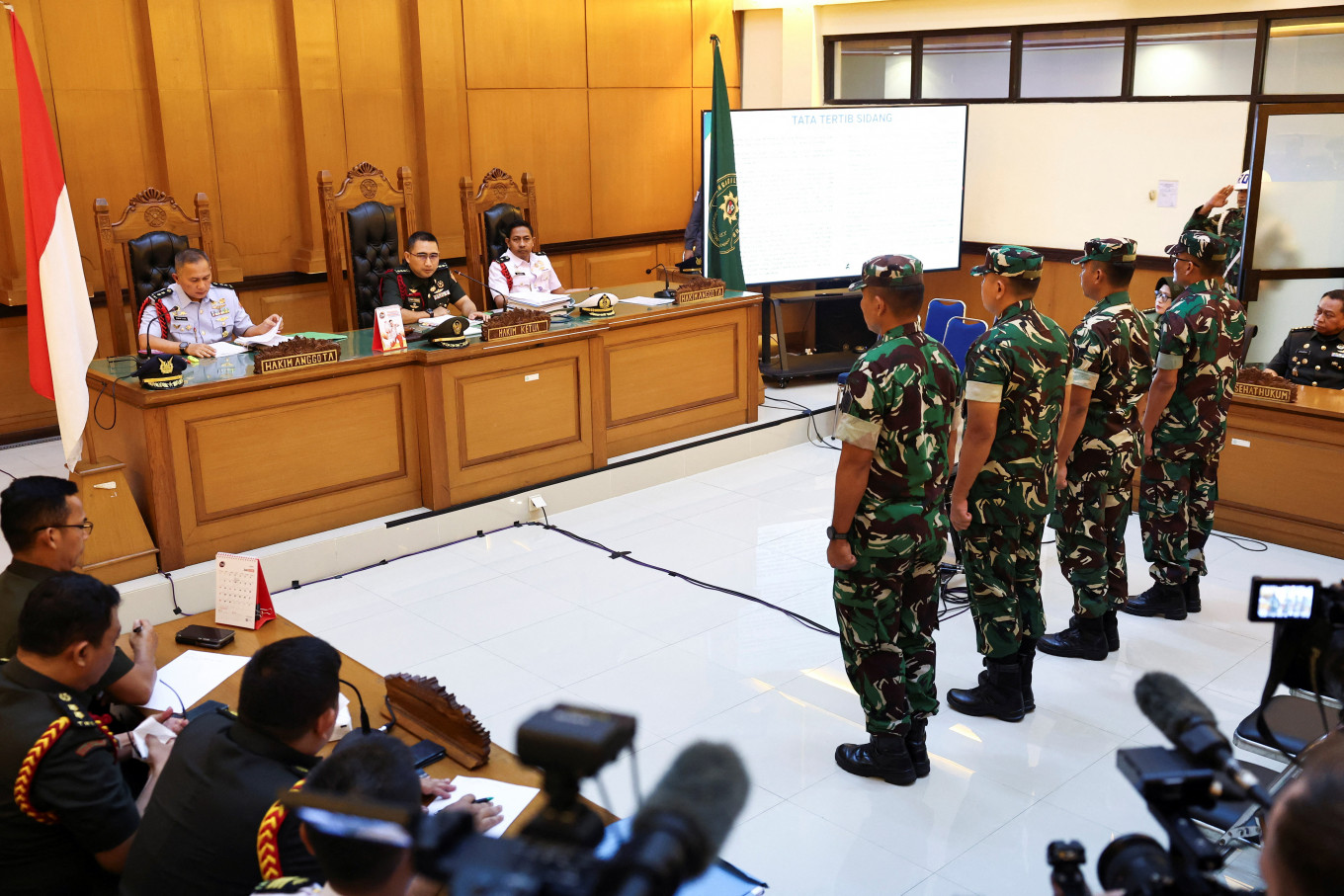 Military personnel Sami Lakka, Nandala Dwi Prasetya, Budhi Hariyanto Widhi Cahyono and Edi Sudarko charged over an acid attack on human rights activist Andrie Yunus, a deputy coordinator with the rights group Commission for Missing Persons and Victims of Violence (Kontras), known for campaigning against the expanding public role of the armed forces, stand at the courtroom for their verdicts at the Jakarta Military Court on June 10, 2026. (Reuters/Willy Kurniawan)
S
ix months have passed since human rights activist Andrie Yunus was ambushed in an acid attack that charred a fifth of his body. Today, after three eye surgeries and four plastic surgery procedures and with the real threat of permanent blindness still hanging over him, public outrage has quietly drifted into collective amnesia.
But what happened next in the courtroom is far harder to forget, or at least, it should be.
When the Jakarta High Military Court stepped in at the end of August to slash the prison sentences of the convicted intelligence officers and overturned the dishonorable discharges of two key perpetrators, it laid bare a harsh truth that the country’s military justice system isn't broken by accident.
It is hard to escape the conclusion that the military tribunal is working exactly as designed as a protective shield for its own ranks, operating at the direct expense of our civilian democracy.
Those watching the military courts over the years would notice this impunity playbook. We saw it back during the Reform era with the notorious Tim Mawar (Rose Team) abductions, where initial dismissals were wiped clean on appeal for almost every officer involved. Some of them have even now earned prominent posts in the government.
We witnessed it again recently when naval personnel convicted of murder of a car rental owner had their prison time trimmed and dismissals thrown out. Or we may remember a young officer found guilty of drug abuse, but eventually escaped dishonorable discharge upon appeal and quietly won promotions after serving his sentence.

Shielded by legal frameworks left over from the New Order, these tribunals mostly operate in shadowy, closed-door hearings. They treat the catastrophic trauma of victims like Andrie as an afterthought, prioritizing institutional preservation over substantive truth.