The Jakarta Post
Please Update your browser
Your browser is out of date, and may not be compatible with our website. A list of the most popular web browsers can be found below.
Just click on the icons to get to the download page.


Popular Reads
Top Results
No results found. Please check your search term and try again
Can't find what you're looking for?
View all search results
Popular Reads
Top Results
No results found. Please check your search term and try again
Can't find what you're looking for?
View all search resultsIndonesia and China: Toward a more honest conversation
Closer relations present a moment to revisit whether the partnership has mutually benefited our peoples and contributed to the greater global public good amid such an unpredictable international environment.
Change text size
Gift Premium Articles
to Anyone
Share the best of The Jakarta Post with friends, family, or colleagues. As a subscriber, you can gift 3 to 5 articles each month that anyone can read—no subscription needed!
 Set as preferred source
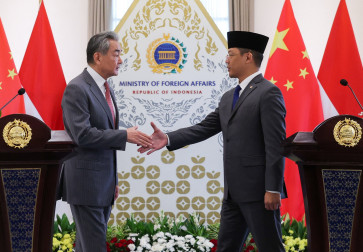
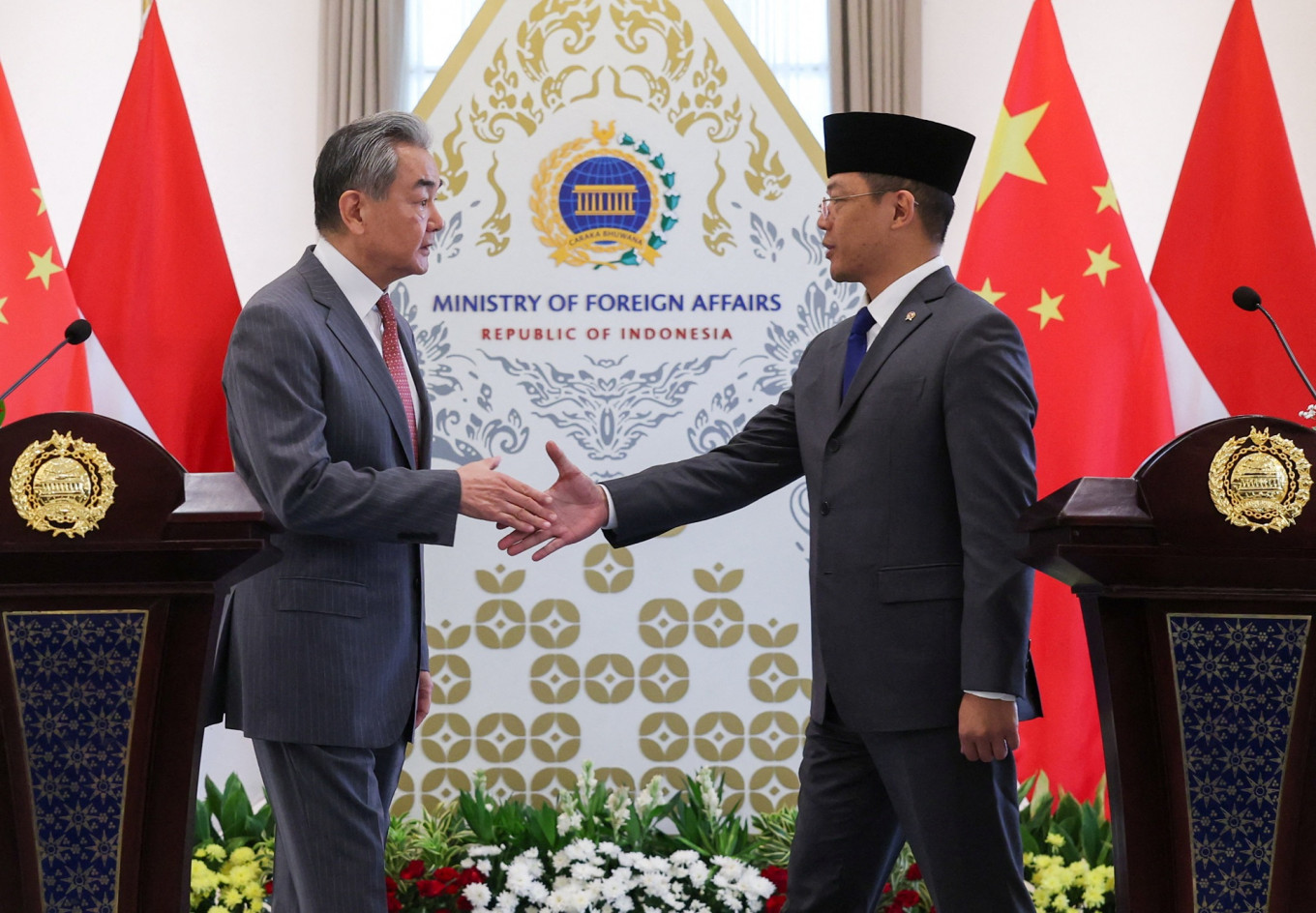 Foreign Minister Sugiono (right) shakes hands with Chinese Foreign Minister Wang Yi as they attend a press conference after their meeting on Aug. 21 at the Foreign Ministry office in Jakarta. (Reuters/Edgar Su)
O
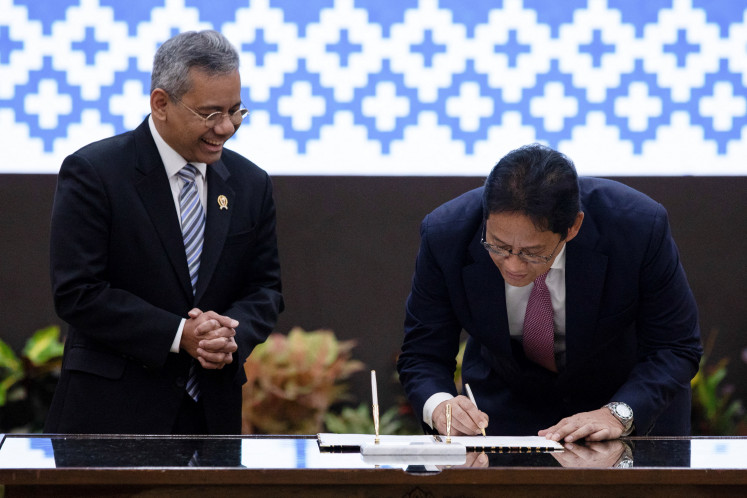
n Aug. 21, the Comprehensive Strategic Dialogue (CSD) between Foreign Minister Sugiono and his Chinese counterpart Wang Yi was held in Jakarta. The CSD serves as a ministerial-level bilateral mechanism, which seeks to guide progress on the existing agreements between the two countries.
Both sides expect to enhance cooperation across five major pillars, namely political, economic, maritime, security and people to people and cultural exchanges, and cover various sectors, such as trade, maritime security, energy and critical minerals. As a follow-up, a drafting process for the Plan of Action 2027-2031 has also been started.
While the CSD marks the elevation of Indonesia-China bilateral relations, it complements existing high-level mechanisms, such as the 2+2 Ministerial Meeting of a Joint Foreign and Defense Minister. The first 2+2 Meeting started on April 21, 2025, where the second iteration was held in conjunction with the CSD. In addition to this, since the beginning of President Prabowo Subianto’s administration, Indonesia has joined BRICS and the World Artificial Intelligence Cooperation Organization (WAICO) where China is one of founding countries.
The closer relations between Indonesia and China present an opportunity to revisit whether the partnership has mutually benefited our peoples and contributed to the greater global public good amid such an unpredictable international environment.
The continuing Russia-Ukraine crisis and the war in the Middle East have prompted further questions as to not only how to make the respective countries resilient against their impacts, but also what kind of roles Indonesia and China could play to de-escalate tensions and thus reduce the impacts.
Indonesia and China may not have a common answer or a similar strategic outlook on this question of changes in the international order. Indonesia views the question through a long-standing commitment to multilateralism anchored in the spirit of the 1955 Asian African Conference, UNCLOS 1982, ASEAN centrality and a bebas aktif (free and active) foreign policy that seeks to maintain constructive relations with all sides. For China, the consideration is likely different, as it needs to take into account expectations of greater responsibility, wisdom and restraint that many have placed upon it.

In the regional context, while there may be new ideas, including the Asian Security Model, none must supplant the ASEAN framework and the ASEAN-led regional security architecture, from which both Indonesia and China have long benefited. A stronger bilateral Indonesia-China relation should contribute further to the maintenance of regional peace and stability, especially to shield the region from the negative impacts of global conflicts, without compromising the commitment to an inclusive and open regional order.