The Jakarta Post
Please Update your browser
Your browser is out of date, and may not be compatible with our website. A list of the most popular web browsers can be found below.
Just click on the icons to get to the download page.


Popular Reads
Top Results
No results found. Please check your search term and try again
Can't find what you're looking for?
View all search results
Popular Reads
Top Results
No results found. Please check your search term and try again
Can't find what you're looking for?
View all search resultsCross-border crises test Indonesia’s regional credibility
When environmental crises cross borders, government communication becomes crucial to managing their impacts and protecting Indonesia’s international reputation.
Change text size
Gift Premium Articles
to Anyone
Share the best of The Jakarta Post with friends, family, or colleagues. As a subscriber, you can gift 3 to 5 articles each month that anyone can read—no subscription needed!
 Set as preferred source
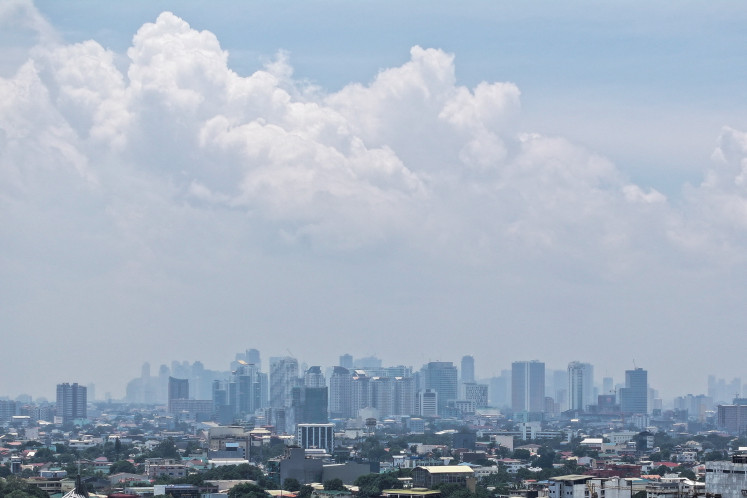
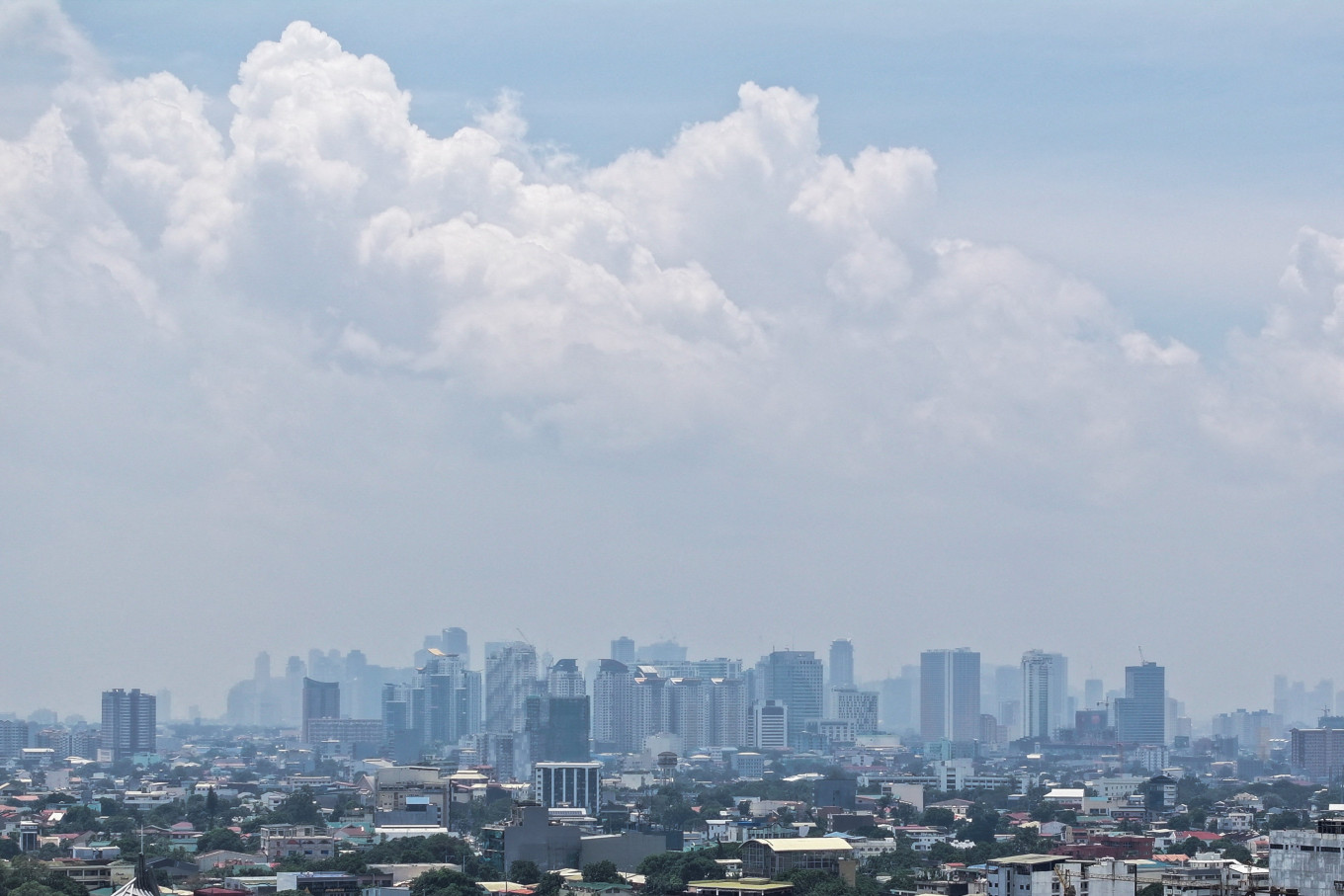 A thick haze shrouds Manila on Sept. 1 in smoke from fires in Kalimantan in this photo taken in Quezon City, the Philippines. (Reuters/Adrian Portugal)
I
n early September, the eruption of Mount Anak Krakatau sent volcanic ash up 15,000 meters and produced rumbling heard 700 kilometers away. Eight airports suspended operations, thousands of flights were disrupted, and more than 270,000 passengers were stranded.
At almost the same time, smoke from forest fires in Kalimantan drifted across national borders.
In Sarawak, Malaysia, deteriorating air quality was associated with a 259 percent rise in asthma cases, while Manila reportedly recorded pollution levels more than four times the World Health Organization’s safe limit.
These cases highlight a broader challenge for Indonesia: when a domestic crisis becomes an international concern, its impact is not limited to physical damage. They can also affect diplomatic relations, regional trust and perceptions of Indonesia as a responsible actor.
Domestically, volcanic ash caused eye irritation and forced schools into distance learning. Internationally, a volcanic eruption can disrupt regional aviation, tourism and travel, requiring rapid coordination and information-sharing with neighboring countries.
Transboundary haze creates a different kind of friction. Smoke originating from fires in Indonesia crosses national borders and affects populations in neighboring countries, while some of the affected concessions are owned by companies linked to Singapore, Japan and Malaysia. This makes the haze not only an environmental issue, but also a question of cross-border corporate accountability and diplomacy.

Indonesia is highly exposed to climate hazards and has experienced a rise in wildfires in recent years. Taken together, these recurring environmental crises may reinforce perceptions of Indonesia and its regional neighbors whose companies operate concessions in Indonesia as sources of regional environmental risk.
For a country seeking to play a larger role in regional and global affairs, this can become a question of credibility: can Indonesia demonstrate that it is capable of managing risks whose consequences extend beyond its own territory?
This question is particularly relevant in ASEAN, where the ASEAN Disaster Risk Communication Framework emphasizes timely, accurate and trustworthy information-sharing among national agencies, ASEAN centers, regional entities and international partners. Can Indonesia also demonstrate leadership in disaster communication in the region?
Ingrid d’Hooghe, a Senior Research Associate and former Head of the Clingendael China Centre, argues that when a domestic crisis becomes an international concern, governments must communicate with audiences at home and abroad through three kinds of information: physical coping, psychological coping and reputational repair.
Physical coping information is guidance to reduce risks, such as air-quality updates, information about affected areas, health risks and protective measures during forest fires or information on volcanic ash, gases, visibility and restricted areas during an eruption.
Psychological coping information helps reduce fear and uncertainty. For example, Indonesia’s National Disaster Mitigation Agency (BNPB) and its meteorological agency BMKG stated that the Anak Krakatau eruption carried no tsunami risk. Such communication was particularly important for communities who remember the 2018 Sunda Strait tsunami, triggered by a collapse of the same volcano, which killed more than 400 people.
Both of these first two layers have an international dimension that is easy to overlook.
Consistent, timely information lets neighboring governments assess risk and coordinate their own responses. Silence, contradiction or delay does the opposite: it forces other countries to make decisions on incomplete information, and they remember having had to.
The third layer, reputational repair, presents a different challenge, because reputational challenge is not the same for every disaster. Reputational repair refers to strategic information and communication aimed at restoring a country’s damaged image, particularly when a crisis involves imputable acts, a lack of prevention or inadequate handling that leaves the country held responsible and under attack.
The Anak Krakatau eruption can be understood as a no-fault crisis: Indonesia did not cause the volcanic eruption. Its reputation is therefore shaped largely by how effectively the government responds, communicates risks and protects affected communities.
Forest fires are different because they are mostly caused by human activity, negligence and inadequate legal enforcement.
In such cases, simply attributing the fires to dry weather or the Super El Niño can still land badly abroad. To an audience in Sarawak or Manila breathing the smoke, a climate explanation can be read as an alibi.
Words alone cannot repair a reputation when audiences are waiting for corrective action: enforcing environmental laws, investigating those responsible, strengthening fire prevention and addressing the conditions that allow fires to recur.
The distinction matters diplomatically. A natural disaster tests Indonesia’s capacity to respond to an unavoidable hazard, while a recurring fire crisis can also test the willingness of Indonesia and its neighbors alike to communicate openly about shared responsibility for risks that cross borders.
For Indonesia, disaster communication is not only a public information exercise. It is also an exercise in public diplomacy.
When crises cross borders, the government needs rapid, transparent and consistent communication. But communication cannot substitute action.
For natural hazards, that means demonstrating preparedness, competence and empathy. For environmental crises involving human responsibility, it also means accountability and prevention.
Ultimately, Indonesia’s international reputation during a crisis will be shaped not simply by what the government says, but by whether its words are consistent with what it does.
---
The writer is a lecturer on international relations at Parahyangan Catholic University. This article is republished under a Creative Commons license. The views expressed are personal.