The Jakarta Post
Please Update your browser
Your browser is out of date, and may not be compatible with our website. A list of the most popular web browsers can be found below.
Just click on the icons to get to the download page.


Popular Reads
Top Results
No results found. Please check your search term and try again
Can't find what you're looking for?
View all search results
Popular Reads
Top Results
No results found. Please check your search term and try again
Can't find what you're looking for?
View all search resultsAnalysis: Danantara, Finance Ministry clash over SOE dividends
Change text size
Gift Premium Articles
to Anyone
Share the best of The Jakarta Post with friends, family, or colleagues. As a subscriber, you can gift 3 to 5 articles each month that anyone can read—no subscription needed!
 Set as preferred source
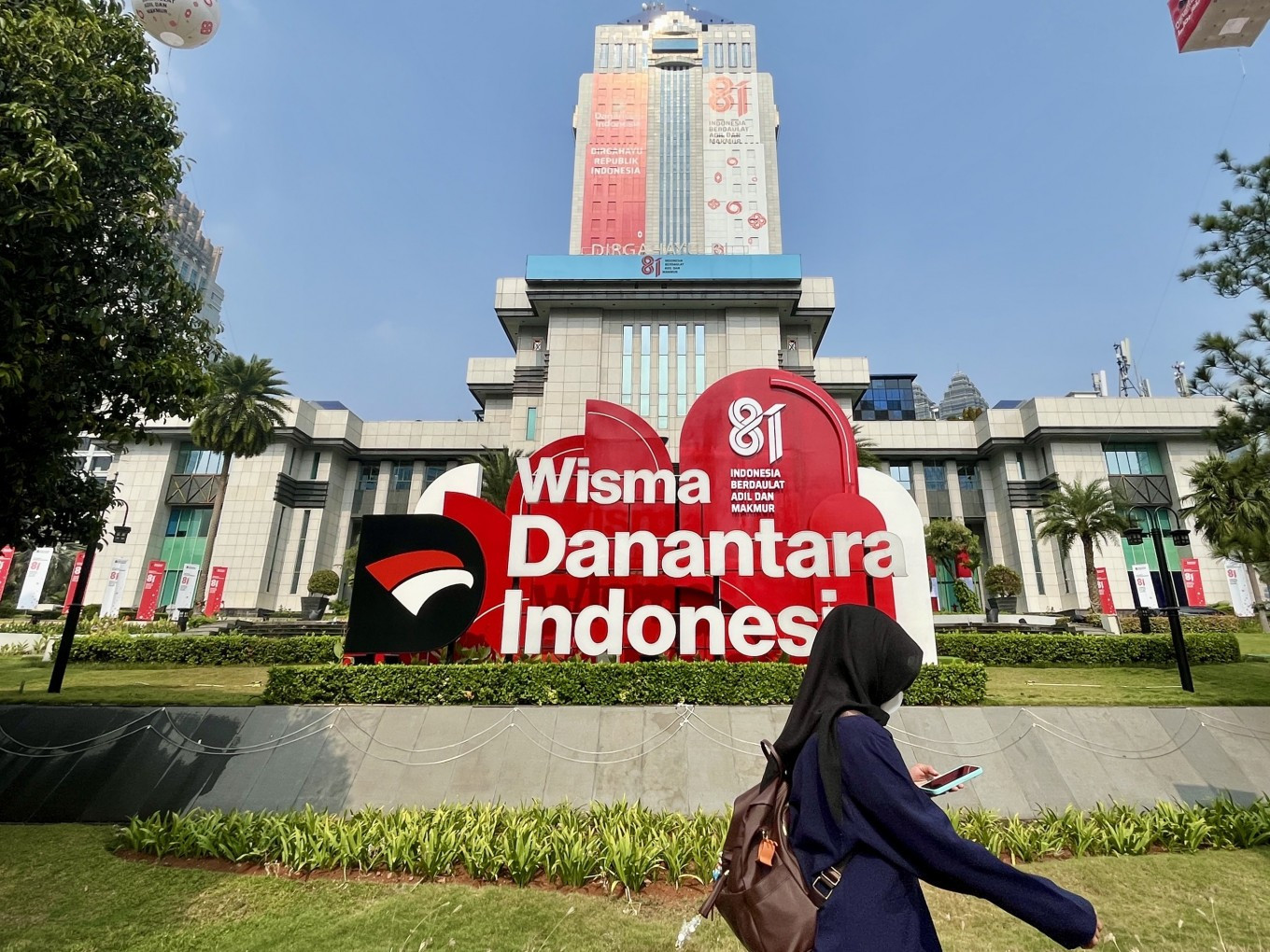 A woman walks past the Wisma Danantara Indonesia building on Aug. 11, 2026, on Jl. Jend. Gatot Subroto in South Jakarta. (JP/Iqro Rinaldi)
T
he Finance Ministry and state asset fund Danantara are at odds over who controls dividends from state-owned enterprises (SOEs), exposing an unresolved question at the heart of Indonesia's new state-asset architecture. Before Danantara was created, SOE dividends were paid to the state and recorded as non-tax revenue. Under the new framework, Danantara manages the shares and assets transferred to it and can use returns from those assets for investment and capital injections. Part of its eventual profits is to be transferred to the state after provisions for investment risks and capital accumulation. The dispute therefore is not simply about whether the government can receive SOE dividends, but about when and through what mechanism those funds should reach the state budget.
The row began on Aug. 28, when then-finance minister Purbaya Yudhi Sadewa said that, following a limited cabinet meeting with President Prabowo Subianto, the Finance Ministry would channel Rp 120 trillion (US$6.76 billion) of SOE dividends into the state budget as a fiscal buffer. The figure followed the President's address to the House of Representatives two weeks earlier, when he projected dividends from Danantara-managed SOEs at Rp 200 trillion.
Three days later, Danantara chief operating officer Dony Oskaria said he knew nothing about the plan and referred reporters to chief executive Rosan Roeslani. Purbaya responded on Sept. 3, saying Danantara was resisting a transfer it had promised the President it would make. Rosan responded on Sept. 9, denying that such a handover had been discussed.
The disagreement comes as the fiscal outlook has become tighter. The 2026 budget deficit is projected to widen from Rp 689.1 trillion, or 2.68 percent of GDP, to Rp 734.3 trillion, or 2.85 percent. Total government debt rose from Rp 9.92 quadrillion in March 2026 to Rp 10.29 quadrillion at the end of June. New borrowing is expected to rise from Rp 775.9 trillion in 2025 to Rp 832.2 trillion in 2026, while spending is projected to increase from Rp 3.84 quadrillion to Rp 3.98 quadrillion to fund priority programs, food price stabilization, purchasing-power support, transfers to regional governments, disaster management and special autonomy funds.
The numbers help explain the Finance Ministry's interest in bringing more funds into the budget. But the legal structure created by Danantara makes the timing and form of that transfer less straightforward than under the previous system.
The Supreme Audit Agency (BPK), in its audit of the 2025 Central Government Financial Report, found that 40 SOEs contributed Rp 11.7 trillion in non-tax revenue to the state, while 16 SOEs placed Rp 131.4 trillion with PT Danantara Asset Management (DAM), Danantara's operational arm. Of the funds placed with DAM, Rp 79.9 trillion was recorded as Danantara dividends, while Rp 70 trillion was invested in PT Danantara Investment Management (DIM) and Rp 34.8 trillion was used for capital injections into SOEs.

The change in the flow of funds reflects Danantara's new position in the SOE ownership structure. Under Law No. 16/2025, the fourth amendment to the SOE Law, the state retains 1 percent of shares in SOEs as Series A Dwiwarna shares through the SOE Regulatory Agency (BP BUMN), while 99 percent of the Series B shares are held through Danantara. The arrangement separates the state's regulatory and controlling role from Danantara's role in managing the investment and corporate assets.