The Jakarta Post
Please Update your browser
Your browser is out of date, and may not be compatible with our website. A list of the most popular web browsers can be found below.
Just click on the icons to get to the download page.


Popular Reads
Top Results
No results found. Please check your search term and try again
Can't find what you're looking for?
View all search results
Popular Reads
Top Results
No results found. Please check your search term and try again
Can't find what you're looking for?
View all search resultsASEAN warms to BRICS without sacrificing centrality
Southeast Asia is not swapping geopolitical camps—it is expanding its diplomatic toolkit to ensure it never has to choose between them.
Change text size
Gift Premium Articles
to Anyone
Share the best of The Jakarta Post with friends, family, or colleagues. As a subscriber, you can gift 3 to 5 articles each month that anyone can read—no subscription needed!
 Set as preferred source
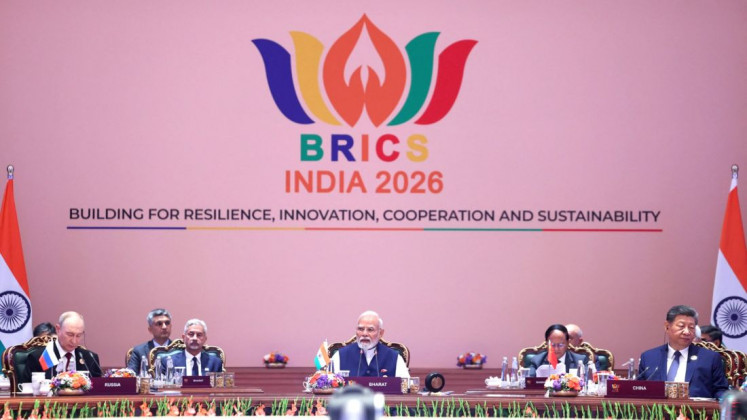
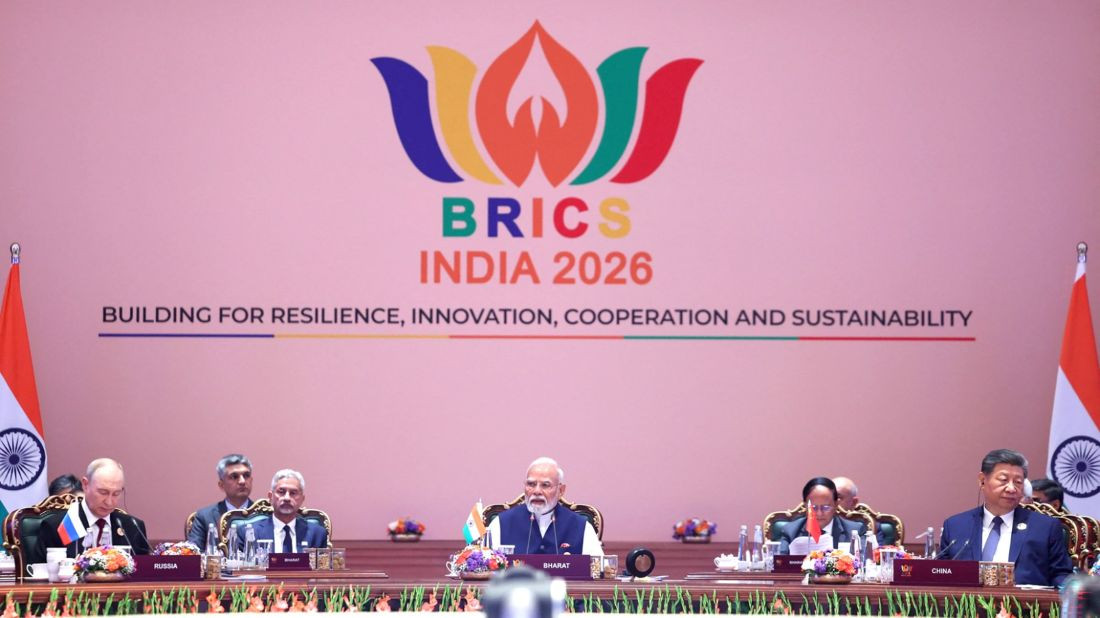 Balancing act: Indian Prime Minister Narendra Modi (center) presides over the second and final day of the 18th BRICS Summit in New Delhi on Sept. 13, 2026, flanked by Russian President Vladimir Putin (left, front), and Chinese President Xi Jinping (right, front). (AFP/Indian Press Information Bureau)
O
ne of the most revealing dynamics of the 18th BRICS Summit in New Delhi recently was how Southeast Asia leaned toward the grouping without ASEAN ever making a collective decision to join. Five ASEAN member states were present, yet each arrived in a distinctly different capacity: Indonesia as a full member; Malaysia, Thailand and Vietnam as partner countries; and the Philippines in its role as the 2026 ASEAN chair.
ASEAN has reached no consensus on joining BRICS. Instead, individual member states are using the expanding grouping to advance their national interests while continuing to uphold ASEAN centrality.
This is, perhaps, the quintessential ASEAN approach. The regional bloc has never been comfortable with exclusive alignments or forced binaries between competing powers. Its members instinctively protect their maneuverability. BRICS has simply emerged as another vehicle through which they can exercise that strategic autonomy.
Indonesia offers the clearest example. Having joined as a full member in 2025, the only ASEAN state to do so, President Prabowo Subianto arrived in New Delhi with a seat at the main table. Jakarta’s presence anchors BRICS directly in Southeast Asia, providing Indonesia an expanded platform to pursue its traditional priorities: strategic autonomy, global governance reform and a louder voice for the Global South.
President Prabowo framed his agenda around three core themes: national self-reliance, developing-world solidarity and practical cooperation within the bloc. His bilateral meeting with Indian Prime Minister Narendra Modi reinforced this rapport, with Modi underscoring the "warmth, positivity and optimism" framing an expanding India-Indonesia partnership.
For Jakarta, BRICS is neither an alternative to ASEAN nor a replacement for the Group of 20. It is an additional diplomatic instrument. Indonesia has long resisted alignment with any single major-power orbit; its participation proves that BRICS can accommodate states that maintain deep, simultaneous ties with both the West and the Global South.

Malaysia, Thailand and Vietnam represent a second, calibrated tier of engagement. All three attended as BRICS "partner countries", a mechanism designed to institutionalize ties without the obligations of full accession, though each may well seek full membership in future expansion rounds.