The Jakarta Post
Please Update your browser
Your browser is out of date, and may not be compatible with our website. A list of the most popular web browsers can be found below.
Just click on the icons to get to the download page.


Popular Reads
Top Results
No results found. Please check your search term and try again
Can't find what you're looking for?
View all search results
Popular Reads
Top Results
No results found. Please check your search term and try again
Can't find what you're looking for?
View all search resultsOutlook of the national palm oil sector in 2027
The government should put an end to the various rules that stifle investment and instead focus on building a healthy, competitive business climate that ensures legal certainty.
Change text size
Gift Premium Articles
to Anyone
Share the best of The Jakarta Post with friends, family, or colleagues. As a subscriber, you can gift 3 to 5 articles each month that anyone can read—no subscription needed!
 Set as preferred source
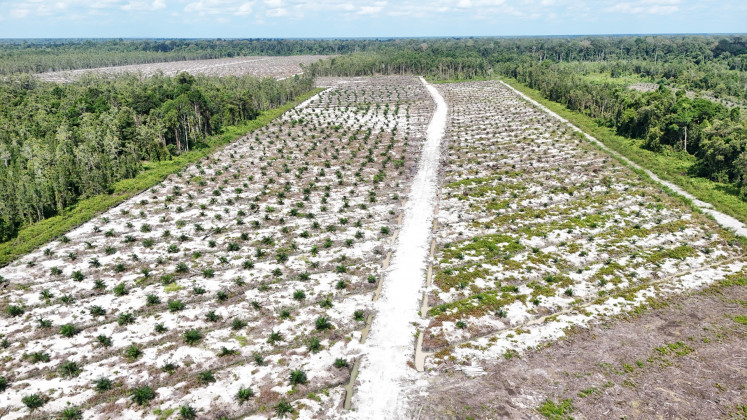
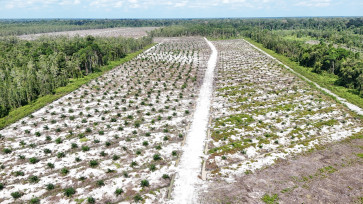
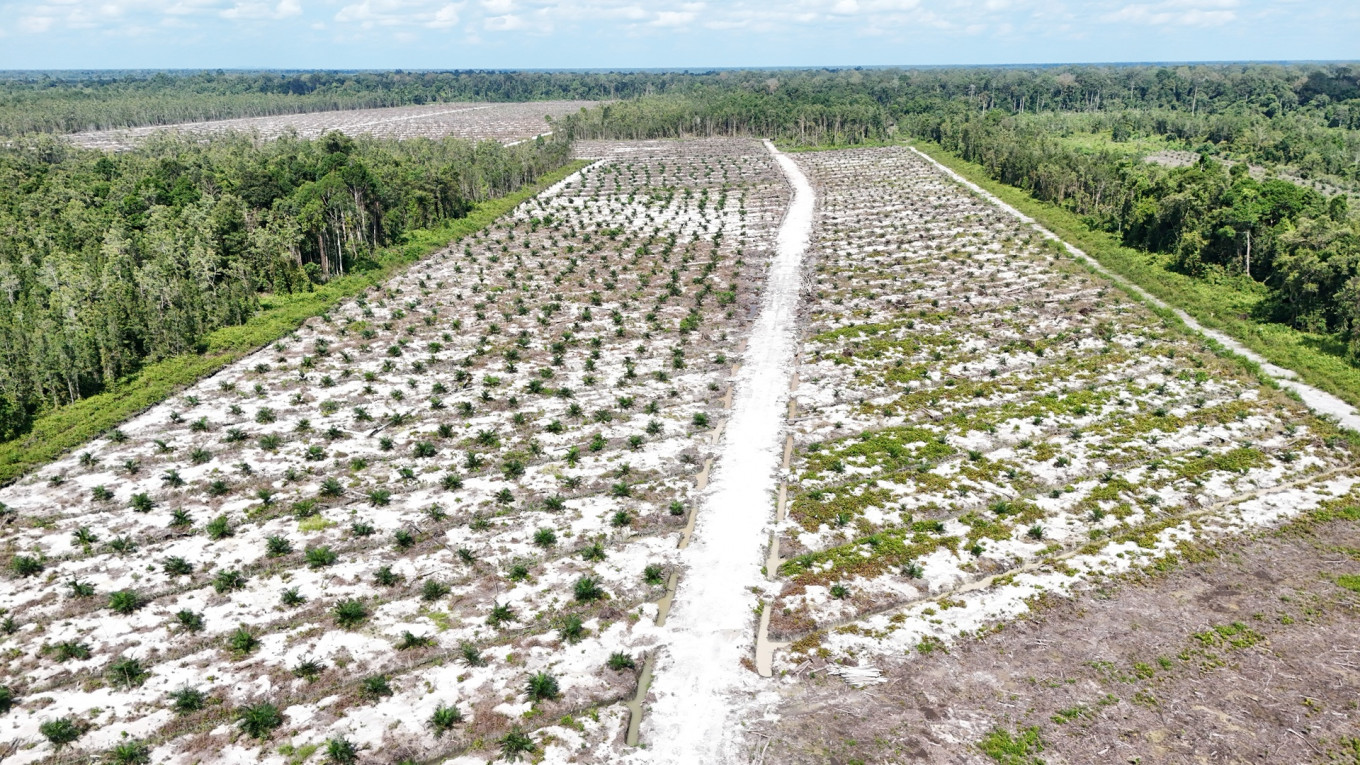 Rows of young oil palm trees are planted just on the border of Sebangau National Park area in Central Kalimantan on April 28, 2026. (JP/Noufal Helmy)
A
s the year draws to a close and we welcome 2027, Indonesia’s palm oil sector stands on a foundation of extraordinary resilience. Over the past few decades, this “green gold” commodity has weathered a relentless wave of challenges, ranging from the relentless negative campaigns, increasingly stringent international market standards, to the uncertain dynamics of the domestic business climate.
The industry has also proven resilient in navigating various restrictive policies, such as the turmoil surrounding the domestic market obligation (DMO), the increase in the mandatory blending ratio of biodiesel (B50), the repossessing of overlapped plantations and legal uncertainty regarding land-use. However, this resilience certainly has its limits. As the backbone of foreign exchange earnings and the national economy, palm oil cannot continue to be burdened by legal uncertainty and contradictory regulations.
Looking ahead to 2027, the government should put an end to the various rules that stifle investment and instead focus on building a healthy, competitive business climate that ensures legal certainty. These are the key topics of discussions at the annual Indonesian Palm Oil Conference (IPOC), organized by the Indonesian Palm Oil Association (GAPKI) in Bali on Nov. 11–13.
One issue that warrants close attention is the government’s decision to grant PT Agrinas Palma Nusantara (Agrinas) a palm oil concession of 400,000 hectares in Papua. The development plan outlines a fairly clear land-use division, with 250,000 ha set aside for cultivation, while another 150,000 ha is designated as conservation zones and customary land.
Legally, this 400,000-ha automatically changes the status of land that was previously designated as forest area into “other land use” (APL). This sets a new precedent and a model for revisiting the national forest land use map to accommodate the development of sustainable, ethical palm oil cultivations.
Hence, the issue of oil palm expansion in Papua goes beyond simply determining a land use area or allocating concession, but to ensure that land-use decisions have a clear and accountable spatial basis in alignment with the National One Map Policy. Consequently, the designation of areas must be based on environmental and social impact assessments, evaluations of conservation and carbon stock values (HCV and HCS) criteria, and extensive consultation to obtain consent from indigenous communities.

Degraded land suitable for agricultural activities may be considered for exclusion from the forestry sector. Conversely, areas with high carbon sequestration potential and biodiversity hotspots must be preserved from development.