The Jakarta Post
Please Update your browser
Your browser is out of date, and may not be compatible with our website. A list of the most popular web browsers can be found below.
Just click on the icons to get to the download page.


Popular Reads
Top Results
No results found. Please check your search term and try again
Can't find what you're looking for?
View all search results
Popular Reads
Top Results
No results found. Please check your search term and try again
Can't find what you're looking for?
View all search resultsForeign Ministry back in the driver's seat, but not alone
Arrmanatha’s appointment puts diplomats back in the driver’s seat of Indonesian foreign policy, but navigating today’s volatile geopolitical landscape requires soldiers, economists and the Palace to chart the course together.
Change text size
Gift Premium Articles
to Anyone
Share the best of The Jakarta Post with friends, family, or colleagues. As a subscriber, you can gift 3 to 5 articles each month that anyone can read—no subscription needed!
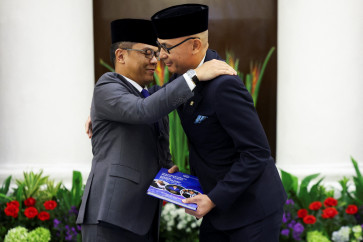
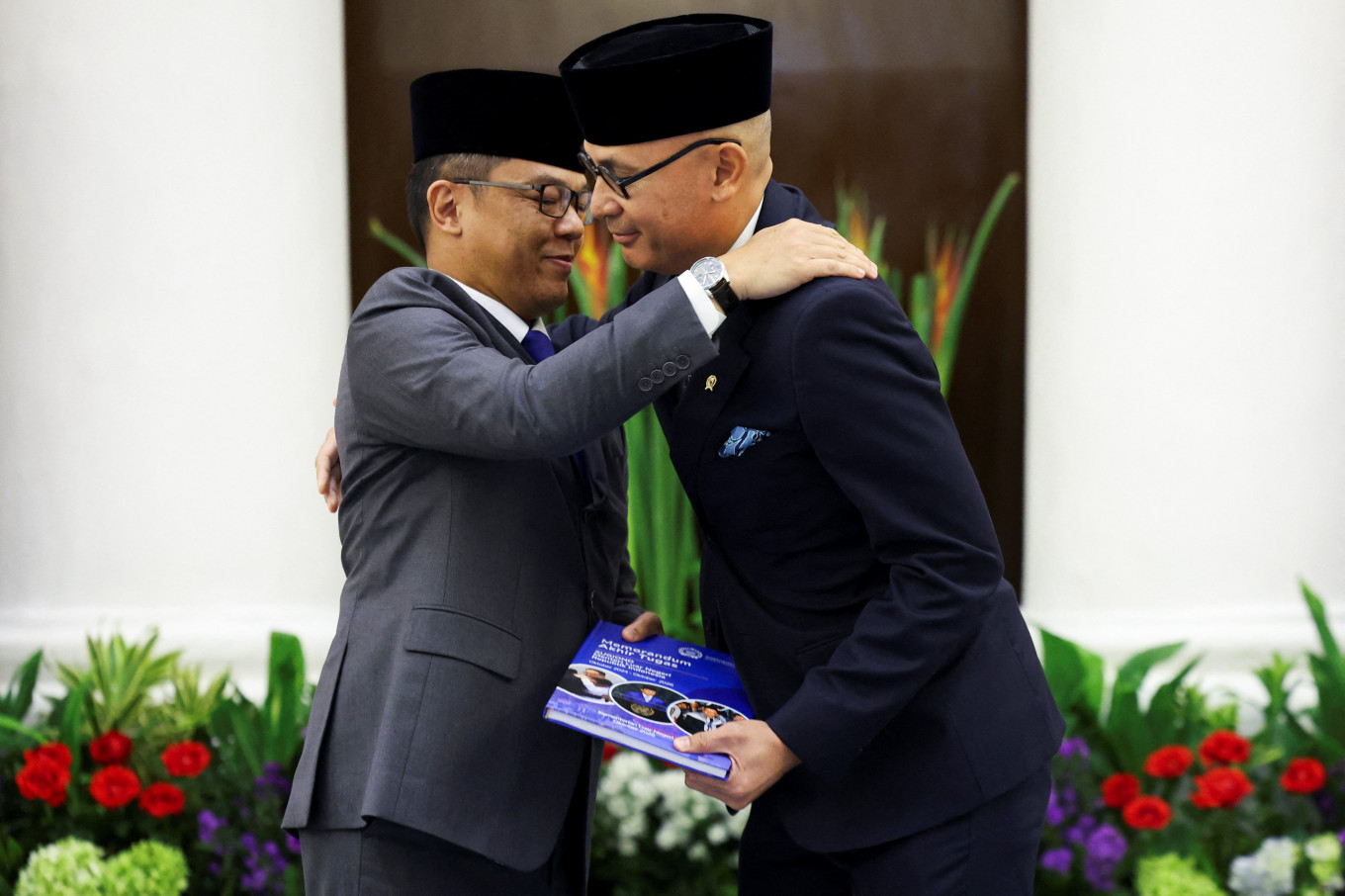 Newly appointed Foreign Minister Arrmanatha Nasir (right) reacts as former foreign minister and current Coordinating Minister for Human Development and Cultural Affairs, Sugiono, embraces him during a handover ceremony at the Foreign Ministry in Jakarta on Oct. 12, 2026. (Reuters/Ajeng Dinar Ulfiana)
T
he appointment of Arrmanatha Nasir as foreign minister signals the return of Indonesia's Foreign Ministry to the center of foreign policy making. For many in Jakarta's diplomatic and foreign policy circles, it marks a restoration of normalcy after two years in which President Prabowo Subianto appeared to take personal charge of the country's international engagement.
There is little doubt that Prabowo upended established conventions. During his first two years in office, foreign policy often seemed to emanate directly from the Presidential Palace rather than from the ministry traditionally responsible for managing it.
Many of his diplomatic initiatives bore a strongly personal imprint. To parts of Indonesia's foreign policy community, they appeared episodic and difficult to fit into a coherent strategic framework. Critics frequently struggled to discern a clear doctrine or long-term road map behind a series of diplomatic moves.
Yet it would be wrong to conclude that Prabowo lacks an understanding of foreign policy. As a former Army general and defense minister from 2019 to 2024, he is no novice in geopolitics. He understands international affairs well. The real difference lies not in competence but in perspective.
Prabowo approaches the world through the lens of strategy and security. Diplomats are trained to view it through negotiation, multilateralism and consensus-building. Neither perspective is inherently superior. They simply reflect different institutional cultures and professional experiences.
What has played out over the past two years is less a clash between expertise and inexperience than a contest between competing ways of understanding Indonesia's place in the world.

That tension is hardly new. For decades, Indonesians debated whether independence was won on the battlefield or at the negotiating table. One school credits soldiers and guerrilla fighters whose resistance made Dutch reoccupation impossible. Another highlights the diplomats who secured international recognition and transformed military gains into sovereign statehood.