The Jakarta Post
Please Update your browser
Your browser is out of date, and may not be compatible with our website. A list of the most popular web browsers can be found below.
Just click on the icons to get to the download page.


Popular Reads
Top Results
No results found. Please check your search term and try again
Can't find what you're looking for?
View all search results
Popular Reads
Top Results
No results found. Please check your search term and try again
Can't find what you're looking for?
View all search resultsThe fading away of Indonesian in Australia
As Indonesian faces functional extinction in Australian classrooms by 2031, both nations stand on the brink of a costly strategic blind spot.
Change text size
Gift Premium Articles
to Anyone
Share the best of The Jakarta Post with friends, family, or colleagues. As a subscriber, you can gift 3 to 5 articles each month that anyone can read—no subscription needed!
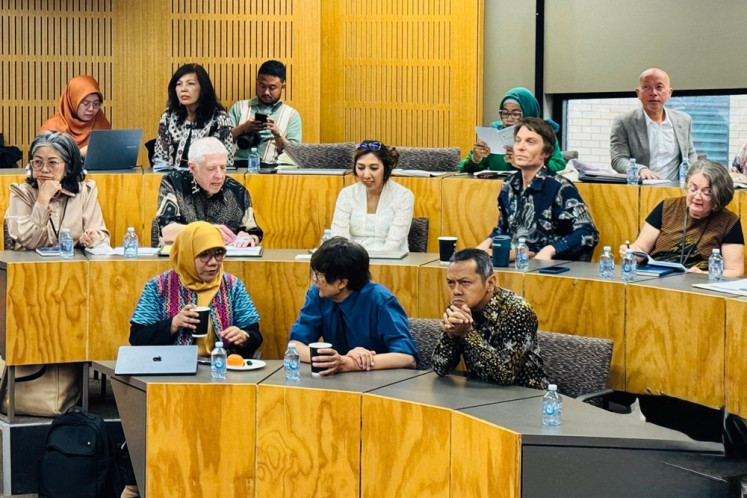
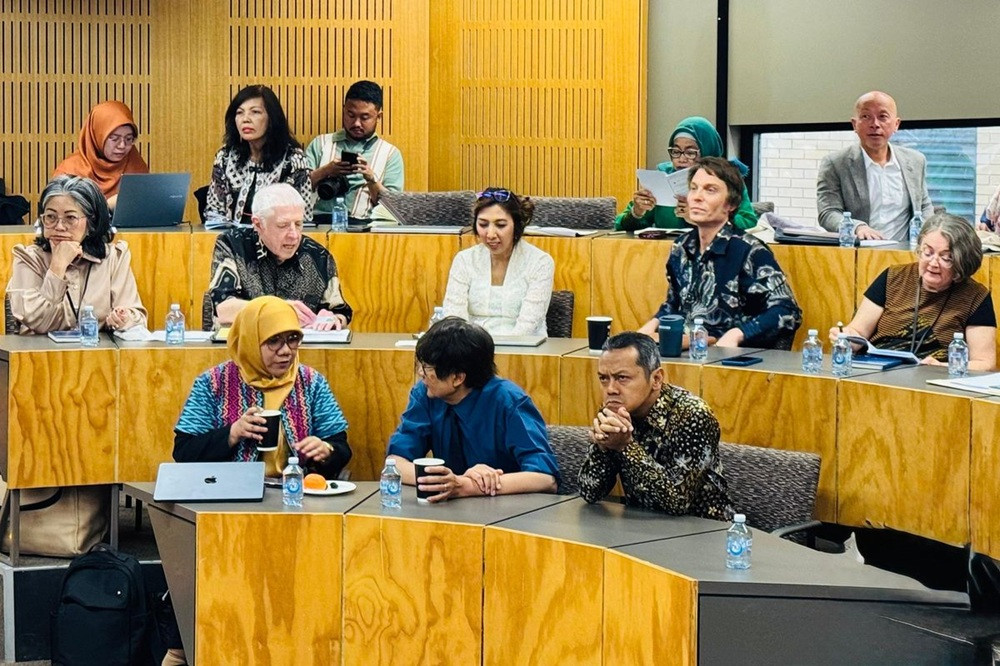 Deputy Primary and Secondary Education Minister Fajar Riza Ul Haq (right front row) attends the First Australian Congress for Indonesian Language 2025 at the Australian National University (ANU) in Canberra on Dec. 6, 2025. (kompas.com/Ayunda Pininta)
C
onsider a nation situated squarely within the Asia-Pacific, home to one of the world’s largest Asian diasporas, and economically tied to the Asian continent, yet increasingly unable to converse in the languages or navigate the cultures of its closest neighbors.
This is the central paradox confronting Australia today.
A stark report by the Australian House of Representatives Standing Committee on Education, Security and Prosperity in Asia delivers a sobering reality check. In 2023, only 3.3 percent of Year 12 students studied priority Asian languages, down from 4.7 percent during the era of the Australia in the Asian Century White Paper. Even more alarming, Indonesian, the language of Australia’s nearest major strategic neighbor, faces functional extinction in the country’s classrooms by 2031.
The collapse is already underway. In Queensland, just four students across the entire state are projected to sit the Year 12 Indonesian examination. Nationally, Year 12 enrolments have plummeted from 1,160 in 2010 to just 486. At tertiary institutions, enrolments across Southeast Asian languages have plunged by 75 percent over two decades. Today, only 13 Australian universities maintain Indonesian programs, down from 22 in 1992.
What explains this precipitous decline?
First, the crisis stems from institutional neglect rather than a lack of individual curiosity. The parliamentary report pointedly observed that Australia’s Department of Education remains largely “agnostic” about whether students learn Asian languages. National coordination, reliable tracking data, and clear policy ownership are conspicuously absent, embodying the adage that when a responsibility belongs to everyone, it belongs to nobody.

Second, counterproductive policy incentives have actively sabotaged language uptake. Under the Job-Ready Graduates Package, tuition fees for language degrees were discounted while fees for humanities subjects doubled. This policy split divorced language instruction from the vital history, politics, and cultural context that make language study meaningful, eroding the core foundations of Australia's regional literacy.