The Jakarta Post
Please Update your browser
Your browser is out of date, and may not be compatible with our website. A list of the most popular web browsers can be found below.
Just click on the icons to get to the download page.


Popular Reads
Top Results
No results found. Please check your search term and try again
Can't find what you're looking for?
View all search results
Popular Reads
Top Results
No results found. Please check your search term and try again
Can't find what you're looking for?
View all search resultsAnalysis: Who pays when Indonesia’s tax ambitions fall short?
Change text size
Gift Premium Articles
to Anyone
Share the best of The Jakarta Post with friends, family, or colleagues. As a subscriber, you can gift 3 to 5 articles each month that anyone can read—no subscription needed!
 (Courtesy of Finance Ministry)
W
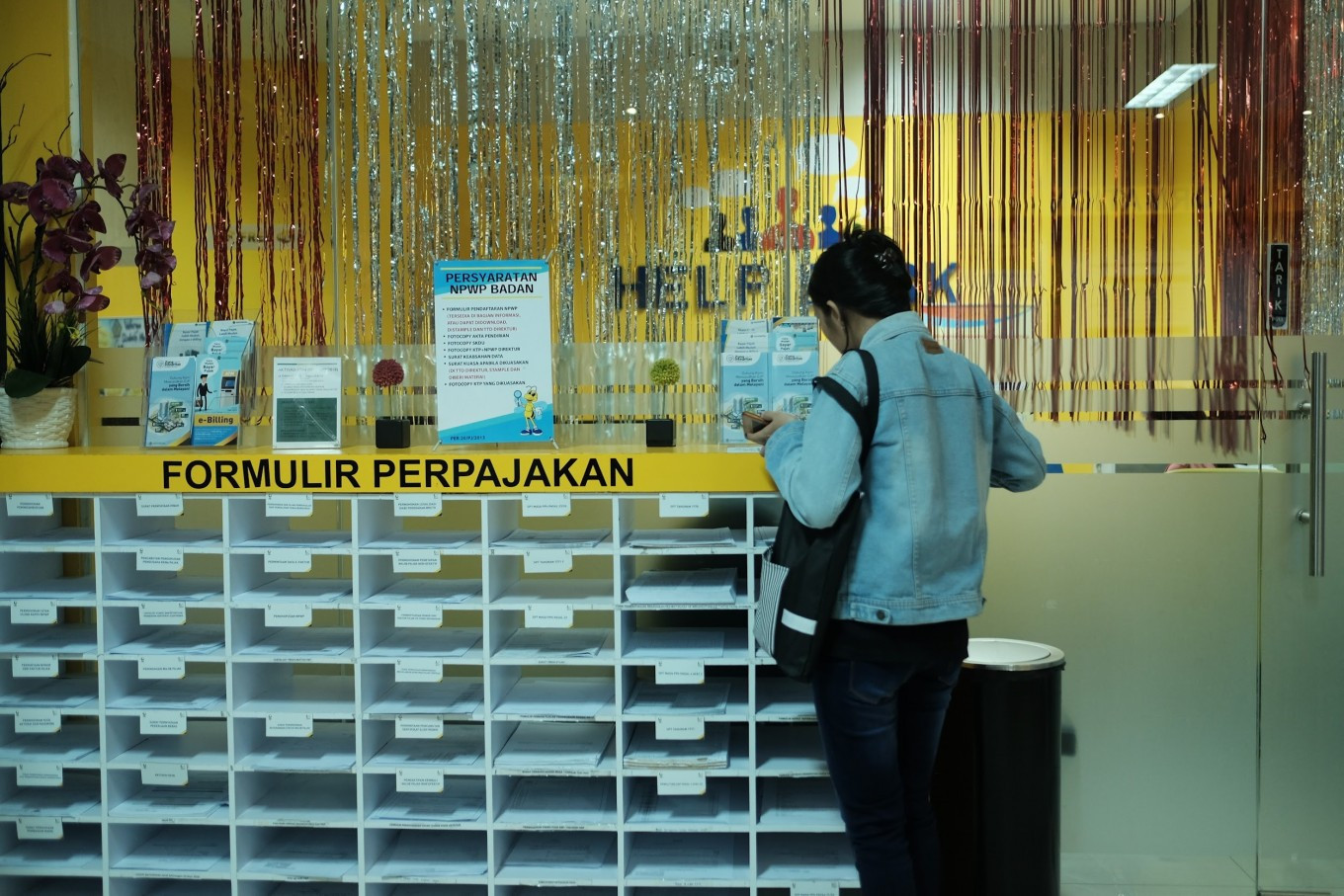
ith three months left in the year, Indonesia has collected barely two-thirds of its annual tax target. The government now faces an uncomfortable choice over how aggressively to pursue the remainder and where to restrain spending. Every effort to balance the books carries consequences for businesses and people who depend on public services. Who will bear the cost if the government's revenue ambitions exceed its capacity to collect?
On the revenue side, the headline rebound masks a demanding year-end target. Tax receipts rose 24.1 percent year-on-year to Rp 1,607.6 trillion (US$91.8 billion) through September, but the government must still collect Rp 750.1 trillion in just three months. That requires average monthly collections roughly 40 percent above the January-September average.
Although receipts typically strengthen toward year-end, last year's weak comparison base also makes the current growth rate look more reassuring than it necessarily is. With authorities intensifying supervision, audits and enforcement, the pressure to deliver could fall heavily on existing taxpayers unless collection efforts successfully reach previously untapped sources.
On the spending side, the restrictions on official travel raise questions about the scale of the government's response. Ministries and agencies have been instructed to cut 30 percent of their official travel budgets remaining unspent as of Oct. 8, rather than their full-year allocations. Meanwhile, central government spending reached Rp 2,061.3 trillion through September, up 29.6 percent year-on-year, while spending by ministries and agencies alone jumped 33.5 percent.
These increases do not necessarily indicate waste, but they show that expenditure pressures extend far beyond official travel. With the deficit already at Rp 319 trillion, or 1.24 percent of GDP, the government needs to demonstrate whether these savings can meaningfully cushion a revenue shortfall or whether tougher spending decisions are merely being postponed.
Asking officials to travel less while the cabinet itself grows larger sends a mixed signal. Suahasil's long record at the Finance Ministry offers some continuity, but frequent turnover at the top makes it harder for markets and taxpayers to gauge the direction of fiscal policy. Ultimately, credibility will depend less on who holds the post than on whether spending priorities are open to revision.

Debt servicing further narrows the room for maneuver. Although the government recorded a primary surplus of Rp 125.5 trillion through September, interest payments of Rp 444.5 trillion pushed the overall budget into deficit. Those payments absorbed roughly one in every five rupiah of state revenue, limiting the funds available for public services and investment.