The Jakarta Post
Please Update your browser
Your browser is out of date, and may not be compatible with our website. A list of the most popular web browsers can be found below.
Just click on the icons to get to the download page.


Popular Reads
Top Results
No results found. Please check your search term and try again
Can't find what you're looking for?
View all search results
Popular Reads
Top Results
No results found. Please check your search term and try again
Can't find what you're looking for?
View all search resultsBangkok meetings: Indonesia’s high-stakes growth test
As rising global debt and geopolitical shocks squeeze developing nations, Indonesia’s push for ambitious expansion hinges on disciplined spending, targeted tax reform and private-sector competitiveness.
Change text size
Gift Premium Articles
to Anyone
Share the best of The Jakarta Post with friends, family, or colleagues. As a subscriber, you can gift 3 to 5 articles each month that anyone can read—no subscription needed!
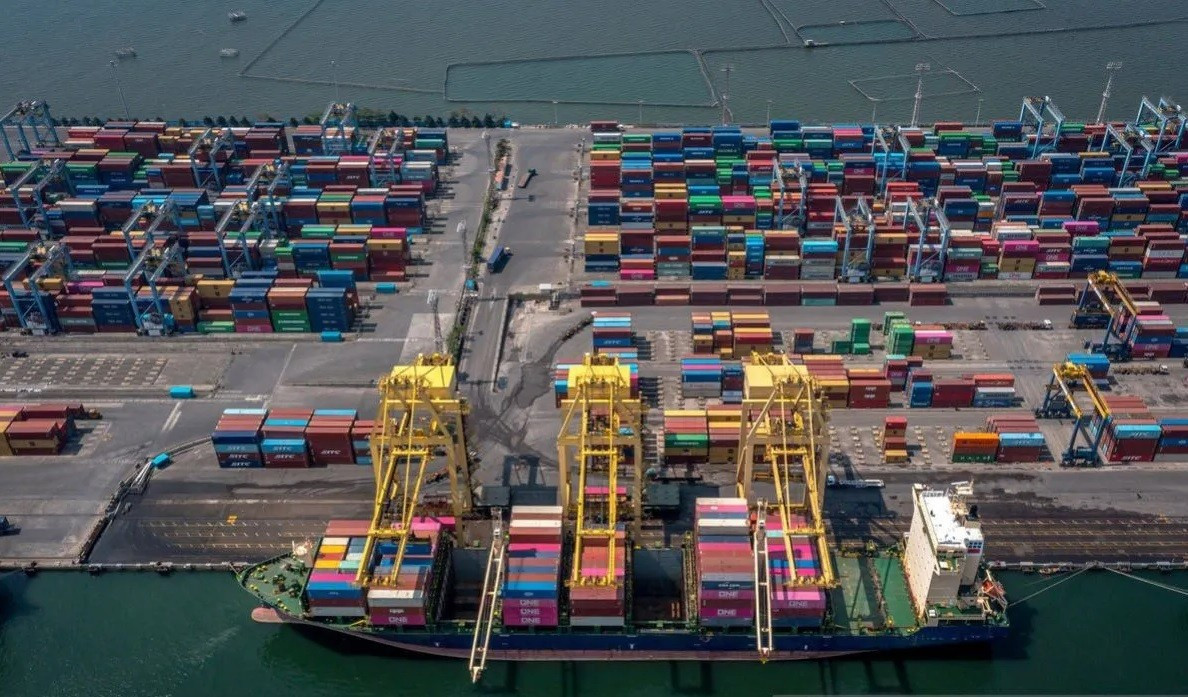 Export-oriented: Using a rubber-tired gantry crane, port workers load export-bound containers onto a vessel flying a Portuguese flag on June 24, 2025, at Tanjung Mas port in Semarang, Central Java. (Antara/Aji Styawan)
T
he International Monetary Fund/World Bank Annual Meetings returned to Southeast Asia - this time in Bangkok - against a backdrop of war in the Gulf, rising trade fragmentation, mounting debt burdens and elevated inflation. The urgency of addressing these issues yielded one positive outcome: economic growth took center stage in Bangkok. Only high-quality economic growth can enable countries to withstand external global shocks.
Five years ago, United States Treasury Secretary Janet Yellen and others spoke of the desire for a global minimum tax to avoid a “race to the bottom” that would deprive countries of revenue. Tax evasion is wrong, but the focus was more on the redistribution of wealth and income and a new international tax architecture. Growth was absent from the discussion. Now, growth is back, and not a moment too soon.
For Indonesia, this focus on growth is familiar: President Prabowo Subianto’s Financial Notes speech focused on an ambitious 6 percent growth target, up from 5.45 percent in the first half of 2026. Higher energy and food prices resulting from the war in the Gulf make this target more challenging. But the basic thrust of pro-growth policy is clear: cut regulations that harm growth, train workers, target industries that drive growth and welcome foreign investment.
Another way to think about growth is to consider Indonesia’s overall competitiveness, for which a global meeting offers a chance for reflection. Indonesia is blessed with many natural resources that provide a comparative advantage and make investment here attractive. But global investors must think carefully about where they wish to locate manufacturing plants or invest in artificial intelligence or other emerging technologies.
They consider the entire investment ecosystem: a well-educated workforce, strong logistics, the regulatory and tax environment, public governance, the role of the state. In some of these areas, Indonesia competes well with ASEAN peers; in others, there is work to do.
Government policy investments should be concentrated in major economic sectors that absorb significant amounts of labor. The state’s role should be to facilitate growth led by a vibrant private sector, not an excessive role through government spending that may not be sustainable.

Although Indonesia’s realized investment from January to June 2026 reached Rp 1.01 quadrillion (US$56 billion) - meeting 49.5 percent of the 2026 national target of Rp 2.04 quadrillion - the country’s Incremental Capital-Output Ratio (ICOR) remains relatively high at around 6. This indicates that investment is less efficient in utilizing capital to generate economic growth. Keeping a watchful eye on Indonesia’s regional – and global – competitiveness is thus essential to a pro-growth policy.