The Jakarta Post
Please Update your browser
Your browser is out of date, and may not be compatible with our website. A list of the most popular web browsers can be found below.
Just click on the icons to get to the download page.


Popular Reads
Top Results
No results found. Please check your search term and try again
Can't find what you're looking for?
View all search results
Popular Reads
Top Results
No results found. Please check your search term and try again
Can't find what you're looking for?
View all search resultsInvestment readiness is key for ASEAN energy transition
Sustainable-finance instruments may be available, but their availability does not automatically translate into new energy-transition projects.
Change text size
Gift Premium Articles
to Anyone
Share the best of The Jakarta Post with friends, family, or colleagues. As a subscriber, you can gift 3 to 5 articles each month that anyone can read—no subscription needed!
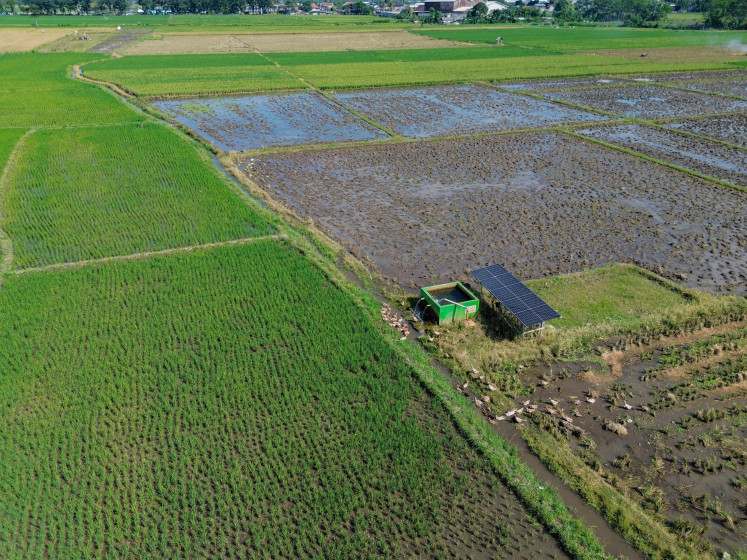
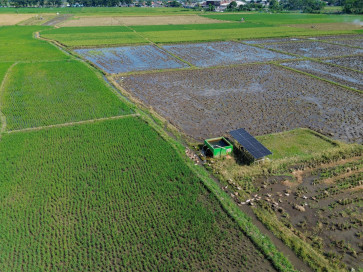
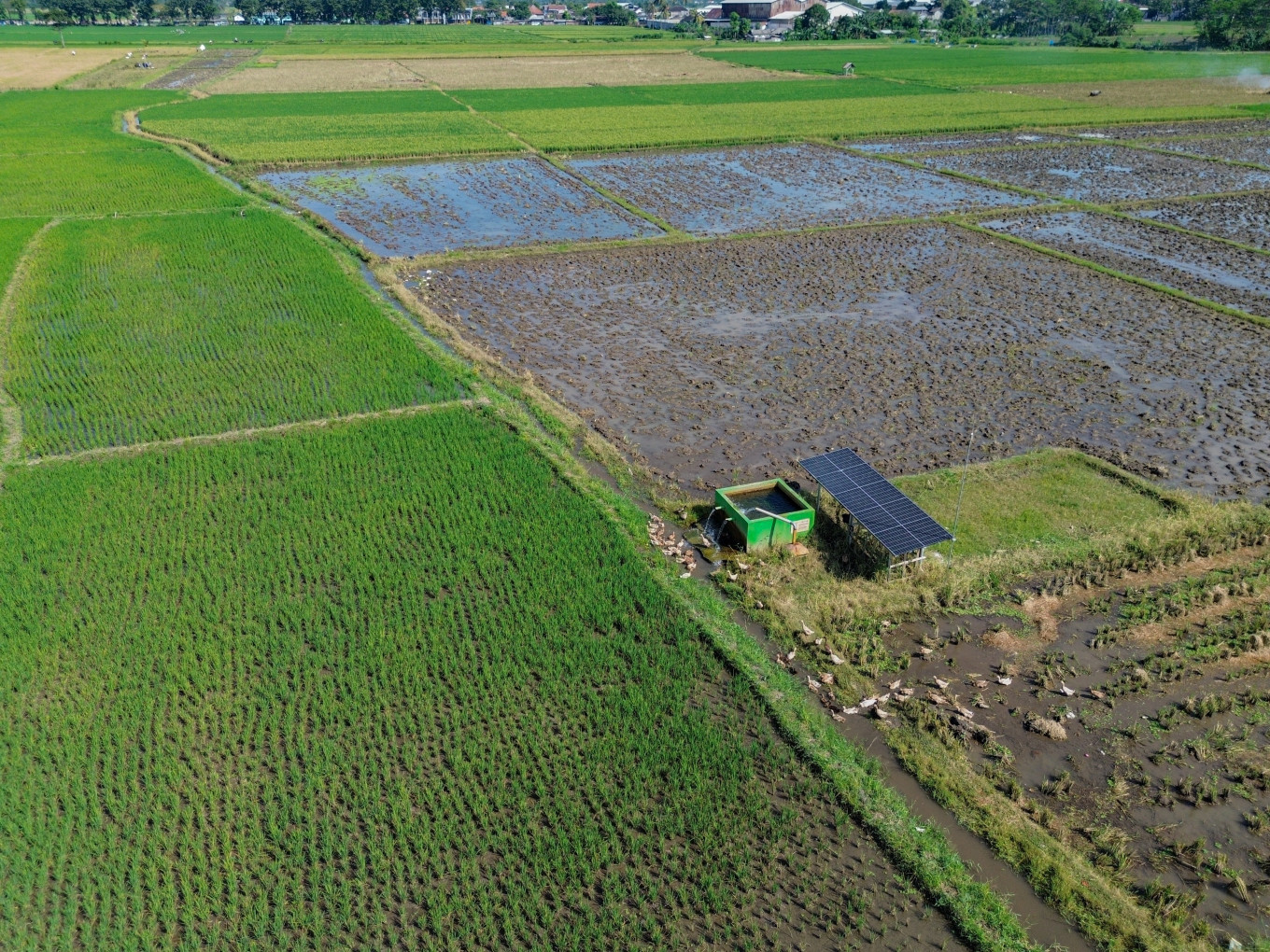 A solar-powered water pump irrigates a rice farm on April 6, 2026, in Lumajang, East Java. (Antara/Irfan Sumanjaya)
A
SEAN’s energy transition could deliver significant economic benefits, potentially adding US$3 trillion–5.3 trillion to regional gross domestic product by 2050, attracting $3.7 trillion–6.7 trillion in green investments, and creating 49 million–66 million new jobs. Realizing these benefits requires not only sufficient finance but also effective challenging of funds into sustainable projects.
To this end, ASEAN has also developed the ASEAN Taxonomy for Sustainable Finance, the ASEAN Green Bond Standards, and the ASEAN Catalytic Green Finance Facility, However, these frameworks have not automatically translated into rapid project implementation, highlighting the importance of investment readiness.
ASEAN aims for renewable energy to account for 30 percent of its total primary energy supply (TPES) and 45 percent of its installed power capacity by 2030, as outlined in the APAEC 2026–2030. However, because renewable energy accounted for about 14 percent of TPES in 2024, significant progress is needed to meet this goal. This suggests the issue extends beyond the availability of sustainable finance to ASEAN's capacity to prepare investment-ready, financially viable energy projects.
According to the ASEAN Energy Investment 2025 report, the main obstacles to energy investment, as viewed by policymakers, are legal and regulatory risks, access to finance, project cash flows, technology risks and uncertainty in interest rates and currency. From the private investors’ perspective, these include revenue uncertainty, high equity costs, a lack of bankable projects, high debt costs and construction/ operational uncertainty.
This indicates that policymakers should focus on regulation, while investors are more concerned with bankability and returns. To bridge it, governments, project developers, financial institutions and development partners need to enhance project preparation, lower risks and make projects more attractive to investors.
Globally, the World Bank reports that developing countries receive only 20 percent of global energy investment, even though they account for two-thirds of the world's population. Moreover, only two-thirds of ASEAN green bonds support renewable energy and energy efficiency; policies to increase issuance do not always lead to more domestic renewable energy or energy efficiency projects. These underlying factors indicate that ASEAN energy investment has not yet reached its full potential. Sustainable-finance instruments may be available, but their availability does not automatically translate into new energy-transition projects.

If the financial structure and instruments are mostly available, why is ASEAN still facing a significant energy investment gap and missing its energy transition target? The issue is not on the supply side (not so much the availability of funds), but on the demand side or the ability to mobilize the available funds into bankable energy projects that meet the expectations of private investors (called “investment readiness”).