The Jakarta Post
Please Update your browser
Your browser is out of date, and may not be compatible with our website. A list of the most popular web browsers can be found below.
Just click on the icons to get to the download page.


Popular Reads
Top Results
No results found. Please check your search term and try again
Can't find what you're looking for?
View all search results
Popular Reads
Top Results
No results found. Please check your search term and try again
Can't find what you're looking for?
View all search resultsAt 80, the rupiah needs credibility, not ceremony
As the rupiah touches record lows and the IDX alters its core index to stem market turbulence, Currency Day is more than an anniversary. Eighty years in, the real test is whether the institutions backing the rupiah can still command market trust.
Change text size
Gift Premium Articles
to Anyone
Share the best of The Jakarta Post with friends, family, or colleagues. As a subscriber, you can gift 3 to 5 articles each month that anyone can read—no subscription needed!
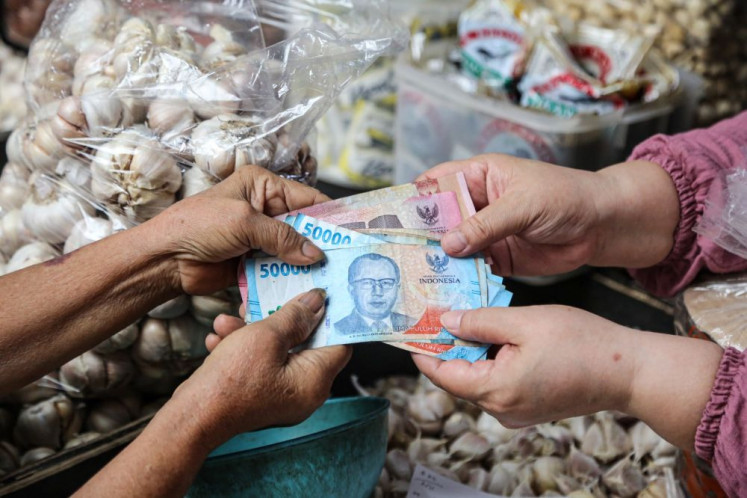
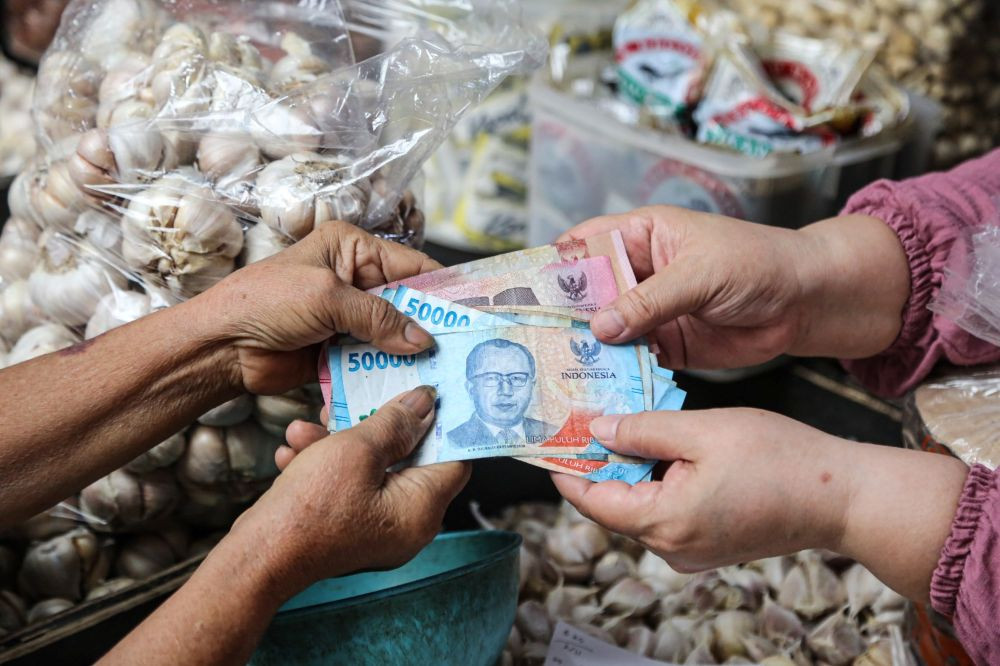 Currency integrity: A vendor and customer complete a cash transaction on Nov. 2, 2026 at the Johar traditional market in Semarang, Central Java. (Antara/Makna Zaezar)
O
n Oct. 30, Indonesia marked Hari Oeang, the 80th anniversary of its national currency, with ceremonial fanfare and banners across government offices. Just two days earlier, the rupiah closed at 18,183 per United States dollar, its weakest level in the nation's history, according to Bloomberg data. By Oct. 29, the currency had shed 8.03 percent against the dollar year-to-date (ytd), marking the steepest depreciation in Asia, according to Asian Bonds Online.
For economists, the rupiah’s slide is a line on a chart. For policymakers, it is a test of institutional credibility. But for a student like me, it is the price of a laptop, the swelling cost of applying to study abroad and an uneasy question mark hanging over the very job market we are preparing to enter.
Eighty years is an achievement worth honoring. Yet a currency is only as resilient as the economy and institutions backing it, and global investors are increasingly questioning both.
A strengthening US dollar and elevated global oil prices explain part of the pressure. Other net oil-importing regional peers have also retreated: the Philippine peso has depreciated 7.67 percent this year and the Thai baht is down 6.64 percent.
Viewed through the foreign exchange market alone, this might look like a broader regional downturn. The equity market, however, tells a far more troubling, domestic story.
In mid-October, MSCI proposed reclassifying Indonesia from emerging market directly to standalone market, bypassing the frontier category entirely. The global index provider cited structural deficiencies, including suspected coordinated trading and an apparent absence of meaningful enforcement of market rules.

While the reclassification is not yet finalized, MSCI has stated it intends to proceed unless public consultations demonstrate material improvements in market governance, setting a decision deadline for June 30, 2027.