The Jakarta Post
Please Update your browser
Your browser is out of date, and may not be compatible with our website. A list of the most popular web browsers can be found below.
Just click on the icons to get to the download page.


Popular Reads
Top Results
No results found. Please check your search term and try again
Can't find what you're looking for?
View all search results
Popular Reads
Top Results
No results found. Please check your search term and try again
Can't find what you're looking for?
View all search resultsThe case against Indonesia’s bid for WHO leadership
National pride cannot replace scrutiny: Health Minister Budi Gunadi Sadikin’s domestic track record on judicial overreach, data governance and fractured medical trust makes him the wrong choice to lead the WHO.
Change text size
Gift Premium Articles
to Anyone
Share the best of The Jakarta Post with friends, family, or colleagues. As a subscriber, you can gift 3 to 5 articles each month that anyone can read—no subscription needed!
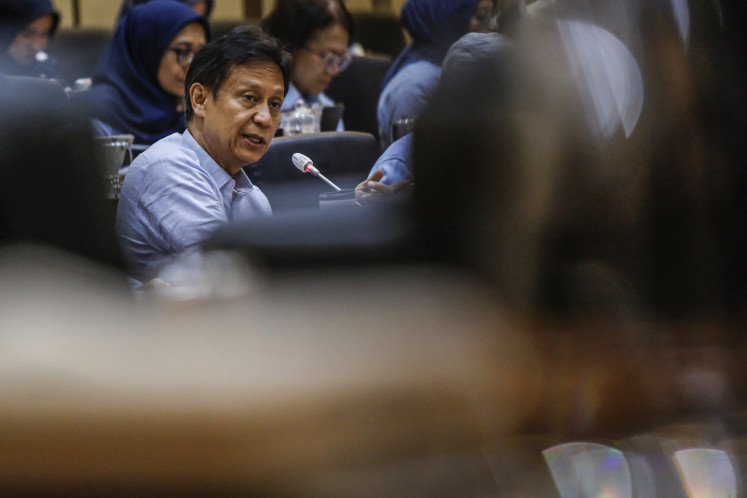
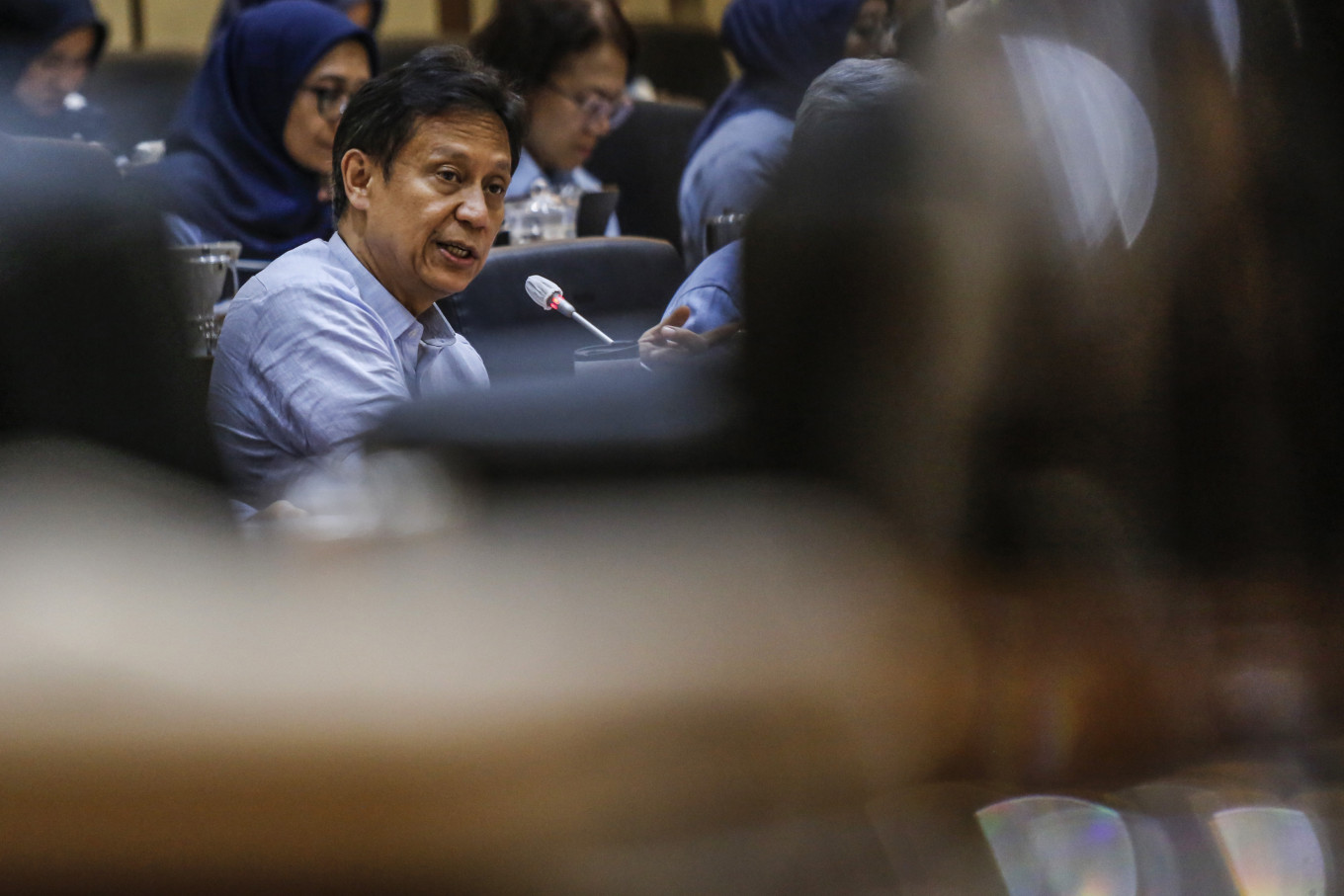 Health Minister Budi Gunadi Sadikin delivers a presentation on April 20 during a meeting with House of Representatives Commission IX at the Senayan Legislative Complex, Central Jakarta. The meeting discussed the handling of extraordinary outbreaks of measles and other infectious diseases, as well as an evaluation of the national immunization program. (Antara/Asprilla Dwi Adha)
W
hen Indonesia nominated Health Minister Budi Gunadi Sadikin for director general of the World Health Organization (WHO) in August, many welcomed the announcement with national pride. No Southeast Asian has ever led the organization, and Indonesia has every right to contest its highest office.
National pride, however, must not displace rigorous scrutiny. On Nov. 4, the Coalition for Health Justice, which I coconvene, submitted a formal letter to the WHO Executive Board and World Health Assembly delegations opposing Minister Budi’s candidacy. More than 22 civil society organizations signed the petition, including the Council of Professors of Medicine of Indonesia (MGBKI), LaporSehat, Kabinet Bayangan, Indonesia Corruption Watch, MBG Watch and BPJS Watch.
We did not take this step lightly. Challenging a nominee from one’s own country before an international body inevitably invites accusations of disloyalty. Yet the WHO director general does not act as a national representative. The role demands principled leadership that defends the right to health, safeguards scientific independence, and maintains global trust in public health institutions. On each of these fronts, Minister Budi’s domestic record raises profound concerns.
Since the passage of Health Law No. 17/2023, several prominent physicians who publicly critiqued Health Ministry policies have been abruptly removed from positions within ministry-affiliated institutions. Neurosurgeon Zainal Muttaqin was dismissed from Dr. Kariadi Hospital in Semarang after publishing critical commentaries. Airlangga University medical dean Budi Santoso was removed after voicing opposition to plans for recruiting foreign doctors. Pediatrician Piprim Basarah Yanuarso was transferred from Cipto Mangunkusumo Hospital (RSCM) after questioning the ministry’s centralized control of medical collegia, and he was subsequently dismissed from the civil service.
These administrative penalties were not mere policy disputes. On Sept. 7, the Supreme Court ruled that Piprim’s transfer and dismissal were unlawful.
Judicial bodies have repeatedly pushed back against executive overreach. The 2023 Health Law and its implementing decrees subordinated the medical collegia—the independent bodies historically responsible for specialist competency standards—under direct ministerial authority.

In January, the Constitutional Court declared this structural subordination unconstitutional. Subsequently, on Oct. 15, the Supreme Court struck down 70 provisions across three ministerial decrees, including rules granting the minister unilateral appointment powers over the Health Council, collegiums, and the Professional Disciplinary Council. To date, Minister Budi has failed to implement these binding rulings.