The Jakarta Post
Please Update your browser
Your browser is out of date, and may not be compatible with our website. A list of the most popular web browsers can be found below.
Just click on the icons to get to the download page.


Popular Reads
Top Results
No results found. Please check your search term and try again
Can't find what you're looking for?
View all search results
Popular Reads
Top Results
No results found. Please check your search term and try again
Can't find what you're looking for?
View all search resultsNever tax essentials
By taxing sanitary pads, books and micro entrepreneurs while letting corporate tax evasion slide, the government is essentially forcing ordinary citizens to subsidize state revenue at the expense of their basic dignity.
Change text size
Gift Premium Articles
to Anyone
Share the best of The Jakarta Post with friends, family, or colleagues. As a subscriber, you can gift 3 to 5 articles each month that anyone can read—no subscription needed!
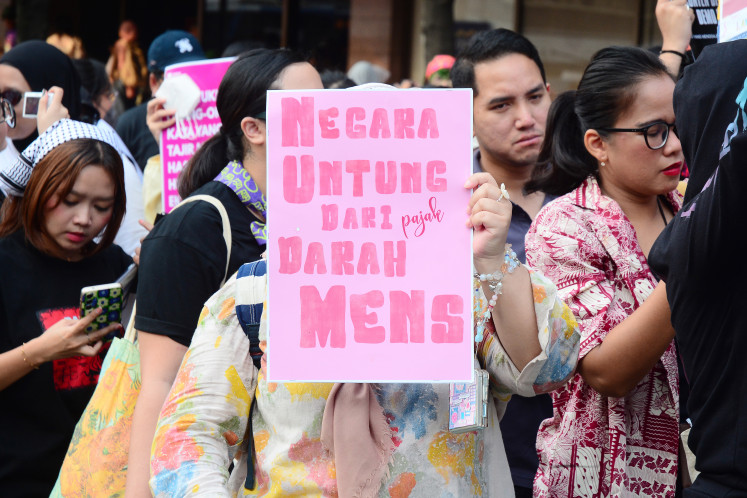
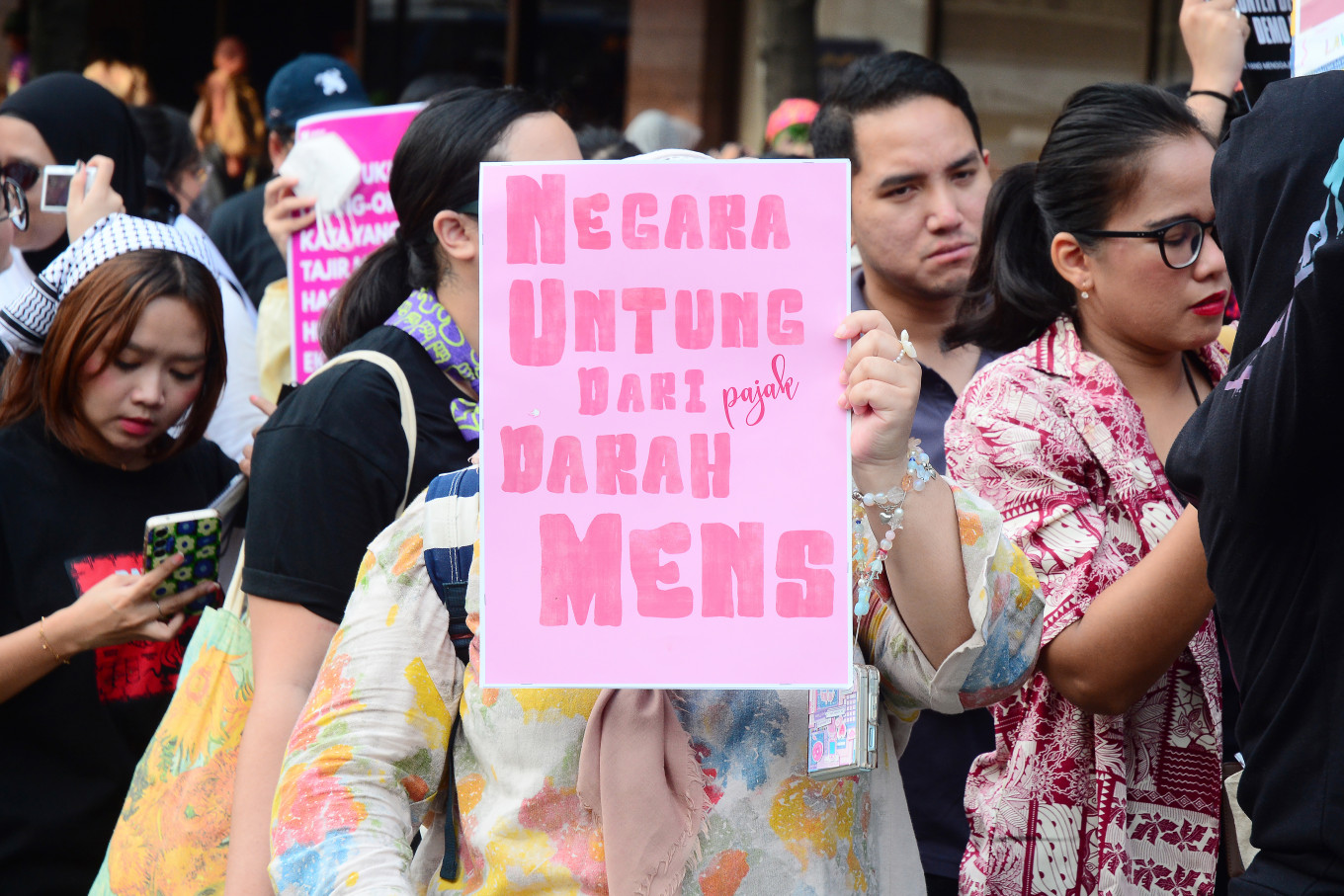 A demonstrator holds a placard that reads, “The state profits from menstrual blood”, referring to a policy to tax sanitary pads, during Women’s March Jakarta 2026 on Nov. 7 along Jl. Thamrin in Central Jakarta. (JP/Iqro Rinaldi)
F
or millions of Indonesian women, menstrual products are an inescapable monthly expense. For parents, purchasing books for their children often requires sacrificing other household essentials. Neither is a luxury, yet the tax regime treats both as ordinary consumer goods, subjecting them to value-added tax and compounding the financial strain on low-income households. The government's drive for state revenue must not come at the expense of citizens' ability to live with dignity.
Consider sanitary pads. Women cannot choose whether to menstruate, yet they are forced to pay taxes on the products they need to manage it: The 11 percent VAT inflates an unavoidable monthly cost.
For women from low-income families, even a marginal price increase carries consequences. Some are forced to ration a single pad per day; others resort to using rags that pose serious health risks. This is period poverty, and it remains a stark reality across the country.
The issue has now reached the Constitutional Court, where an individual has petitioned against the exclusion of menstrual products from the list of VAT-exempt basic necessities. The challenge argues that essential goods tied to unavoidable biological functions warrant tax exemption.
The government should not wait for a judicial ruling to act. Menstrual products should carry zero VAT and where feasible, be distributed free of charge in schools, health facilities and workplaces, particularly for low-income women.
The same principle applies to books, if the government is to uphold the constitutional mandate of educating the nation. Indonesia's 11 percent VAT on books is among the highest in Southeast Asia. While select educational materials qualify for exemptions, the vast majority of books remain taxable. By contrast, neighboring Malaysia and Singapore exempt books from consumption taxes altogether.

For a family living on minimum wage, a book priced at Rp 100,000 (US$5.49) is a significant outlay. Multiplied by the number of books a student requires, reading quickly becomes a prohibitive expense. The state cannot credibly promote literacy while pricing books out of reach.