The Jakarta Post
Please Update your browser
Your browser is out of date, and may not be compatible with our website. A list of the most popular web browsers can be found below.
Just click on the icons to get to the download page.


Popular Reads
Top Results
No results found. Please check your search term and try again
Can't find what you're looking for?
View all search results
Popular Reads
Top Results
No results found. Please check your search term and try again
Can't find what you're looking for?
View all search resultsGibran’s exit: The Machiavellian end of a political alliance
Gibran Rakabuming Raka’s abrupt resignation amid a credentials scandal lays bare the transactional pragmatism of Prabowo’s governing coalition, igniting a high-stakes race to fill the vice presidential vacancy ahead of the 2029 election.
Change text size
Gift Premium Articles
to Anyone
Share the best of The Jakarta Post with friends, family, or colleagues. As a subscriber, you can gift 3 to 5 articles each month that anyone can read—no subscription needed!
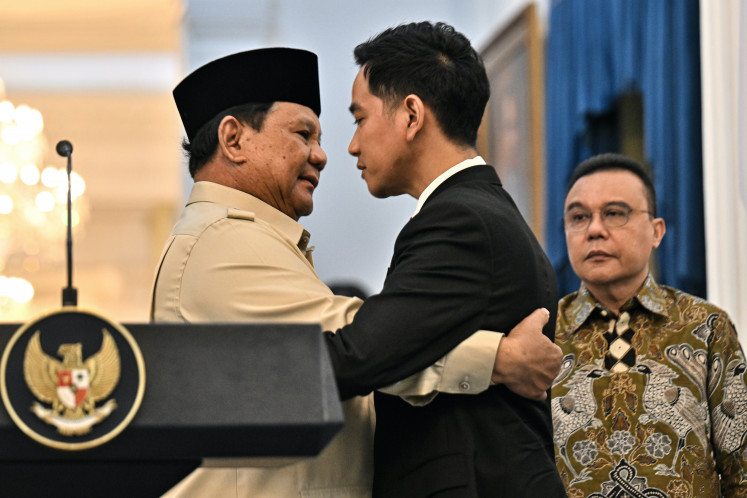
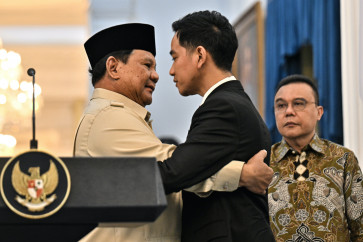
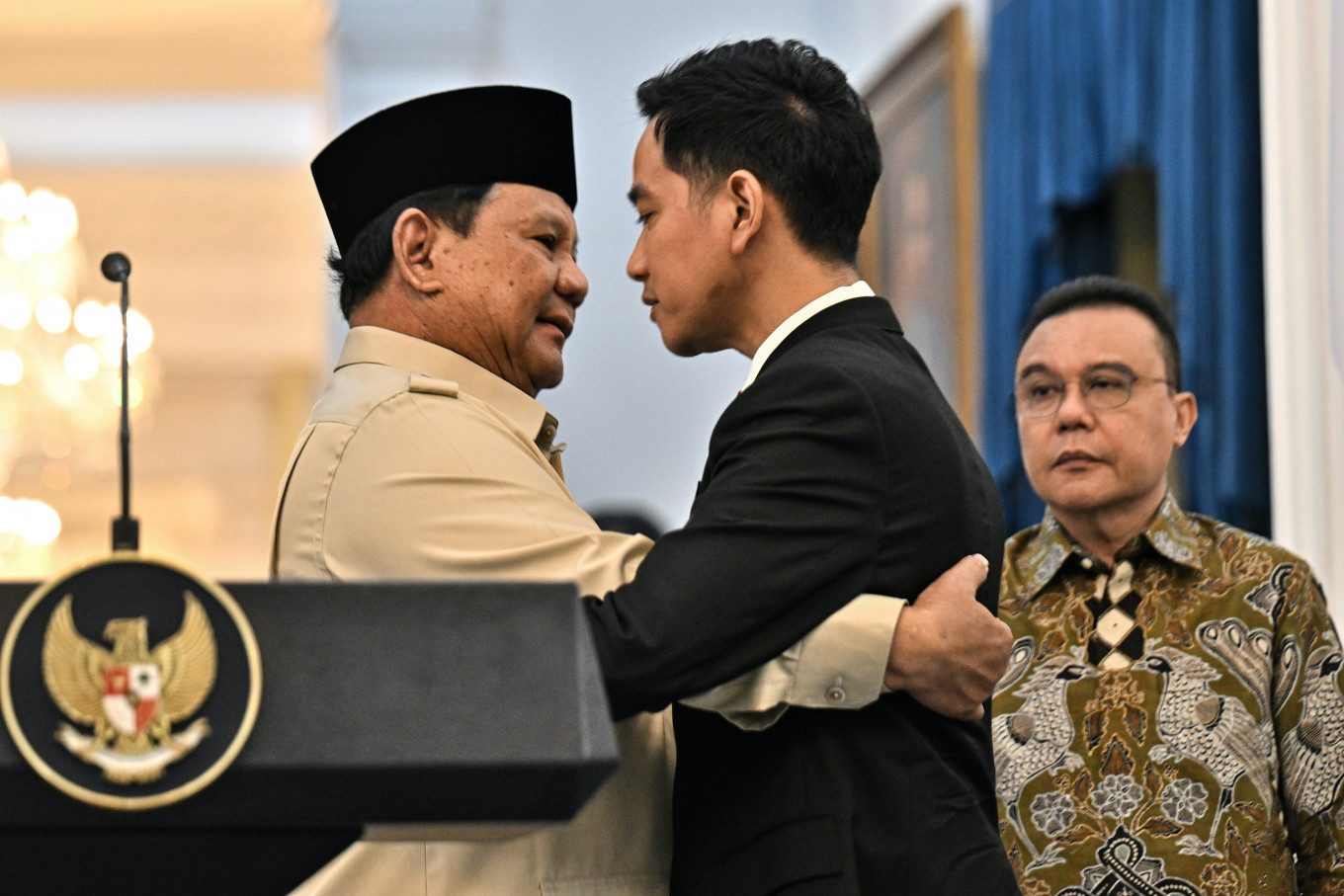 President Prabowo Subianto (left) embraces Gibran Rakabuming Raka on Nov. 12, 2026, as House of Representatives Deputy Speaker Sufmi Dasco Ahmad looks on, after a press conference to announce Gibran’s resignation as vice president at Merdeka Palace in Central Jakarta. (Antara/Bayu Pratama S)
P
rabowo Subianto and Gibran Rakabuming Raka won the 2024 presidential election in a single round with 58.59 percent of the vote; two years later, their partnership collapsed. On Nov. 12, 2026, Gibran submitted his resignation to the People’s Consultative Assembly. Consequently, the House of Representatives called off a scheduled plenary session to consider an impeachment motion, a proposal that had garnered backing from lawmakers across all eight House factions, including those of Prabowo’s Gerindra Party.
History seems to repeat itself. In 2001, following a heated schism, Abdurrahman “Gus Dur” Wahid was impeached by the very politicians who made him president two years prior.
Gibran’s departure allows Prabowo to nominate two candidates to fill the vacancy. It also provides coalition parties with an opening to bargain over who will stand beside him for the remainder of his term, and who will be best positioned to contest the 2029 race.
The crisis stemmed from two court proceedings regarding Gibran’s educational qualifications. On Oct. 6, the Constitutional Court declared inadmissible a challenge to the 2024 election results filed by a group that included constitutional lawyer Denny Indrayana. While the petitioners lacked legal standing, the court nevertheless observed that the evidence before it did not convincingly establish that Gibran held a foreign credential substantiating his secondary school qualification.
That finding had no direct bearing on the election outcome or Gibran’s tenure. However, on Oct. 30 in a separate administrative case, the Supreme Court annulled the government-issued certificate recognizing Gibran’s secondary education as equivalent to an Indonesian high school diploma. This ruling invalidated the foundational document used to establish his eligibility, giving lawmakers formal grounds to question his continued tenure.
Gibran’s candidacy had been controversial from the outset. In October 2023, the Constitutional Court under Anwar Usman, his uncle and brother-in-law of then-president Joko "Jokowi" Widodo, revised the age requirement for vice presidential candidates. While maintaining the general minimum age at 40, the court carved out an exception for younger candidates who held or had previously held elected office. That exception enabled Gibran, then 36 and serving as mayor of Surakarta, Central Java, to run.

This controversy outlasted the election and continued to cloud the legitimacy of Prabowo’s presidency, with public scrutiny eventually shifting from Gibran’s age to his academic credentials.