The Jakarta Post
Please Update your browser
Your browser is out of date, and may not be compatible with our website. A list of the most popular web browsers can be found below.
Just click on the icons to get to the download page.


Popular Reads
Top Results
No results found. Please check your search term and try again
Can't find what you're looking for?
View all search results
Popular Reads
Top Results
No results found. Please check your search term and try again
Can't find what you're looking for?
View all search resultsReplanting alone may not stop mangrove degradation
Natural disasters are just among a slew of negative effects as a result of mangrove degradation, activists warned, as failure to prevent mangrove degradation also harmed biodiversity and caused economic losses for communities that depended on mangroves for a living.
Change text size
Gift Premium Articles
to Anyone
Share the best of The Jakarta Post with friends, family, or colleagues. As a subscriber, you can gift 3 to 5 articles each month that anyone can read—no subscription needed!
 Set as preferred source
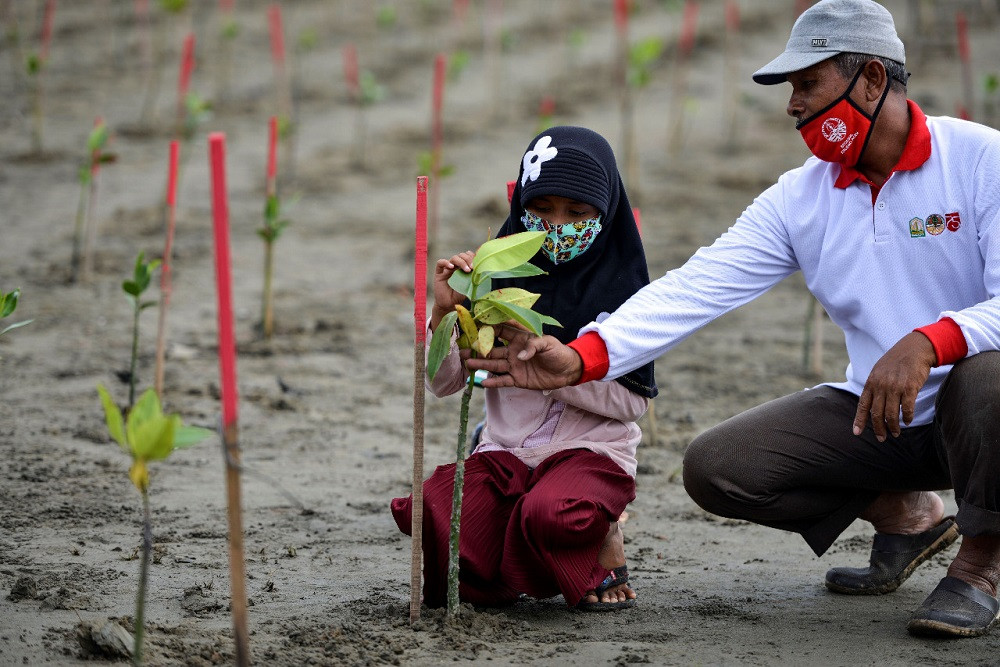
When 53-year-old Azizi is not tending to his crab farm, he would be nursing the 456-hectare mangrove forest near his home in the village of Gambus in North Sumatra’s Batu Bara regency.
The former fisherman said recently that fewer than three-quarters of the nearby mangroves were in good condition, but the same could not be said for the rest of the regency’s mangrove cover, about 70 percent of which is damaged. Some areas were being converted into oil palm plantations or prawn farms, he said.
The mangrove degradation had caused landslides in neighboring villages, he claimed, sinking 30 to 50 houses. He said the dwindling mangrove cover would allow strong wind to pass through, potentially damaging nearby neighborhoods in the future.
“It’s a big risk,” he said on Friday. “We have to be ready to let our houses plunge [to the sea] if we are not ready to preserve our mangroves,” he said.
But natural disasters are just among a slew of negative effects as a result of mangrove degradation, activists warned, as failure to prevent mangrove degradation also harmed biodiversity and caused economic losses for communities that depended on mangroves for a living.
Indonesia currently has nearly 3.5 million ha of mangroves, but over half of them are damaged, the Coordinating Maritime Affairs and Investment Ministry said in a press release in July.