The Jakarta Post
Please Update your browser
Your browser is out of date, and may not be compatible with our website. A list of the most popular web browsers can be found below.
Just click on the icons to get to the download page.


Popular Reads
Top Results
No results found. Please check your search term and try again
Can't find what you're looking for?
View all search results
Popular Reads
Top Results
No results found. Please check your search term and try again
Can't find what you're looking for?
View all search results[INSIGHT] Disaster amid pandemic: Operationalizing remote support
Are we ready for national or nonnatural disasters while the world is struggling with COVID-19? Now is the time to plan and prepare.
Change text size
Gift Premium Articles
to Anyone
Share the best of The Jakarta Post with friends, family, or colleagues. As a subscriber, you can gift 3 to 5 articles each month that anyone can read—no subscription needed!
 Set as preferred source
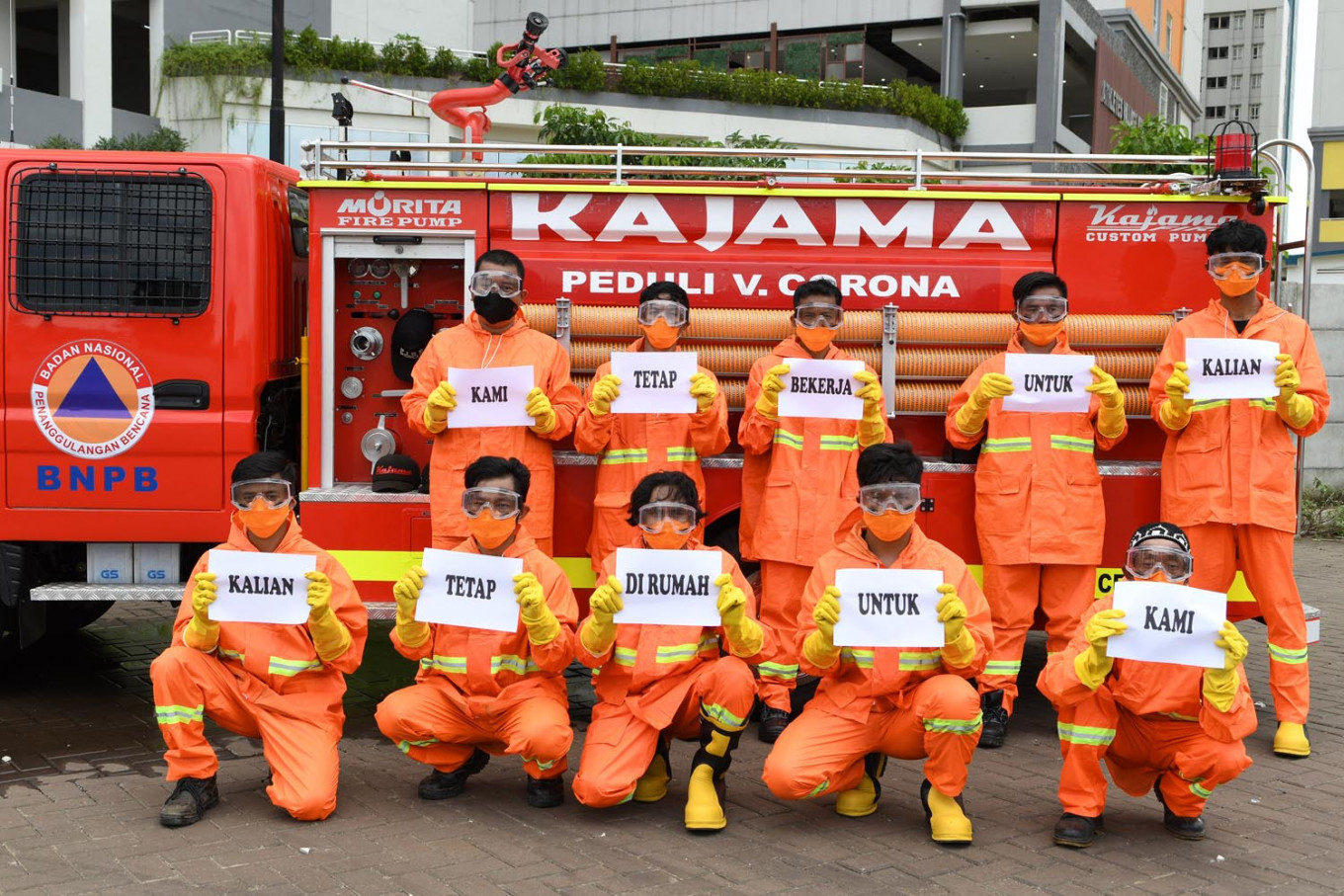
We have read numerous articles and listened to countless webinars on humanitarian operations amid the COVID-19 pandemic. Humanitarian workers continue to contemplate how coordination will work should a natural disaster strike during the pandemic, given the restrictions within and across countries.
Prior to COVID-19, international aid workers would fly out to the affected country to meet with relevant stakeholders to discuss and plan how best to proceed during the emergency. We are used to being physically present and meeting with our counterparts to solve complex problems. With the pandemic still raging, is that still feasible?
COVID-19 seems to have forced us to find new ways of coordinating without risking our lives. Hence, the conversation is about how to coordinate in the new era of remote support for emergency response operations. As easy as it may sound, do we really know how humanitarian aid coordination will operate during this pandemic?
Essentially, coordination as a process is the entire effort of achieving common goals, from engaging with humanitarian actors, building trust, exchanging information and planning strategies to delivering the final result. To achieve this, it is essential to meet and discuss with various stakeholders on a regular basis, particularly since information is dynamic and limited in times of emergency. For instance, during the Central Sulawesi earthquake and tsunami back in 2018, humanitarians, including the Indonesian government, were busy attending various cluster meetings almost every day.
As a structure, coordination aims to illustrate complex elements and show how they synergize. Before COVID-19, most countries had a coordination structure in place to determine who calls the shots and how decisions are implemented. However, the game plan has changed with the pandemic. Countries have set up ad hoc coordination structures specifically designed to tackle COVID-19.
How would this new ad hoc structure work with existing national/local coordination structures for natural disaster response?