TheJakartaPost
Please Update your browser
Your browser is out of date, and may not be compatible with our website. A list of the most popular web browsers can be found below.
Just click on the icons to get to the download page.


Popular Reads
Top Results
No results found. Please check your search term and try again
Can't find what you're looking for?
View all search results
Popular Reads
Top Results
No results found. Please check your search term and try again
Can't find what you're looking for?
View all search resultsFrom irony of success to tragedy of failure
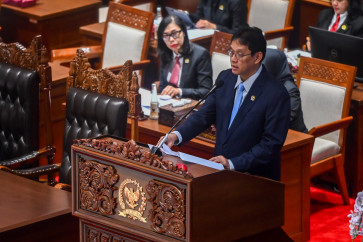
The nontransparent deliberation of the bill in the House of Representatives has exposed the fact that there is not even a single little party in the House to represent the views of employees and sufferers of environmental degradation.
Change text size
Gift Premium Articles
to Anyone
Share the best of The Jakarta Post with friends, family, or colleagues. As a subscriber, you can gift 3 to 5 articles each month that anyone can read—no subscription needed!
W
hy has democratic development derailed in Indonesia, and can it be revived? During a decade and a half after democrats made Soeharto step down and rulers put on new cloths, mainstream scholars like David Horowitz and Larry Diamond dubbed Indonesia a showcase of liberal democratization.
Edward Aspinall certainly cautioned that the “the irony of success” was that the elites had adjusted to new freedoms and democratic institutions in return for the containment of popular movements.
But the expectation remained that, since the elites adjusted to the new rules of the game, they would also, gradually, build better parties, reduce corruption and respect the rule of law and human rights. Actually, it was clear already since 2004 that this expectation did not materialize and that the main reason (according to Indonesian Centre for Democracy and Human Rights (Demos) and later on University of Gadjah Mada’s nationwide surveys of how grounded experts assessed the dynamics) was that pro-democrats were not given fair chances to get into politics and propel progress.
Still, this fundamental problem of representation was brushed aside, while most experts focused on institutional flaws, and the political economists stressed the dominance of the oligarchs. It was not until retired general Prabowo Subianto gained vast support for his strongman agenda in the 2014 elections, and populist identity politics undermined then-governor of Jakarta Basuki “Ahok” Tjahaja Purnama, followed by President Joko “Jokowi” Widodo’s dubious countermeasures, that most scholars agreed (in several international assessments and in Australian National University’s 2019 Indonesia update) that democracy is indeed regressing.
Yet, the focus remains on the institutional decay along with the maneuvers of the political elite, the oligarchs and their followers in un-civil society. This is of course important, but although it should be clear by now that democratization is not a technical matter that the elite will fix on its own, nothing is there of the processes and actors that might have resisted the perpetrators and nurtured positive change.
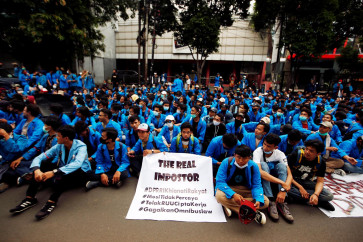
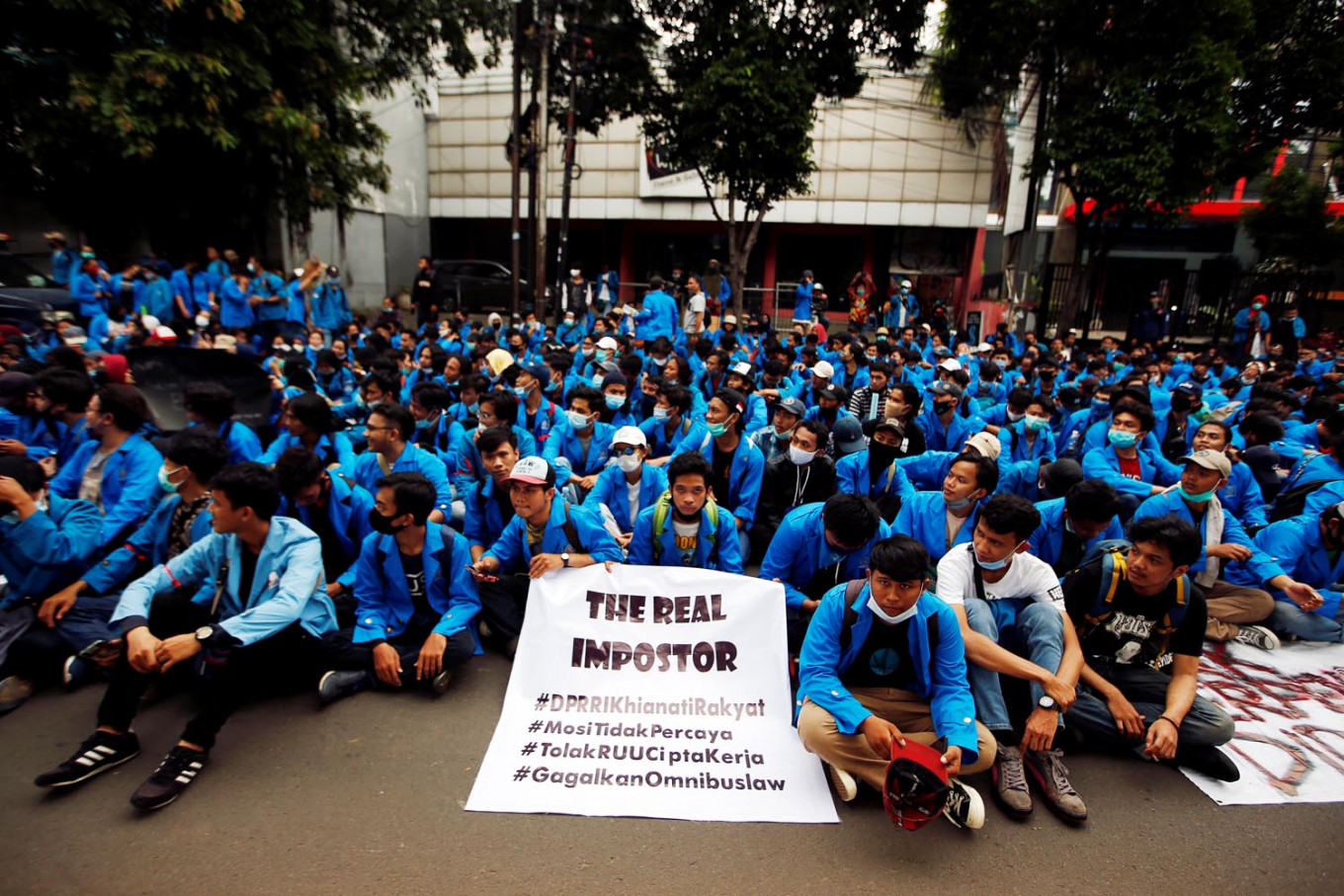
Ironically, this bias is now unmasked by reality itself through the Job Creation Law, exposing how the “irony of success” for elitist democratization has turned into a tragedy of failure. In three strokes, it is clearer than ever how democrats, and thus democracy, have lost out.
Firstly, the law explicitly trashes quests for inclusive and sustainable development based on social contracts about increased productivity and more jobs through training and socioeconomic and environmental equity, plus production-oriented programs for the underemployed. Instead, priority is given to investments in extractive industries based on more exploitation of people and nature, along with handouts for the victims. The idea of an unemployment insurance is a lone step in the right direction, but entirely insufficient.