The Jakarta Post
Please Update your browser
Your browser is out of date, and may not be compatible with our website. A list of the most popular web browsers can be found below.
Just click on the icons to get to the download page.


Popular Reads
Top Results
No results found. Please check your search term and try again
Can't find what you're looking for?
View all search results
Popular Reads
Top Results
No results found. Please check your search term and try again
Can't find what you're looking for?
View all search results[INSIGHT] Respond, recover, reimagine: How government agencies can emerge stronger
Change text size
Gift Premium Articles
to Anyone
Share the best of The Jakarta Post with friends, family, or colleagues. As a subscriber, you can gift 3 to 5 articles each month that anyone can read—no subscription needed!
 Set as preferred source
T
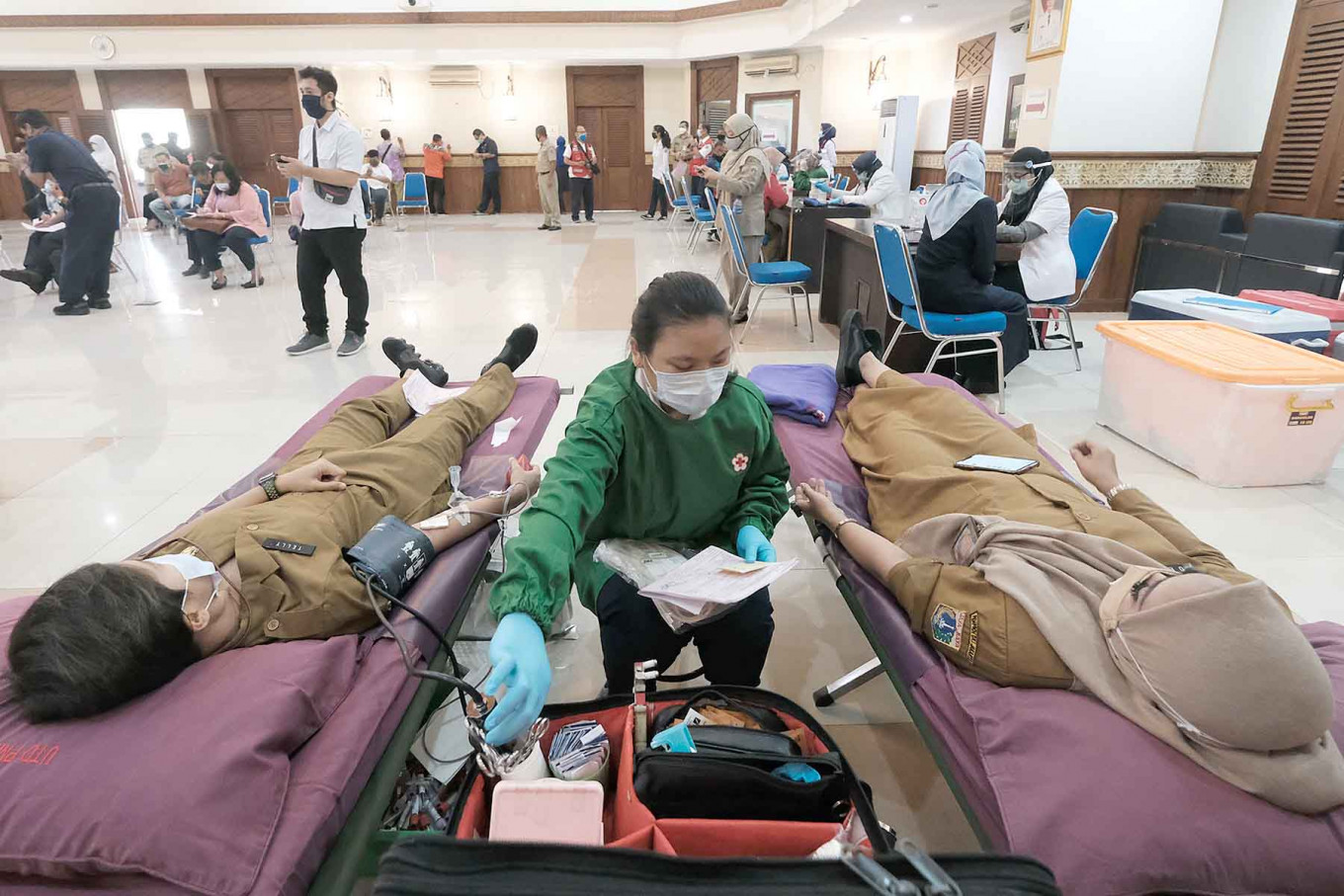
he pandemic has brought about changes in the way we live, work and play – from healthcare workers taking on additional roles to the new normal of office staff working from home.
It is a time when every step or misstep of civil servants is magnified, when they adapt and pivot to serve citizens or lapse to reveal a lack of resources or planning. Through analytical insights, government agencies can go beyond responding to emergencies and can ensure that policy planning and the execution of policies result in positive outcomes for citizens.
As we emerge from the ruins of the pandemic and assess its unfolding impact, analytics can help in the recovery. Analytics can inform strategy and policies through providing a holistic understanding of our environment and circumstances through situational awareness. Governments will need a strategic framework to navigate the country out of this crisis. A three-phased framework, when applied to government agency decisions, can guide leaders in making critical decisions.
In the initial stages of a crisis, when governments are responding to it, analytics can provide insights for situational awareness to understand the potential threats and trajectory of a given situation. Decisions have to be made quickly based on rapidly evolving data, and analytics can help in refining situational awareness through assessing the situation, visualizing it and charting trends to predict future possibilities.
Analytics in medical resource optimization can predict the need for limited resources such as medical equipment and infrastructure. Public health agencies can use specialized analytics and scenario analysis tools to plan for situations to help governments build capacity before it is needed.
Analytics can also be used in manual contact tracing efforts to better understand who should be tested, where the virus is spreading, which communities are at the greatest risk and to identify missing or unexpected linkages in the community.
In India, the Odisha state government developed analytic models predicting the pandemic’s peak periods for infections and deaths at district levels and forecasting COVID-19 hotspots and containment areas. It was used to estimate quarantine bed capacity and intensive care unit (ICU) infrastructure, considering the immigrant population. Insights from analytical modelling for best- and worst-case scenarios have been used to map regions to be reopened for movement to mitigate the spread of the virus.