The Jakarta Post
Please Update your browser
Your browser is out of date, and may not be compatible with our website. A list of the most popular web browsers can be found below.
Just click on the icons to get to the download page.


Popular Reads
Top Results
No results found. Please check your search term and try again
Can't find what you're looking for?
View all search results
Popular Reads
Top Results
No results found. Please check your search term and try again
Can't find what you're looking for?
View all search resultsBacterial cellulose provides hope for eco-friendly medical mask
The search for sustainable and environmentally friendly raw materials to produce masks is intensifying, and bacterial cellulose is one promising approach.
Change text size
Gift Premium Articles
to Anyone
Share the best of The Jakarta Post with friends, family, or colleagues. As a subscriber, you can gift 3 to 5 articles each month that anyone can read—no subscription needed!
 Set as preferred source
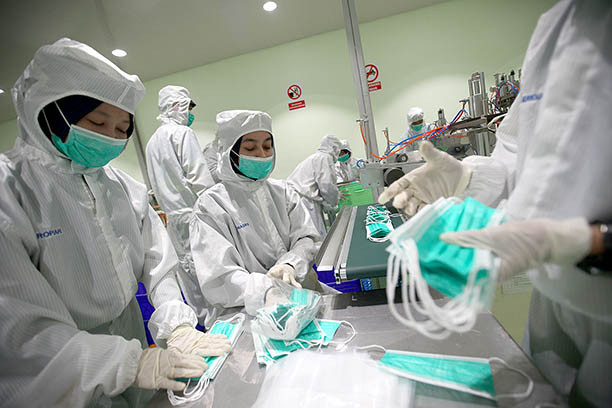
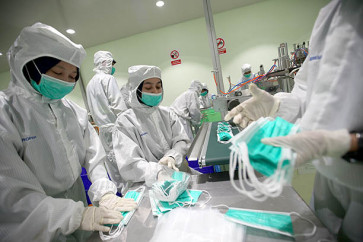
More than nine months after its outbreak, the COVID-19 pandemic’s infection curve in Indonesia is still on the rise. The virus is so contagious that personal protective equipment is imperative for survival. Therefore, during this so-called new normal, masks are a must-wear item for everyone.
However, the huge demand for medical masks worldwide has threatened supply. Besides, waste from medical masks is cause for environmental concern. Consequently, the search for sustainable and environmentally friendly raw materials to produce masks is intensifying.
We all know that bacterial cellulose (BC) has been around for ages. In Indonesia and other Asian countries, BC is known as “nata de coco.” However, with the unique properties of BC, including its high purity, high crystallinity, light weight, network morphology, fiber strength, excellent biocompatibility, high polymerization and good moldability, BC applications could go far beyond food.
BC has already gained attention as a natural biofabric in a nonwoven and tailor-shaped form for the biocouture industry. Due to its physicochemical and biological characteristics, its application has been noticed for medical garments. However, can BC compete with or replace other approved materials?
BC is produced extracellularly by Komagataiebacter xylinum through fermentation. Since the BC producing-bacteria can only unite fibrils on a nanoscale (diameter of 10 nm and length of 0.5 µm), all BC is nanocellulose. In terms of chemical composition, BC has the same molecular formula as cellulose from plants (C5H10O)n. However, they are very different in terms of physical and chemical characteristics.