The Jakarta Post
Please Update your browser
Your browser is out of date, and may not be compatible with our website. A list of the most popular web browsers can be found below.
Just click on the icons to get to the download page.


Popular Reads
Top Results
No results found. Please check your search term and try again
Can't find what you're looking for?
View all search results
Popular Reads
Top Results
No results found. Please check your search term and try again
Can't find what you're looking for?
View all search resultsMyanmar crisis highlights need to revamp ASEAN Charter
Existing ASEAN institutions are not equipped to deal with short-term domestic crises with regional implications involving member states like Myanmar.
Change text size
Gift Premium Articles
to Anyone
Share the best of The Jakarta Post with friends, family, or colleagues. As a subscriber, you can gift 3 to 5 articles each month that anyone can read—no subscription needed!
 Set as preferred source
A
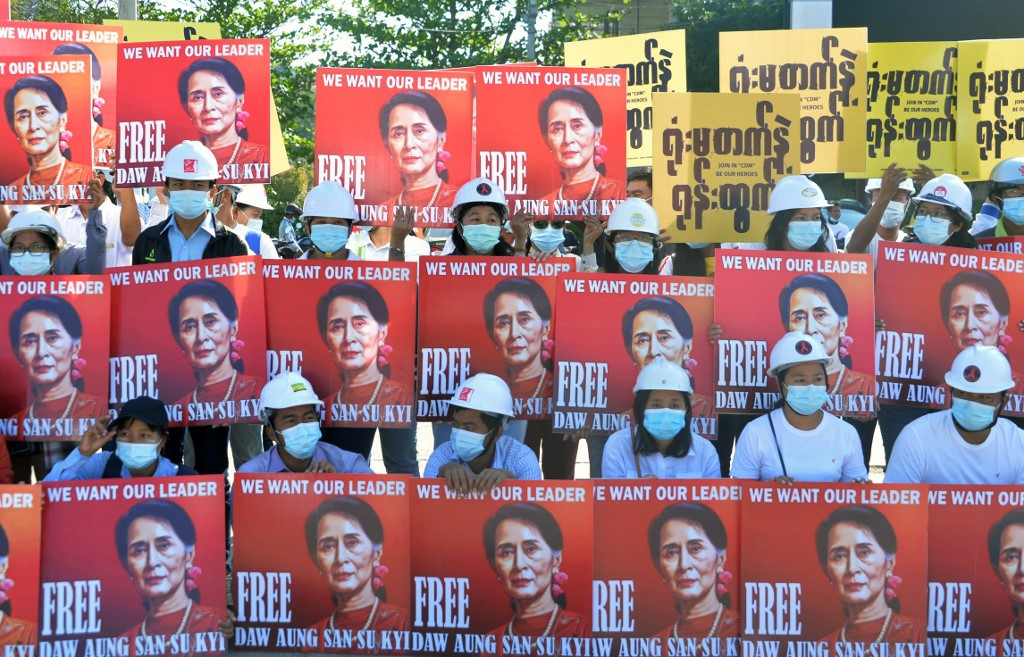
s Myanmar security forces continue to use violence against protesters challenging the Feb. 1 coup, what can ASEAN do? The answer may simply be “not much”.
After all, ASEAN operates on consensus-based decision-making. So, any ASEAN-wide effort to end the crisis in Myanmar must account for the views of Myanmar’s representatives—whose own legitimacy remain in doubt.
Indonesia made valiant diplomatic efforts nonetheless to engage all the salient parties—both within and outside of Myanmar—to end the month-long crisis that threatens ASEAN centrality and regional security. Unfortunately, only Singapore, Malaysia and Brunei appear to be fully on board with the goal of getting Myanmar’s military regime to open up, release prisoners and begin dialogue, while ensuring the people of Myanmar that their aspirations will not be ignored.
It remains unclear to what extent the current ASEAN chair, Brunei, and the secretary-general can and will play a role in the ongoing efforts. It also remains unclear whether ASEAN members are willing to invoke the so-called ASEAN Troika—the foreign ministers of the previous, current, and next ASEAN chair—or the ASEAN High Council in engaging Myanmar.
The lack of common views among ASEAN members are to be expected given the political-security diversity of the region. But the lack of an ASEAN institutional mechanism to address a common regional crisis should not be. Indeed, one of the strategic rationales behind the ASEAN Charter and the ASEAN Political Security Community project was to ensure ASEAN-wide institutions can help member states address pressing challenges.
But the challenges we now face in Myanmar highlight the need to revamp the ASEAN Charter.
For one thing, since the charter came into effect over a decade ago, there has not been a single review of the document, even though Article 50 allows for such a review five years after it came into force.