The Jakarta Post
Please Update your browser
Your browser is out of date, and may not be compatible with our website. A list of the most popular web browsers can be found below.
Just click on the icons to get to the download page.


Popular Reads
Top Results
No results found. Please check your search term and try again
Can't find what you're looking for?
View all search results
Popular Reads
Top Results
No results found. Please check your search term and try again
Can't find what you're looking for?
View all search resultsWhy are schools still closed in Indonesia?
It is about time that schools reopen, before our children fall even more behind in their studies and development.
Change text size
Gift Premium Articles
to Anyone
Share the best of The Jakarta Post with friends, family, or colleagues. As a subscriber, you can gift 3 to 5 articles each month that anyone can read—no subscription needed!
 Set as preferred source
I
t has been a year since schools were closed due to the COVID-19 pandemic. Now, it is about time to open the debate on when and how in-class learning can resume. Addressing the issue is important for our children, and for the country‘s economy.
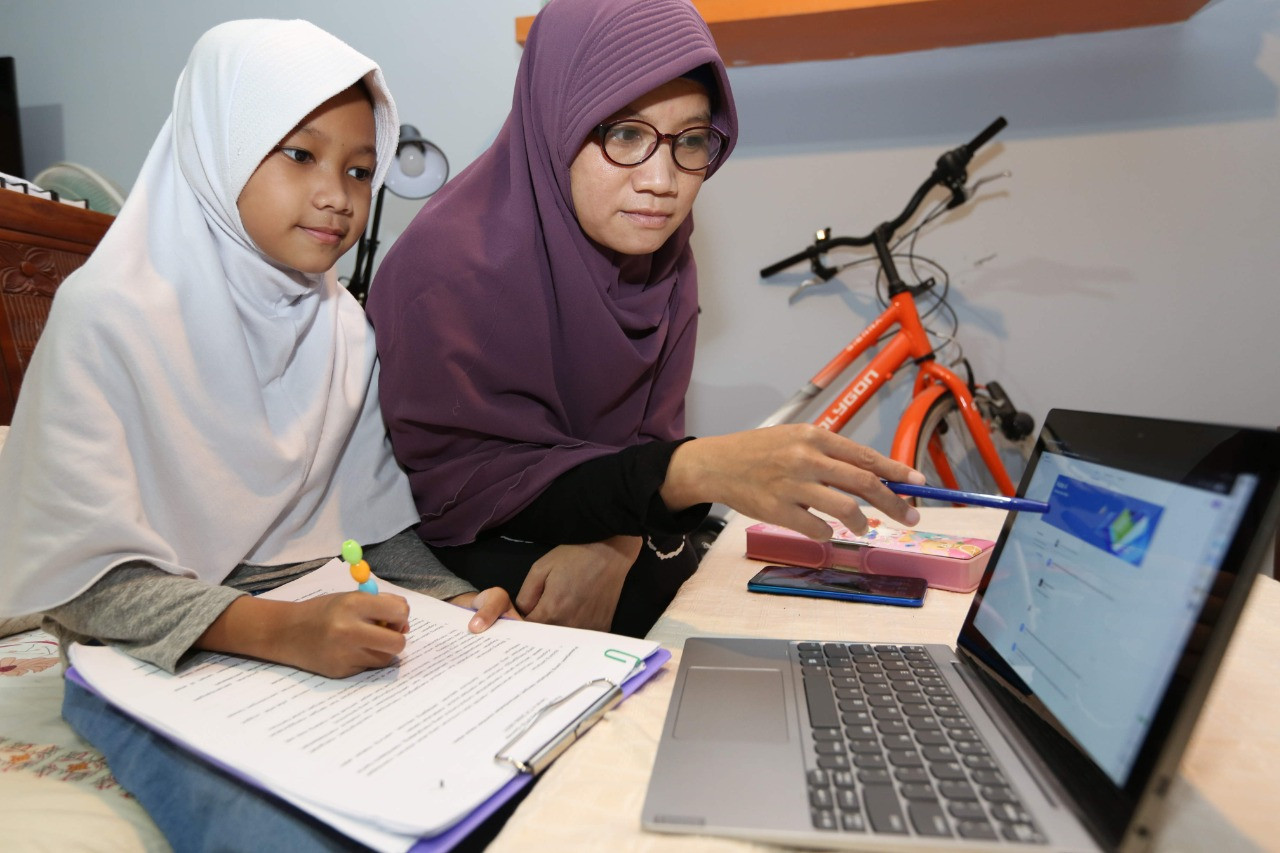
Nobody could have imagined a year ago that the school closure would last this long. But here we are. Schoolchildren have remained unable to study in classrooms and interact with their friends and teachers. There is an indication that schools might reopen in July, but who knows if this will happen?
Most businesses appear to have returned to normal recently. Shopping malls, traditional markets, restaurants and other places have welcomed back customers, although with certain restrictions. Meanwhile, the number of daily infections has dropped markedly in the last few months, indicating that the many good measures have been effective in containing the virus.
On top of these virus containment efforts, mass vaccination has been underway since Jan. 13 and is now inoculating teachers.
Despite the progress, school reopenings are unlikely to happen anytime soon, and this is likely to have many consequences, not only for children but also the Indonesian economy for many years to come. The longer the schools remain closed, the greater the problems and consequences will be.
Various studies predict that school closures will have a decisive effect on the economies of nations for a very long time. The Organisation for Economic Cooperation and Development (OECD), for example, has estimated that students in grades 1-12 affected by the closures might expect 3 percent lower incomes over their lifetimes. The loss in income is likely to be much higher among disadvantaged students. For nations, long-term growth related to reduced incomes might yield an average loss of 1.5 percent in annual gross domestic product for the remainder of the century.
Other studies indicate that prolonged school closures could also lead to reduced life expectancy.