The Jakarta Post
Please Update your browser
Your browser is out of date, and may not be compatible with our website. A list of the most popular web browsers can be found below.
Just click on the icons to get to the download page.


Popular Reads
Top Results
No results found. Please check your search term and try again
Can't find what you're looking for?
View all search results
Popular Reads
Top Results
No results found. Please check your search term and try again
Can't find what you're looking for?
View all search resultsDangdut, UNESCO and the hidden potential of intangible cultural heritage
Weintraub thinks that dangdut not only reflects national politics and social settings, but in terms of economic, political and ideological practices, dangdut has also played a role in shaping the perspectives of class, gender and ethnicity in modern Indonesia.
Change text size
Gift Premium Articles
to Anyone
Share the best of The Jakarta Post with friends, family, or colleagues. As a subscriber, you can gift 3 to 5 articles each month that anyone can read—no subscription needed!
 Set as preferred source
I
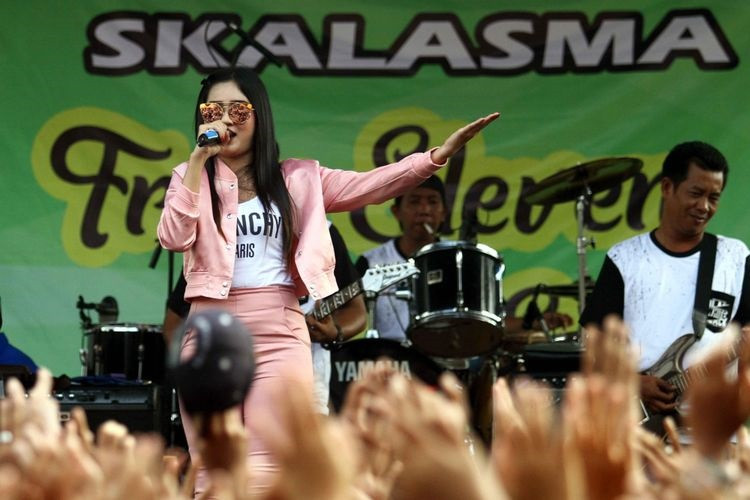
magine if iconic world music was internationally recognized as intangible cultural heritage. The United States has Hollywood, South Korea has K-Pop, and Indonesia has dangdut.
The discussion on proposing dangdut as an internationally recognized example of intangible cultural heritage has been around for a while. During Agung Laksono’s tenure as the coordinating people’s welfare minister from 2009 to 2014, he was the first person to support the king of dangdut, Rhoma Irama, in promoting dangdut for recognition by UNESCO as a part of Indonesia’s intangible cultural heritage. The support was conveyed on March 3, 2012, during the opening ceremony of the national congress of the Dangdut-Malay Music Performers Association (PAMMI) in Surabaya.
After nine years, on March 30 of this year, support for dangdut revived. The Tourism and Creative Economy Ministry, alongside PAMMI, renewed discussions on the possibility of getting UNESCO to recognize dangdut. Tourism and Creative Economy Minister Sandiaga Uno responded positively by preparing a team to submit a proposal to UNESCO. The Directorate General of Multilateral Cooperation at the Foreign Ministry also stated its support.
Sandiaga said dangdut music had great potential to contribute to the tourism and creative economy sector, including by creating jobs and developing large-scale industry.
There are several requirements to apply for UNESCO recognition of cultural heritage. First, it has to be part of the cultural identity of one or more cultural community. Second, the proposal must be filed by the community and at least one master of the form who is still active. Third, it must have been inherited generationally, or at least be an art or cultural form that is more than fifty years old.
Andrew Weintraub, a music professor at the University of Pittsburgh, in his book Dangdut Stories: A Social and Musical History of Indonesia's Most Popular Music (2010), quoted William Frederick from the University of Ohio as stating that dangdut was a reflective and useful prism to view Indonesian society.
Furthermore, Weintraub thinks that dangdut not only reflects national politics and social settings, but in terms of economic, political and ideological practices, dangdut has also played a role in shaping the perspectives of class, gender and ethnicity in modern Indonesia.