TheJakartaPost
Please Update your browser
Your browser is out of date, and may not be compatible with our website. A list of the most popular web browsers can be found below.
Just click on the icons to get to the download page.


Popular Reads
Top Results
No results found. Please check your search term and try again
Can't find what you're looking for?
View all search results
Popular Reads
Top Results
No results found. Please check your search term and try again
Can't find what you're looking for?
View all search resultsMosque council mulls ‘simultaneous’ call to prayer in Greater Jakarta
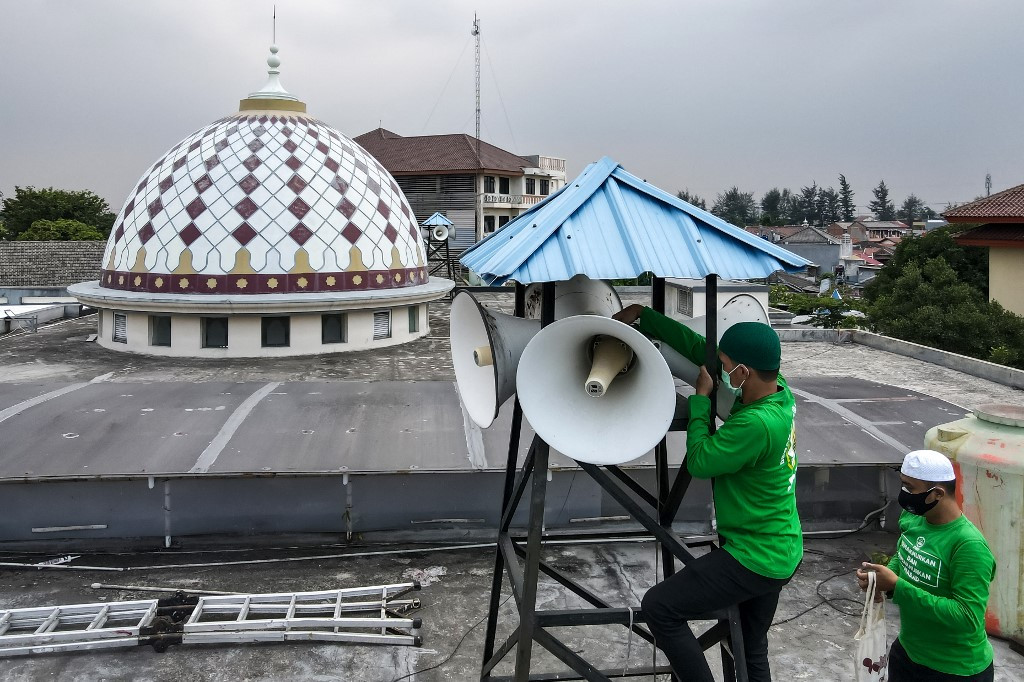
Concerns over the liberal use of mosque loudspeakers in urban centers have been a topic of profound sensitivity in Muslim-majority Indonesia, but talks are under way to bring some order to the ubiquity of mosques that have come to define the modern urban landscape.
Change text size
Gift Premium Articles
to Anyone
Share the best of The Jakarta Post with friends, family, or colleagues. As a subscriber, you can gift 3 to 5 articles each month that anyone can read—no subscription needed!
T
he Indonesian Mosque Council (DMI) is considering plans to have mosques in big cities broadcast the adzan (Islamic call to prayer) from a centralized source, starting with those in the Greater Jakarta area.
Concerns over the liberal use of mosque loudspeakers in packed urban centers have been a topic of profound sensitivity in the Muslim-majority country, in some cases leading to blasphemy charges against complainants.
However, talks are under way to bring some order to the ubiquity of mosques that have come to define the modern Indonesian urban landscape.
“For instance, we could centralize the adzan for Jakarta and surrounding areas within the same time zone. [The adzan] could be broadcast from the City Hall Mosque, or, perhaps more suitably, from the Istiqlal Mosque, due to it being situated in the nation’s capital,” DMI secretary-general Imam Ad Daruquthni told Tempo.co on Wednesday.
To follow through with such a plan, he said the Jakarta administration and other regional authorities would have to install receivers in every mosque sound system so they would be able to broadcast the adzan simultaneously.
A second call immediately before the prayer called iqamah would likely still be delivered by worshipers at their respective mosques and without a broadcast.
Imam said that the council had been training voluntary sound technicians to go from mosque to mosque to ensure the acoustics were tuned to comfortable levels. These volunteers would be enlisted for the free service or maintenance of mosque sound systems, for all but the most serious of hardware damage, he said.
The council was also currently devising a proposed regulation for the use of mosque loudspeakers, which would be discussed with the Indonesian Ulema Council (MUI), the Religious Affairs Ministry and regional administrations.
“We don’t intend to ban the use of loudspeakers for the adzan, because it remains a means for syiar [propagation of faith], which is compulsory [for Muslims]. However, the adzan itself is sunnah [optional] and not part of prayers,” Imam insisted.
There are around 750,000 mosques across Indonesia – a medium-sized venue could have at least a dozen external loudspeakers that blare the call to prayer five times a day.
The DMI official recognized that across many modern urban centers, the local work culture has shifted to become “more technocratic”, leading to the need to bring order to the effective use of time.
Unlike in rural areas, where people’s daily schedules remain varied, there is more of a need to synchronize the adzan in big cities, Imam said, as the people living there have scheduled work hours that often run parallel to – if not in conflict with – the Muslim prayer times.
The plan to synchronize the adzan was proposed amid a flurry of online complaints over mosque loudspeakers being put up too loud and used for purposes other than the call to prayer. Such complaints are often made anonymously out of fear of a backlash, even if sometimes there is enough proof of misuse or noise pollution.
In August 2018, ethnically Chinese and Buddhist woman Meiliana was sentenced to 18 months in prison over blasphemy charges after she complained about the loudness of the adzan being broadcast from a mosque adjacent to her former home in Tanjung Balai, North Sumatra.
She had remarked to a neighbor in July 2016 that the adzan was too loud and had hurt her ears. Her comments spread through the neighborhood by word of mouth but were distorted, with residents at some point claiming that she had wanted the adzan banned.
By the end of that month, 14 Buddhist temples in Tanjung Balai had been burned and ransacked by angry mobs who took offense at Meiliana’s complaints. She reportedly disappeared but was later arrested and named a suspect in an ensuing blasphemy case on May 30, 2018.
Meiliana was released on parole on May 21, 2019. (ami)