The Jakarta Post
Please Update your browser
Your browser is out of date, and may not be compatible with our website. A list of the most popular web browsers can be found below.
Just click on the icons to get to the download page.


Popular Reads
Top Results
No results found. Please check your search term and try again
Can't find what you're looking for?
View all search results
Popular Reads
Top Results
No results found. Please check your search term and try again
Can't find what you're looking for?
View all search resultsDo FTAs matter for realizing circular supply chains in ASEAN?
The recently concluded Regional Comprehensive Economic Partnership (RCEP) completely ignored the provision of environmental goods services.
Change text size
Gift Premium Articles
to Anyone
Share the best of The Jakarta Post with friends, family, or colleagues. As a subscriber, you can gift 3 to 5 articles each month that anyone can read—no subscription needed!
T
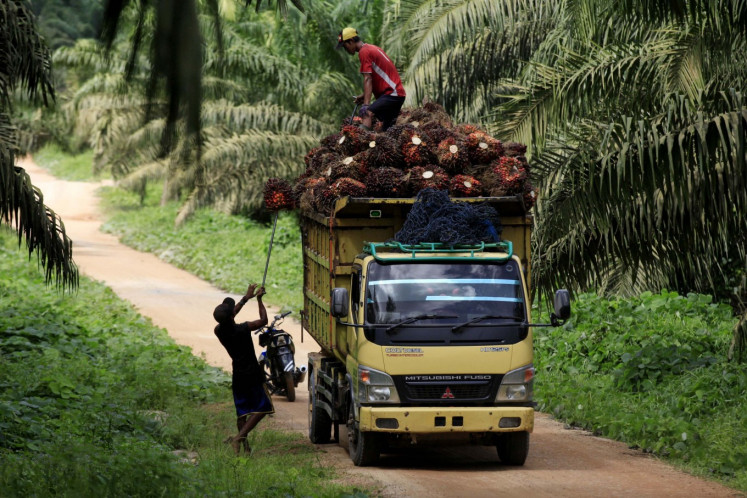
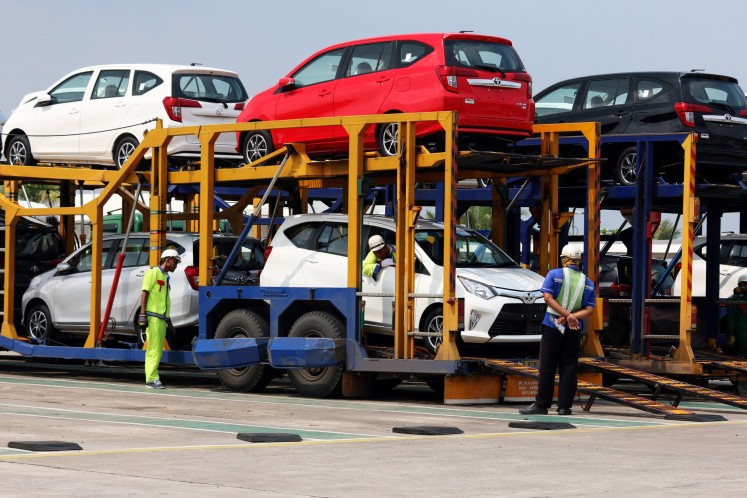
he Asia-Pacific region plays a prominent role in global production, resource use, and employment through the formation of global supply chains (GSC). In part, this is the result of multilateral trade pacts, harmonized rules and adopting technological innovations. The main traded goods are from the apparel and footwear, automotive, agrifood, electronics, and extractive industries.
The global supply chain participation tends to be higher in the 10 economies of ASEAN and East Asia and in 2019 accounted for more than 65 percent of the GSC-related intermediate imports in the world.
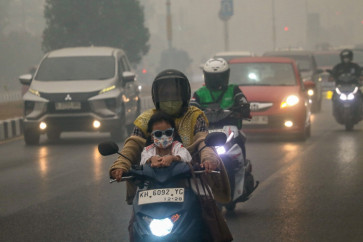
Widespread deforestation, polluted water resources, degraded agricultural lands, and declining fish stocks are just examples of the consequences of aggressively pursued economic growth by GSC that also generated millions of jobs across the region.
GSC-related carbon emissions account for an average of 73 percent of multinational company’s total emissions. This underlines the imperative for circular supply chains that could tackle the negative externalities of free trade.
Many countries and businesses in the world have started adopting roadmaps for a transition toward more circular supply chains —a model that promotes enhanced resource efficiency and the decoupling of economic growth from extractive, wasteful, and polluting processes. Moving from a linear, extractive produce–use–discard model to a more circular approach will involve a paradigm shift and significant changes to existing business models.
A wide range of trade in products and services plays a critical role in supporting the different business models unpinning circular supply chains. They include both traditional services such as construction, repair, and maintenance services and new forms of products and production processes, services related to sharing models involving co-ownership or co-access to the information stored in digital platforms or product service systems focusing on selling a service rather than the product itself.
These circular services are not limited to domestic activities but are procured and supplied across the borders. A recent study reveals that the current circular business approaches taken by Multi-National Companies could create a US$1.6 trillion opportunity in the Asia-Pacific region.