TheJakartaPost
Please Update your browser
Your browser is out of date, and may not be compatible with our website. A list of the most popular web browsers can be found below.
Just click on the icons to get to the download page.


Popular Reads
Top Results
No results found. Please check your search term and try again
Can't find what you're looking for?
View all search results
Popular Reads
Top Results
No results found. Please check your search term and try again
Can't find what you're looking for?
View all search resultsCollective effort, political will key to protecting Arafura, Timor seas' marine heritage
There is a dire need to ensure that communities, whose future depends on the riches of the oceans, understand that sustainable fishing practices are non-negotiable.
Change text size
Gift Premium Articles
to Anyone
Share the best of The Jakarta Post with friends, family, or colleagues. As a subscriber, you can gift 3 to 5 articles each month that anyone can read—no subscription needed!
I
t is now common knowledge that humanity faces some serious threats to its long-term survival on Earth. Foremost of these threats is climate change, with rising temperatures posing an existential threat to the human race.
Central to mitigating this threat is better protection and preservation of our oceans, because not only is 70 percent of Earth’s surface covered by water, but the oceans also regulate our climate.
Our oceans are under threat not only from rising temperatures, which cause lasting destruction to the marine ecosystem, but by our overall. Apart from emitting millions of tons of carbon dioxide into the atmosphere, we are also guilty of marine and land-based pollution, unsustainable fishing, habitat degradation and being the cause of loss of species.
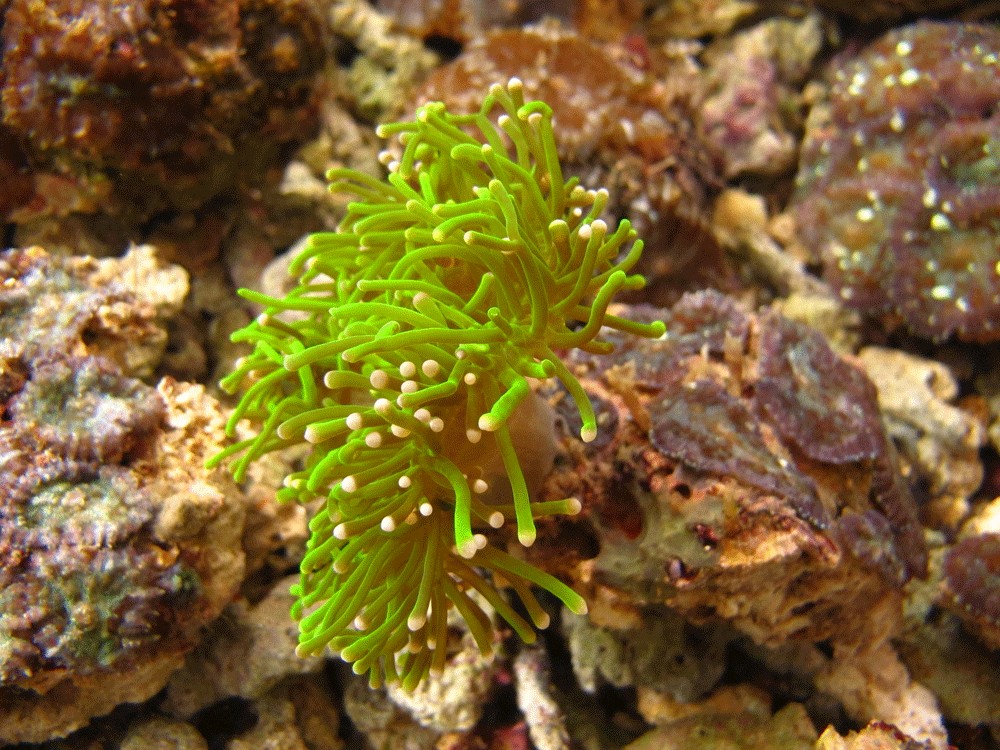
Many experts warn that by 2050, there may be more plastic than fish in our seas, or possibly, all that will be left in our seas is plastic. In addition, 90 percent of coral reefs may be dead and waves of mass extinction may be unleashed on marine species.
If our oceans die, so will we. While 2050 may seem far down the road, it is less than three decades away. In terms of Earth’s life span, it is a mere nanosecond.
Over the past decade, the Arafura and Timor Seas Ecosystem Action Programme (ATSEA) has been working hand in hand with the governments of Indonesia, Timor-Leste, Papua New Guinea and Australia to address these challenges.
The ATSEA-2 project is the second phase of the ATSEA program, which is funded by the Global Environment Facility (GEF) and supported by the United Nations Development Programme (UNDP). The project runs from 2019 to 2024 and has achieved a number of milestones.
Covering more than 5,000 kilometers of coastline, impacting the lives of more than 1 million inhabitants and with an economic value of US$7.3 billion per year, the marine environment in the Arafura and Timor Seas (ATS) is under serious threat because of overharvesting, as well as from other indirect impacts of human activity.
The region is adjacent to the Coral Triangle, which hosts the world’s highest marine biodiversity and contains some of the most pristine and highly threatened coastal and marine ecosystems, including 25 percent of the world’s remaining mangrove ecosystem.
It is worth all of our efforts to preserve and protect our natural heritage. The ATSEA program aims to promote sustainable development in the ATS region to improve the lives of the coastal communities through restoration, conservation and sustainable management of marine coastal ecosystems, in an area with the highest productivity in the Arafura and Timor Seas region.
The ATSEA-2 project focuses specifically on supporting the implementation of the strategic action program (SAP) for the ATS region, which incorporates: creating a functioning regional governance mechanism; incorporating climate change adaptation into an integrated coastal management system; moving up to 25 percent of overexploited fisheries in the region to more sustainable levels; and including oil spill response systems and procedures.
Key among these priorities is fostering regional collaboration among the countries that border the ATS region, an area of “semi-enclosed seas”. Article 123 of the UN Convention on the Law of the Sea (UNCLOS) places responsibility and obligation on countries bordering enclosed and semi-enclosed seas to cooperate in resource management, marine environment protection and marine scientific research.
While ATSEA is confident that it will be able to contribute a regional governance mechanism before the end of its mandate in 2024, the four bordering countries’ buy-in and partnership is critical for the sustainable management of marine resources in the ATS region.
Political will is crucial to this. We can have the best designed regional governance mechanism, but the political will to enforce and carry out the arrangements that have been agreed is vital to the long-term ecosystem health and economic vitality of the ATS region.
For each of the four governments to succeed in their objectives, they must familiarize and mitigate the threats to the ATS region to their citizens, especially their coastal communities. There is a dire need to ensure that these communities, whose future depends on marine riches, understand that sustainable fishing practices are nonnegotiable.
There is much at stake if governments, institutions and communities do not take concrete action. Therefore, they should undertake those mutually agreed actions to build regional cooperation with better planning to protect and improve inclusion among the wider stakeholder base in the ATS region, including representatives of local communities and women’s groups.
Entire coastal communities will lose their livelihoods and governments risk losing economic value, but most of all, we put our collective future in danger if action is not taken immediately.
These issues will also be at the heart of the discussions at this year’s UN World Oceans Day themed “Revitalization: Collective Action for the Ocean”, which falls on June 8.
Each country that borders the ATS region depends on the seas for sustenance and the livelihood of its coastal citizens. Ensuring the long-term marine health of the Arafura and Timor Seas is therefore the collective responsibility of Indonesia, Timor-Leste, Papua New Guinea and Australia.
It is not too late to ensure that our future generations will continue to enjoy the riches of the seas. But in order to do so, we need to act, collaborate and partner with one another.
***
The author is the ATSEA-2 regional project manager.