The Jakarta Post
Please Update your browser
Your browser is out of date, and may not be compatible with our website. A list of the most popular web browsers can be found below.
Just click on the icons to get to the download page.


Popular Reads
Top Results
No results found. Please check your search term and try again
Can't find what you're looking for?
View all search results
Popular Reads
Top Results
No results found. Please check your search term and try again
Can't find what you're looking for?
View all search resultsThe shadow over solar power
President Jokowi should assert his leadership, if he is really serious about achieving the renewables target he flaunted at the G20 Summit in Bali.
Change text size
Gift Premium Articles
to Anyone
Share the best of The Jakarta Post with friends, family, or colleagues. As a subscriber, you can gift 3 to 5 articles each month that anyone can read—no subscription needed!
P
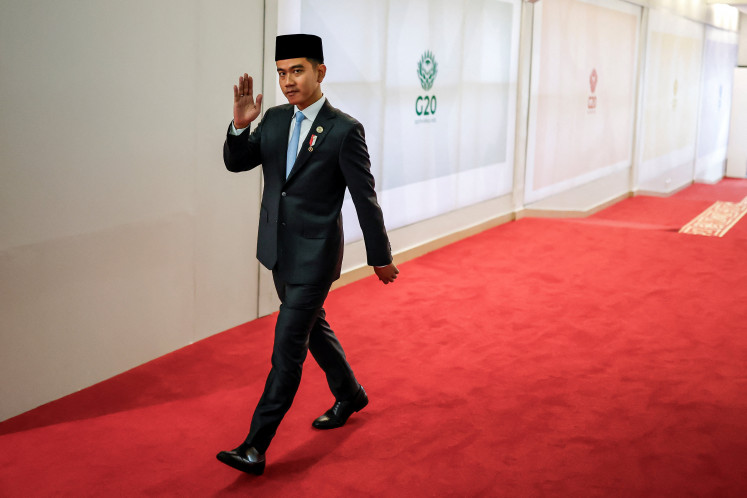
resident Joko “Jokowi” Widodo showed off Indonesia’s plan to accelerate the transition from fossil fuels to renewable energy at the Group of 20 Summit in Bali last November, announcing a new energy transition mechanism to achieve a target of 34 percent renewable energy mix by 2030, compared with a mere 11 percent at present.
That is indeed an ambitious target for a country, which, according to the Institute for Essential Services Reform (IESR), still depends on fossil energy, mainly coal, for 85 percent of its electricity as the new energy mix requires the phasing out of 8.6 gigawatts of coal plants and the building of 28 GW of renewable energy.
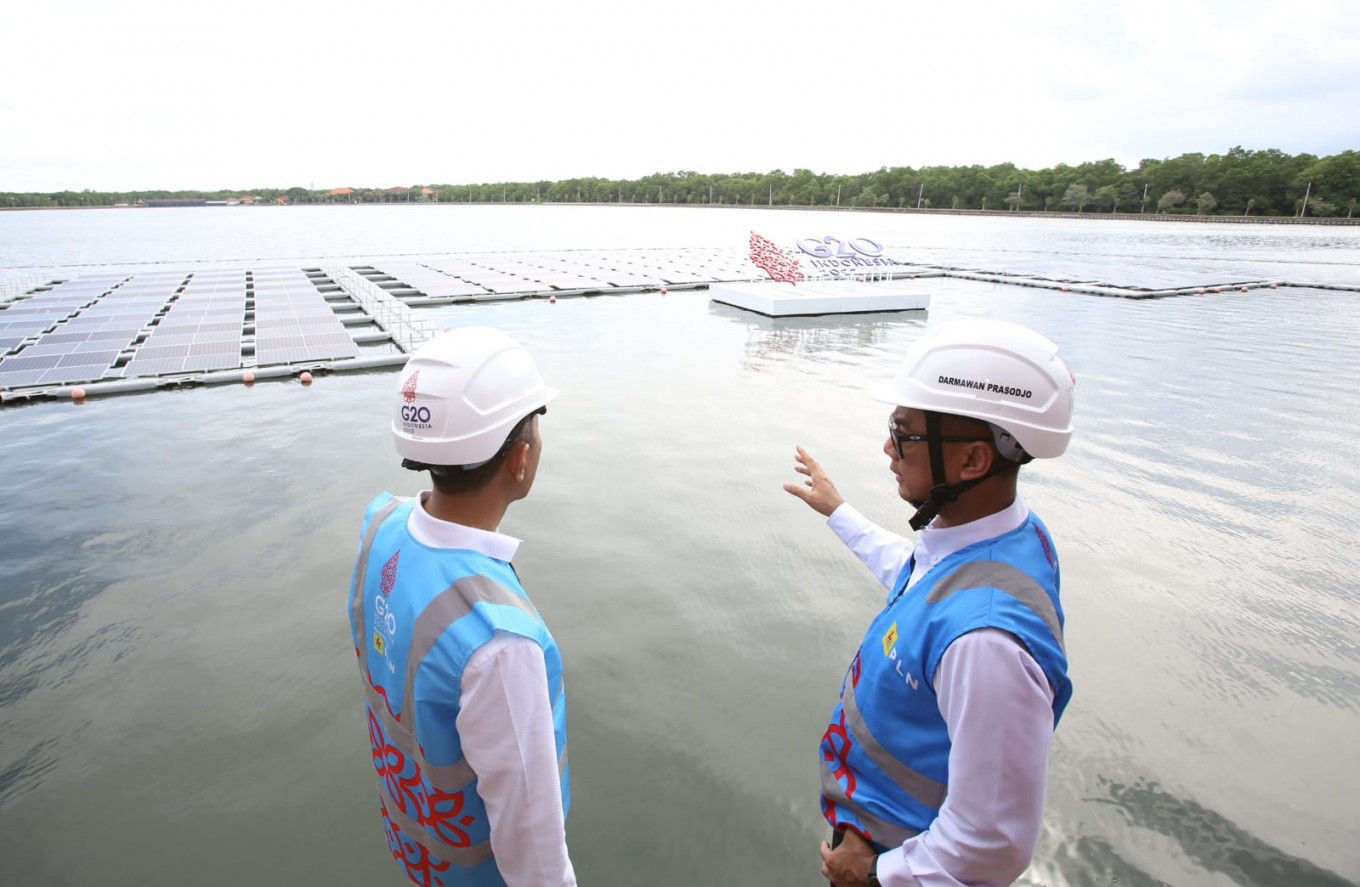
The government also seems to realize that given the availability of resources and funding, solar power should play a very important role in contributing up to one third of the renewables target. We have indeed plenty of solar power to meet the bulk of our electricity needs and solar photovoltaic (PV) costs have fallen and this trend is expected to continue as the growing demand for PV panels increases and the production costs decline as well.
The modularity of PV units allows them to be installed instantly on any surface, land, water or rooftops, as well as on agricultural land, without compromising productivity. The most simple and fast solution is to install solar panels on roofs. According to a 2019 IESR study, residential buildings alone can generate between 195 and 565 GW and hundreds of GW more from industrial building rooftops.
The government also has amended regulations and offered incentives for the harnessing of renewable energy, notably solar power through rooftop solar systems. The net metering feed in tariff for rooftop solar has been raised from 65 percent to 100 percent. But why has rooftop solar power development been so utterly slow in Indonesia? Why can we not do as well as Vietnam which, according to media reports, generated more than 9 GW of rooftop PV in 2020 alone?
The main problem facing Indonesia is the conflict of interests of the debt-ridden electricity monopoly (state electricity company PLN). Because of the acceleration of coal-fired power plants since 2014 PLN already has a surplus power capacity in Java and most of Sumatra.
Consumers who apply for PV installations have been complaining about PLN’s decision to limit capacity installation way below that requested.