The Jakarta Post
Please Update your browser
Your browser is out of date, and may not be compatible with our website. A list of the most popular web browsers can be found below.
Just click on the icons to get to the download page.


Popular Reads
Top Results
No results found. Please check your search term and try again
Can't find what you're looking for?
View all search results
Popular Reads
Top Results
No results found. Please check your search term and try again
Can't find what you're looking for?
View all search resultsSlow disaster: Residents in Central Java’s sinking village forced to adapt
More than 200 people have stayed in one of Indonesia's fastest sinking areas, which has turned from a landscape of lush rice paddies into a network of boardwalks and canoes.
Change text size
Gift Premium Articles
to Anyone
Share the best of The Jakarta Post with friends, family, or colleagues. As a subscriber, you can gift 3 to 5 articles each month that anyone can read—no subscription needed!
T
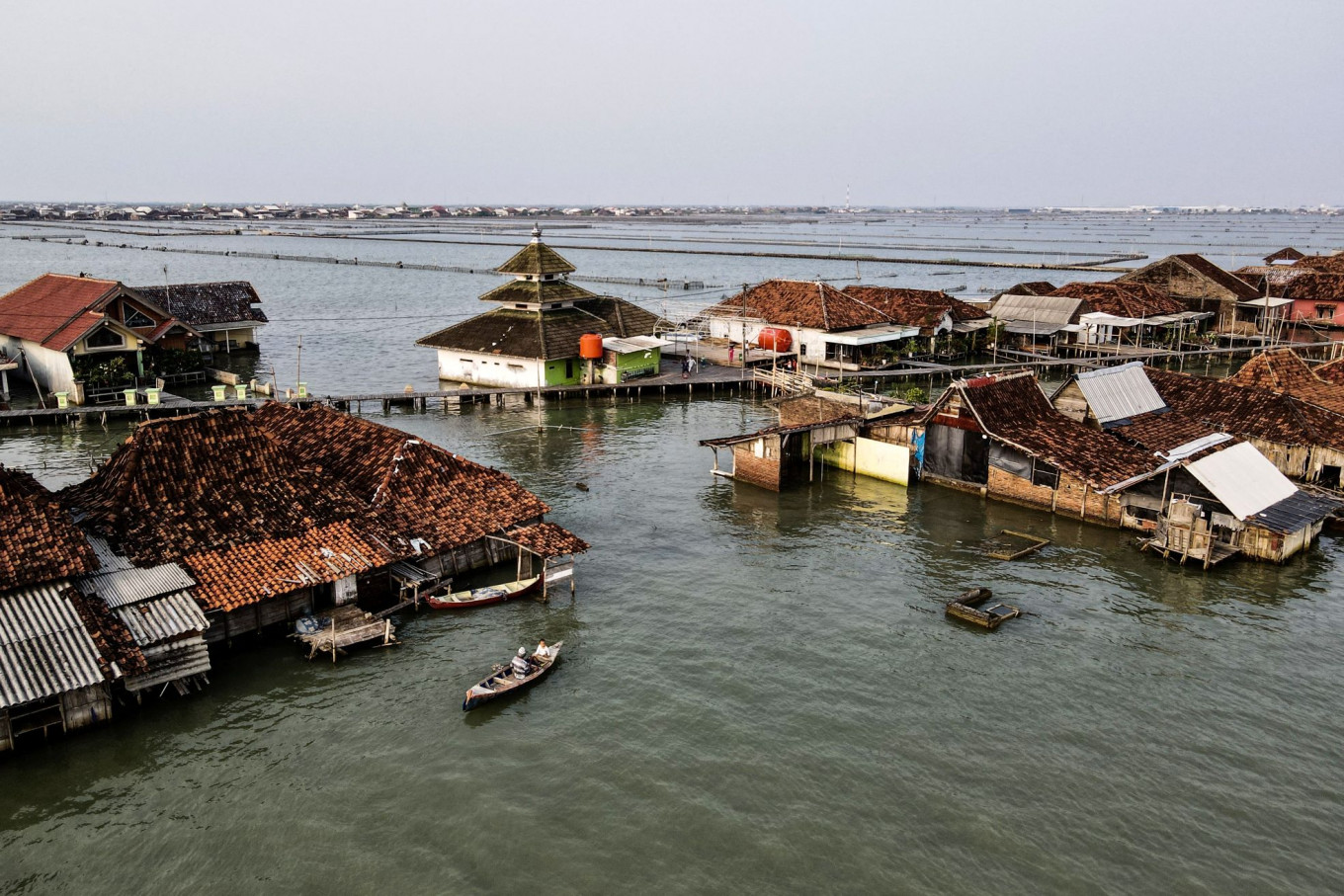
eacher Sulkan lives through pictures at his small sea-surrounded mosque, remembering a marching band and smiling children who graduated from his kindergarten, standing on a road now submerged by murky, green water.
That is just one of many landmarks in the coastal village of Timbulsloko in Demak, Central Java, swallowed by rising tides, which have forced residents to adapt to a new life on the water.
More than 200 people have stayed in one of Indonesia's fastest sinking areas, which has turned from a landscape of lush rice paddies into a network of boardwalks and canoes in an alarming sign of how climate change could upend coastal communities everywhere.
"It's only memories now [...] there are no such activities anymore," said 49-year-old Sulkan.
"Why? Because the place is already flooded by the tide."
Timbulsloko residents' lives have been drastically altered by rising sea levels, coastal erosion and excessive groundwater extraction making the land sink.
The coastline has also been left vulnerable to floods after locals cut down mangroves for fishing ponds in the 1990s.