The Jakarta Post
Please Update your browser
Your browser is out of date, and may not be compatible with our website. A list of the most popular web browsers can be found below.
Just click on the icons to get to the download page.


Popular Reads
Top Results
No results found. Please check your search term and try again
Can't find what you're looking for?
View all search results
Popular Reads
Top Results
No results found. Please check your search term and try again
Can't find what you're looking for?
View all search resultssupreme-court
Americas 2 weeks ago
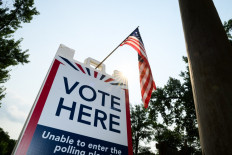
US midterms begin with chaos over mail-voting crackdown
Voters and election officials still do not know what rules may govern millions of mail ballots, as Trump asks the Supreme Court to revive curbs blocked by a federal judge and as states scramble to prepare for changes that could come after voting has begun.
Politics 4 months ago
PREMIUM
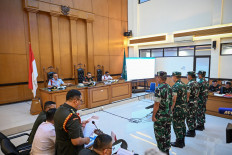
Military judges in activist acid attack trial face ethics complaint
The Advocacy Team for Democracy (TAUD) filed a complaint with the Supreme Court against presiding judge Col. Fredy Ferdian Isnartanto and panel judges Lt. Col. Irwan Tasri and Maj. Zainal Abidin over remarks it deemed improper during the proceedings.
Politics 5 months ago
PREMIUM
New justice puts Constitutional Court in spotlight amid TNI Law petitions
Liliek Prisbawono Adi, who was nominated by the Supreme Court, took his seat at the Constitutional Court, as the justices are examining judicial review petitions against the recently-revised Indonesian Military (TNI) Law.



Academia 6 months ago
PREMIUM
The information technology stakes in the US-Indonesia trade deal
The recently signed agreement, without saying so outright, institutionalizes a process through which US threat assessments can shape Indonesia's ICT procurement, illustrating the increasingly blurred line between national security and commercial decisions.

Academia 6 months ago
PREMIUM
After the court ruling: What’s next for the Indonesia-US trade deal?
For greater durability, Jakarta needs to explore pathways toward a more institutionalized trade framework with Washington, while preparing a US+1 contingency strategy and articulating a clearer vision of its role within the evolving international economic order.
Editor's Picks
Popular
- Indonesia calls for more representative UN amid changing world order
- Safeguarding Indonesia's AI future
- Recentralization concerns in fiscal, education heighten
- Twenty years on, BRICS faces a defining choice
- Court decision tightens House oversight on free meals funding
- Jakarta water shortages worsen as dry season drags on
- Indian arrested for smuggling gold bars to Thailand via N. Sumatra airport
- Singapore’s BDx launches 640MW data center project in West Java
- Govt under pressure as 3 million home drive hits cracks
- Gontor leader’s blunt remarks highlight ‘pesantren’ political independence


