The Jakarta Post
Please Update your browser
Your browser is out of date, and may not be compatible with our website. A list of the most popular web browsers can be found below.
Just click on the icons to get to the download page.


Popular Reads
Top Results
No results found. Please check your search term and try again
Can't find what you're looking for?
View all search results
Popular Reads
Top Results
No results found. Please check your search term and try again
Can't find what you're looking for?
View all search resultsdata

Academia 4 days ago
PREMIUM
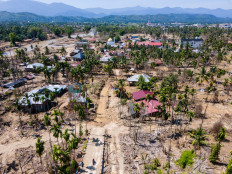
From the Himalayas to Sumatra: Can Indonesia govern an unruly climate?
When freak disasters render historical weather data useless, Indonesia's real climate crisis isn't about predicting the next storm—it’s learning how to govern a future that no longer plays by the rules.
Academia 1 week ago
PREMIUM
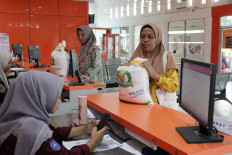
‘Desil-desilan’: Indonesia’s welfare ranking needs more than a data refresh
The deeper issue is that a probabilistic statistical estimate is being wielded as an indisputable administrative fact; one deemed sharp enough to decide who gets subsidized fuel and who walks away empty-handed.




Academia 3 weeks ago
PREMIUM
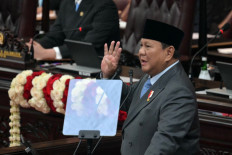
Connecting India and ASEAN's digital economy agreement
As ASEAN rewrites the rules of Southeast Asia’s digital economy with the DEFA, India must launch a dedicated two-track strategy to integrate cross-border tech and trade without compromising its regulatory sovereignty.

Editor's Picks
Popular
- Much ado about asset forfeiture
- Mass poisonings cast doubt on free meals reforms
- New data rules could unlock cross-border data flows
- Children are no longer the priority, were they ever?
- Three more volcanoes erupt following Sinabung, Anak Krakatau
- Indonesia, Hong Kong to host new 14-team FIFA ASEAN Cup
- Rescuers searching for 140 people from passenger ship in Java Sea
- Haze drives surge in respiratory illnesses in Indonesia
- Trump says he would be OK with China building cars in US
- Assessing the merit of the strategic commodities bill


