The Jakarta Post
Please Update your browser
Your browser is out of date, and may not be compatible with our website. A list of the most popular web browsers can be found below.
Just click on the icons to get to the download page.


Popular Reads
Top Results
No results found. Please check your search term and try again
Can't find what you're looking for?
View all search results
Popular Reads
Top Results
No results found. Please check your search term and try again
Can't find what you're looking for?
View all search resultsgovernment

Opinion 10 months ago
PREMIUM
Analysis: Govt drops excise hikes, offers amnesty to illegal cigarette makers
The government has walked back its previous plan to raise the tobacco excise tax, a policy that had been a central pillar of its earlier crackdown on illegal cigarettes. Under the former administration, the approach was largely punitive, marked by annual excise hikes, aggressive “Gempur Rokok Ilegal” raids on small retailers, and stiff penalties for anyone caught selling untaxed products. In a major policy shift, Finance Minister Purbaya Yudhi Sadewa has now announced that the government will instead offer amnesty to illegal cigarette producers, aiming to incentivize them to register, fulfill their tax obligations, and transition into the formal, regulated market.

Opinion 11 months ago
PREMIUM
Analysis: Unmet revenue target, govt pushes faster, stronger tax collection
Indonesia will need to accelerate both revenue collection and government spending in the final months of this year, after realizing just over half of the 2025 outlook by the end of August. The Finance Ministry reported that state revenue reached Rp 1.64 quadrillion (US$98.61 billion) as of Aug. 31, or 57.2 percent of the outlook, and realized state spending of Rp 1.96 quadrillion (55.6 percent). This left the 2025 state budget with a deficit of Rp 321.6 trillion, equal to 1.35 percent of gross domestic product (GDP).
Opinion 11 months ago
PREMIUM
Analysis: Debate grows over government sway as BI & Fed slash rates
Bank Indonesia (BI) cut its benchmark interest rate for the fifth time this year, lowering it to 4.75 percent just a day before the United States Federal Reserve (the Fed) announcement. The move reflected BI’s bet that the US monetary authority would also ease its policy. A day later, the Fed indeed cut the federal funds rate (FFR) for the first time in 2025. Both central banks’ decisions were driven by concerns over slowing economic growth but also sparking debate on government influence in central bank decisions.
Opinion 11 months ago
PREMIUM
Analysis: To be or not to be: The political implications of police reform
Just weeks after the largest wave of demonstrations against Prabowo Subianto’s presidency, the root of public anger remains unaddressed despite several government actions. While the controversial housing allowances for House of Representatives lawmakers were scrapped and arrogant politicians were suspended, the National Police, the institution responsible for the deaths of at least 11 individuals, including 21-year-old Affan Kurniawan, has largely remained unscathed.
Opinion 11 months ago
PREMIUM
Analysis: BI burden-sharing scheme with the government draws scrutiny
Bank Indonesia (BI) and the Finance Ministry have announced another burden-sharing arrangement through Indonesian government securities (SBN), a mechanism typically reserved for easing the government’s fiscal burden during crises, even though no national crisis has been declared. Part of the proceeds will finance priority programs, continuing the central bank’s financial backing of government initiatives. Economists warn, however, that the policy risks undermining economic stability and BI’s independence.
Opinion 11 months ago
PREMIUM
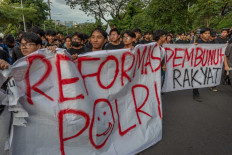
Analysis: Protesters now have a common “reform agenda”
This month, protests demanding political and economic change continue, although smaller and more orderly. A clearer picture of demands that the government can respond to has been compiled into the “17+8 People’s Demands”.
Politics 1 year ago
PREMIUM
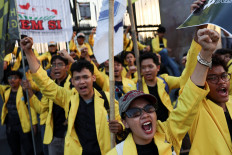
Protesters decry ‘bare minimum’ govt response
Protesters, workers and civil groups said Prabowo Subianto’s administration and the government-controlled House of Representatives have fallen far short in addressing demands raised during the recent nationwide protests, despite their reactions and concessions.

Academia 1 year ago
PREMIUM
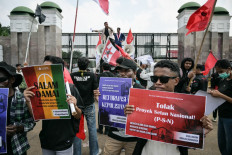
Redefining government ‘harmony’: Not at the expense of people's lives
Influencers, students, and community voices collectively shape public opinion and, beyond that, provide effective and innovative policy literacy tools more effectively than the government or any lawmakers.
Editor's Picks
Popular
- Much ado about asset forfeiture
- Mass poisonings cast doubt on free meals reforms
- New data rules could unlock cross-border data flows
- Children are no longer the priority, were they ever?
- Three more volcanoes erupt following Sinabung, Anak Krakatau
- Indonesia, Hong Kong to host new 14-team FIFA ASEAN Cup
- Trump says he would be OK with China building cars in US
- Assessing the merit of the strategic commodities bill
- Haze drives surge in respiratory illnesses in Indonesia
- Modi, Putin seek stronger ties as Russia calls for BRICS to counter West


