The Jakarta Post
Please Update your browser
Your browser is out of date, and may not be compatible with our website. A list of the most popular web browsers can be found below.
Just click on the icons to get to the download page.


Popular Reads
Top Results
No results found. Please check your search term and try again
Can't find what you're looking for?
View all search results
Popular Reads
Top Results
No results found. Please check your search term and try again
Can't find what you're looking for?
View all search resultsgovernment
Politics 9 months ago
PREMIUM
Power consolidated, governance left wanting in 2025
As 2025 draws to a close, Indonesia faces the outcomes of President Prabowo Subianto’s first year in office, marked by rapid political consolidation that delivered stability for the elites but exposed weaknesses in the government’s coordination and policy execution.

Opinion 9 months ago
PREMIUM
Analysis: Government's tax revenue slips, raising fiscal deficit pressures
Indonesia may face a tax revenue shortfall this year, as recent data show the country had realized only 74.62 percent of its annual tax target as of November, underscoring mounting difficulties in sustaining revenue growth amid global and domestic economic headwinds. The World Bank Group (WBG) has projected Indonesia's tax ratio, the share of tax revenue in gross domestic product (GDP), to fall to 9.4 percent in 2025, down from 10.1 percent in 2024. The downward trend is a worrying signal for future state spending, particularly as the government rolls out costly flagship programs that risk widening the fiscal deficit.
Opinion 9 months ago
PREMIUM
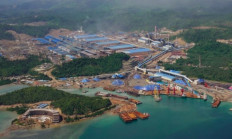
Analysis: IMIP airport raises questions on transparency and oversight
The presence of the Indonesia Morowali Industrial Park (IMIP) Private Airport in Morowali Regency, Central Sulawesi, has sparked controversy after Defense Minister Sjafrie Sjamsoeddin asserted that the facility operates without proper state oversight. The issue appears to reflect a broader debate among state institutions, revealing friction between figures from the previous administration and the current government.
Opinion 10 months ago
PREMIUM
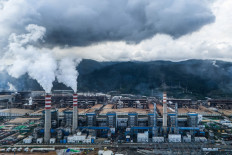
Analysis: Nickel giants under pressure
Indonesia's nickel smelter boom, long promoted as the centerpiece of its downstream industrialization agenda, is entering a new phase. Through Government Regulation No. 28/2025, the government has moved to restrict new smelter permits, prompting questions over whether this signals a response to overcapacity, a recalibration of its downstream strategy or the start of a more measured and deliberate industrial policy.

Opinion 10 months ago
PREMIUM
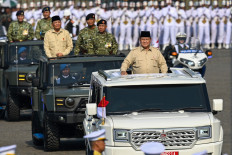
Analysis: Prabowo's national car: Industrial renaissance or personal ambition?
President Prabowo Subianto, who often arrives at the presidential office in a locally produced Maung vehicle, has renewed his promise to create Indonesia's first official national car within the next three years. Whether he can succeed where his predecessors failed remains uncertain, as both Soeharto and Joko "Jokowi" Widodo saw their own national car dreams fade due to political and economic missteps.
Opinion 11 months ago
PREMIUM
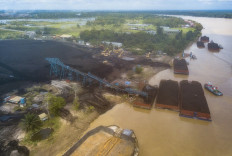
Analysis: Co-ops, SMEs mining rights access spark oversight concerns
Cooperatives and small and medium enterprises (SMEs) are now eligible to manage mining concessions over significant land areas across the country following the issuance of a revision to the Government Regulation (PP) No. 39/2025 on implementation of mineral and coal mining operations. While the government has presented this policy to boost local economic participation, particularly among communities near existing mines, it has also raised concerns over the limited technical capacity of co-ops and SMEs and the risk that they could be used as fronts for large corporations.
Editor's Picks
Popular
- Whisky, big-screen TV seized from prison 'villas' in West Java
- Indonesia pushes cooperation to outpace global scam networks
- Jakarta international airport extends closure after Anak Krakatau eruption
- Militarization by request: The quiet creep in Jakarta
- BREAKING: Prabowo reshuffles cabinet, replaces police chief
- Sugarcane farmers query House over sugar imports
- The vanishing of Indonesia from the heart of Papua
- BREAKING: Arrmanatha takes over as foreign minister in latest reshuffle
- Water concerns triggers suspension of West Java data center project
- The agrarian reform law and investment prospects of palm oil


