The Jakarta Post
Please Update your browser
Your browser is out of date, and may not be compatible with our website. A list of the most popular web browsers can be found below.
Just click on the icons to get to the download page.


Popular Reads
Top Results
No results found. Please check your search term and try again
Can't find what you're looking for?
View all search results
Popular Reads
Top Results
No results found. Please check your search term and try again
Can't find what you're looking for?
View all search resultsgovernment

Politics 1 week ago
PREMIUM
Skepticism persists even as court decriminalizes insulting government
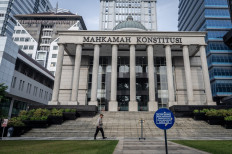
The Constitutional Court’s decision to scrap criminal penalties for insulting the government and state institutions has been applauded by activists, though they caution that the ruling alone remains insufficient to deter rising intimidation and criminalization against critics.
Opinion 4 weeks ago
PREMIUM
Analysis: Whoosh's mounting financial burden is now govt’s problem
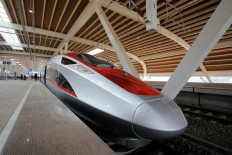
The government's decision to take over the debt restructuring of the Whoosh Jakarta-Bandung high-speed railway marks the end of one of Indonesia's largest business-to-business (B2B) infrastructure experiments. A decade after promising the project would not rely on the state budget, the government has been forced to step in. The rescue raises a broader question: If the existing line has yet to prove financially sustainable, why extend it to Surabaya?

Politics 3 months ago
PREMIUM
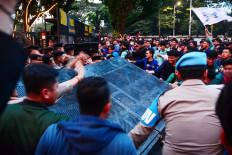
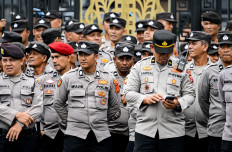
Concern grows over planned expansion of police roles in free meals agency, drug regulator
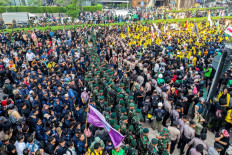
Proposed amendment to the Police Law has alarmed critics over new provisions that could allow active-duty officers to serve at two agencies in charge of rolling out free meals and regulating food and drugs, stoking fresh fear of police encroachment into civic spaces.
Opinion 3 months ago
PREMIUM
Analysis: Govt accelerates WtE push as national waste crisis worsens
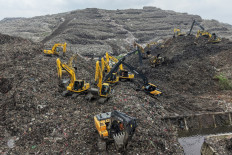
The Bantar Gebang landfill in Bekasi, West Java, has once again come under scrutiny following a fatal landslide in March, in a new report that ranked it among the world’s largest methane-emitting landfills in 2025, highlighting the country’s mounting waste crisis. The government has since enacted Presidential Regulation (Perpres) No. 109/2025 to accelerate investment in waste-to-energy (WtE) projects, while state asset fund Danantara has stepped in to coordinate investment and operations nationwide. However, major hurdles remain, including regulatory uncertainty, high investment costs and environmental as well as public concerns.
Opinion 4 months ago
PREMIUM
Analysis: Labor now part of Prabowo’s big coalition government
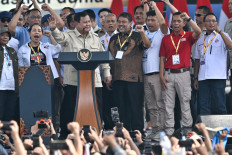
With little fanfare, Indonesia’s labor movement has joined President Prabowo Subianto’s big coalition government, giving it an inside track in the corridors of power to fight for its interests. Although some might argue that it has been co-opted to blunt the movement.
Editor's Picks
Popular
- Much ado about asset forfeiture
- Mass poisonings cast doubt on free meals reforms
- New data rules could unlock cross-border data flows
- Children are no longer the priority, were they ever?
- Three more volcanoes erupt following Sinabung, Anak Krakatau
- Indonesia, Hong Kong to host new 14-team FIFA ASEAN Cup
- Trump says he would be OK with China building cars in US
- Assessing the merit of the strategic commodities bill
- Haze drives surge in respiratory illnesses in Indonesia
- Modi, Putin seek stronger ties as Russia calls for BRICS to counter West


