The Jakarta Post
Please Update your browser
Your browser is out of date, and may not be compatible with our website. A list of the most popular web browsers can be found below.
Just click on the icons to get to the download page.


Popular Reads
Top Results
No results found. Please check your search term and try again
Can't find what you're looking for?
View all search results
Popular Reads
Top Results
No results found. Please check your search term and try again
Can't find what you're looking for?
View all search resultsgrowth

Academia 4 months ago
PREMIUM
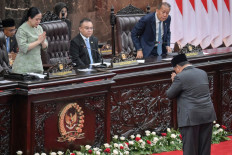
Developmental state ambition: Reading Prabowo’s economic direction
President Prabowo’s visionary fiscal address signals a bold shift toward a state-driven, developmental state model aimed at unleashing Indonesia’s economic potential—but its ultimate success hinges entirely on dismantling the entrenched governance and bureaucratic failures of the past.
Opinion 4 months ago
PREMIUM
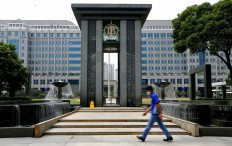
Analysis: Bank Indonesia faces a growing policy paradox
Bank Indonesia’s decision to raise its benchmark BI Rate by 50 basis points to 5.25 percent marks a clear shift from supporting growth to defending macroeconomic stability as the rupiah comes under pressure. But the move also exposes a deeper dilemma: The central bank must stabilize the currency while sustaining growth, even as expansive fiscal intervention weakens monetary policy effectiveness and raises questions over its independence.
Academia 4 months ago
PREMIUM
Indonesia’s start-up boom and what we refuse to measure
As prosecution of digital pioneers has become commonplace, a deeper crisis emerges: a nation that enthusiastically celebrates start-up hypergrowth but lacks the analytical tools to distinguish strategic risk from structural failure.
Economy 4 months ago
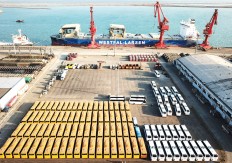
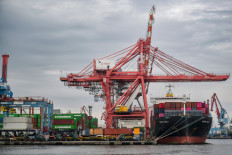
China's economy loses steam at start of Q2
Better-than-expected exports and China's domestic fuel-pricing controls have helped weather the energy shock, but higher input costs threaten to squeeze already weak factory margins and further dampen consumer spending if the conflict drags on.
Opinion 4 months ago
PREMIUM
Analysis: Growth masks rising risks from fiscal, monetary expansion
The recent announcement on 5.6 percent economic growth came as little surprise after Finance Minister Purbaya Yudhi Sadewa made a similar projection in February. At first glance, the figure appears to validate President Prabowo Subianto’s economic agenda, particularly the free nutritious meal program. Yet behind the stable headline growth, macroeconomic indicators suggest the economy is becoming increasingly dependent on government spending and monetary expansion rather than healthy private sector activity.
Academia 4 months ago
PREMIUM
Growth without gain: Why Indonesians don't feel the economy
While Indonesia's headline GDP suggests an economic triumph, a deeper look at GNP reveals a hollow growth, where wealth flows outward rather than into households. The country’s impressive statistics are failing to move the needle for the middle class and the informal workers who anchor the economy.

Academia 4 months ago
PREMIUM
Purbaya’s aggressive fiscal shift: Growth at what cost?
Finance Minister Purbaya has pivoted toward an aggressive, pro-growth fiscal strategy that breaks from years of cautious discipline. However, using reserve cash and central bank surpluses to fund this vision may jeopardize Indonesia’s long-term institutional stability and debt credibility.

Economy 5 months ago
Batam investment surges 103% in Q1 2026, reinforcing role as Indonesia’s key growth hub
Badan Pengusahaan Batam (BP Batam) has reported an investment realization of Rp 17.4 trillion in the first quarter of 2026, marking a 102.85 percent increase year-on-year (YoY) and 68.92 percent growth quarter-on-quarter. The performance signals a strong start to the year and reinforces Batam’s position as one of Indonesia’s most dynamic investment centers.
Editor's Picks
Popular
- Whisky, big-screen TV seized from prison 'villas' in West Java
- Indonesia pushes cooperation to outpace global scam networks
- Jakarta international airport extends closure after Anak Krakatau eruption
- Militarization by request: The quiet creep in Jakarta
- BREAKING: Prabowo reshuffles cabinet, replaces police chief
- Sugarcane farmers query House over sugar imports
- The vanishing of Indonesia from the heart of Papua
- BREAKING: Arrmanatha takes over as foreign minister in latest reshuffle
- Water concerns triggers suspension of West Java data center project
- The agrarian reform law and investment prospects of palm oil


