The Jakarta Post
Please Update your browser
Your browser is out of date, and may not be compatible with our website. A list of the most popular web browsers can be found below.
Just click on the icons to get to the download page.


Popular Reads
Top Results
No results found. Please check your search term and try again
Can't find what you're looking for?
View all search results
Popular Reads
Top Results
No results found. Please check your search term and try again
Can't find what you're looking for?
View all search resultsgrowth


Academia 5 months ago
Why manufacturing remains Indonesia’s key growth driver, accelerating downstreaming
As Southeast Asia’s largest economy, Indonesia has big goals ahead. The government’s plan, from 2025 to 2029, focuses on three outcomes: slashing the poverty rate to between 4.5 and 5 percent, raising the Human Capital Index (IMM) to 0.59 percent and pushing annual economic growth toward the 8 percent mark by 2029.

Academia 5 months ago
PREMIUM
Global oil shocks and fiscal pressures: Indonesia’s next crisis?
Indonesia’s fiscal resilience is facing a high-stakes stress test as rising global oil prices collide with rigid domestic spending. While a crisis is not yet inevitable, the narrowing gap between political commitments and economic reality suggests the window for decisive action is closing.

Opinion 5 months ago
PREMIUM
Analysis: Strong data, fragile foundations: Testing Indonesia’s growth narrative
Escalating geopolitical tensions between Iran and the United States-Israel are putting pressure on global oil markets and pushing many economies into a defensive stance. Against this backdrop, Finance Minister, Purbaya Yudhi Sadewa, has maintained an outwardly optimistic outlook, projecting economic growth of 5.7 percent in the first quarter of 2026. Yet such confidence has been met with caution from economists and market participants. The concern is not merely how the government spends, but at what cost to fiscal credibility.

Economy 6 months ago
Batam economy surges 7.49% yoy in Q4 2025, outpacing provincial growth
The economy of Batam continued to show strong momentum toward the end of 2025, with economic growth reaching 7.49 percent year-on-year (yoy) in the fourth quarter (Q4), the highest among regions in Riau Islands province.




Academia 7 months ago
PREMIUM
Why we cannot afford to neglect the urban middle class
As national policies pivot toward rural and lower-income support, the urban middle class is being left out in the cold, squeezed by stagnant wages and rising costs, creating a "quiet frustration" that could pose a systemic risk to economic and political stability.
Companies 7 months ago
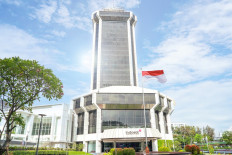
Indosat Ooredoo Hutchison shows healthy fundamentals in 2025 with 12.2% net profit growth
Indosat Ooredoo Hutchison (ISAT) demonstrated robust performance throughout 2025, recording revenue of Rp 56.5 trillion (US$3.37 billion) in addition to double-digit profit growth of 12.2 percent year-on-year (yoy) and 51 percent quarter-on-quarter (qoq) to Rp 5.5 trillion.
Editor's Picks
Popular
- Much ado about asset forfeiture
- Mass poisonings cast doubt on free meals reforms
- The benefit of the doubt has expired
- New data rules could unlock cross-border data flows
- Prabowo replaces Finance Minister Purbaya with his deputy
- Children are no longer the priority, were they ever?
- Six killed, 129 missing after ferry capsizes off Java
- Prabowo sacks Purbaya, turns to familiar hand at Finance Ministry
- SOE dividend grab tests Danantara’s mandate
- Prabowo calls for Global South, BRICS unity amid fragmented world order


