The Jakarta Post
Please Update your browser
Your browser is out of date, and may not be compatible with our website. A list of the most popular web browsers can be found below.
Just click on the icons to get to the download page.


Popular Reads
Top Results
No results found. Please check your search term and try again
Can't find what you're looking for?
View all search results
Popular Reads
Top Results
No results found. Please check your search term and try again
Can't find what you're looking for?
View all search resultsgrowth





Opinion 3 weeks ago
PREMIUM
Analysis: 2027 budget sticks to growth agenda despite headwinds
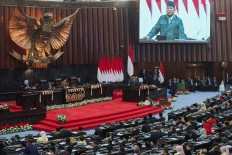
President Prabowo Subianto has unveiled the government’s proposed state budget for the 2027 fiscal year, outlining another substantial expansion in government spending ahead of Indonesia’s 81st Independence Day. Government expenditure is set to rise to Rp 4,097.2 trillion (US$230.4 billion), from Rp 3,842.7 trillion in this year’s state budget, while state revenue is targeted at Rp 3,426 trillion, compared with Rp 3,153.6 trillion this year. The government is also targeting 6 percent economic growth in 2027, reinforcing Prabowo’s longstanding commitment to using government-led initiatives to accelerate growth.


Opinion 1 month ago
PREMIUM
Analysis: RI’s 5.29 percent growth tests sustainability of fiscal expansion
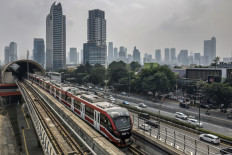
Statistics Indonesia (BPS) announced that Indonesia’s economy expanded 5.29 percent year-on-year (yoy) in the second quarter of 2026, marking notable growth above the 5 percent threshold amid continued global uncertainty and geopolitical tensions. The figure also improved from 5.12 percent in the same quarter last year, suggesting that President Prabowo Subianto’s increasingly expansionary fiscal policies have helped sustain domestic economic activity even as global trade growth weakens. However, the stronger growth also comes as the government ramps up spending on its flagship programs, raising questions about the fiscal cost of sustaining this momentum.

Editor's Picks
Popular
- PISA gains belie Indonesia’s persistent education crisis
- Not the Ministry of Magic
- Suahasil seen to prioritize fiscal discipline, continuity
- The benefit of the doubt has expired
- Osama the gamer: A list of Bin Laden’s video games from his hard drive
- Saudi civil defense sends all-clear after alerts issued for capital Riyadh
- Indonesian Navy welcomes former Italian warship as its first aircraft carrier
- Prabowo skips UNGA as RI seeks to bridge divides
- Saudi-led coalition says Houthis fired ballistic missile at Riyadh
- Another 150 Indonesians deported from Malaysia to Batam


