The Jakarta Post
Please Update your browser
Your browser is out of date, and may not be compatible with our website. A list of the most popular web browsers can be found below.
Just click on the icons to get to the download page.


Popular Reads
Top Results
No results found. Please check your search term and try again
Can't find what you're looking for?
View all search results
Popular Reads
Top Results
No results found. Please check your search term and try again
Can't find what you're looking for?
View all search resultsstem
Academia 2 months ago
PREMIUM
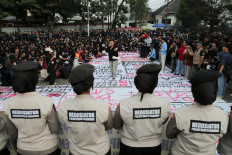
The new Indonesian rebellion: Build, don’t just protest
While student protests expose deep-seated anxieties over economic mismanagement, Indonesia's ultimate survival relies on shifting its revolutionary spirit away from the streets and toward breaking the shackles of economic stagnation.
Academia 4 months ago
PREMIUM
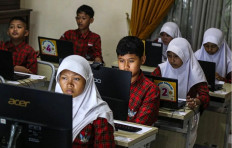
Stop building schools for the poor. Start fixing education for all
Establishing separate schools for poor children doesn't break the cycle of poverty, but rather institutionalizes it. Indonesia must move beyond charity schooling and commit to a single, high-quality education system that treats every child as a full participant in the nation's future.
Academia 6 months ago
PREMIUM
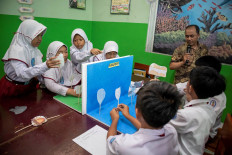
The hidden curriculum of domesticity and our STEM future
To unlock Indonesia’s STEM potential, we must dismantle the "hidden curriculum" that quietly trades a girl’s public authority for domestic virtue, turning classrooms into rehearsal spaces for expertise rather than compliance.
Society 1 year ago
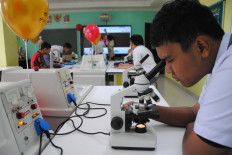
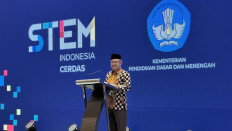
National AI, STEM initiative started by ministries, foundation
The initiative aims to provide foundational skills in AI and STEM to some 10 million students from about 500 public and private schools, including madrassa (Islamic curriculum school) and pesantren (Islamic boarding schools).

Society 1 year ago
PREMIUM
ITB, Prasetiya Mulya aim to bolster STEM education, research on semiconductors
Bandung Institute of Technology (ITB) and Prasetiya Mulya University have agreed to collaborate in developing STEM programs and bolstering research on semiconductors amid the rise of digital technology industries globally.

Society 1 year ago
PREMIUM
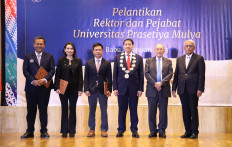
Prasetiya Mulya University appoints former senior diplomat Hassan Wirajuda as new rector
Hassan Wirajuda, who served as foreign minister under the country's fifth and sixth presidents, was inaugurated on Wednesday as rector of Prasetiya Mulya University, vowing to develop an East Asian studies program to reflect the region's growing impact on the global order.
Editor's Picks
Popular
- Mass poisonings cast doubt on free meals reforms
- Much ado about asset forfeiture
- New data rules could unlock cross-border data flows
- Children are no longer the priority, were they ever?
- Indonesia, Hong Kong to host new 14-team FIFA ASEAN Cup
- Free meals face seven-day ultimatum, possible lawsuit
- Assessing the merit of the strategic commodities bill
- Prabowo’s approval slide fuels warm-up to 2029 elections
- Volcanic eruptions take toll on economy
- Osama the gamer: A list of Bin Laden’s video games from his hard drive


